
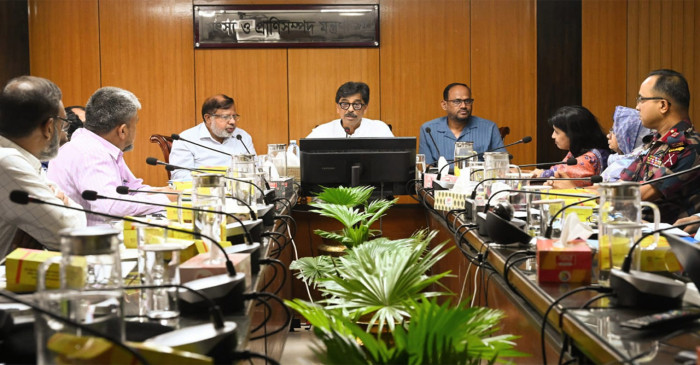
Hilsa fishing will be banned across Bangladesh for 22 days, from 8 to 29 October, to let mother hilsa spawn safely during the peak breeding season. Transporting, storing, marketing, buying, selling and exchanging hilsa will also be prohibited for the period. The decision was taken at a meeting of the National Task Force on Hilsa Resource Development, which set the dates for the Mother Hilsa Conservation Campaign 2026.
The meeting on Tuesday (15 September) was chaired by Mohammad Amin Ur Rashid, minister for fisheries and livestock and for agriculture, at the ministry's conference room. Joint drives by law-enforcement agencies and the Department of Fisheries will be stepped up in the main breeding grounds, and the government will provide VGF food assistance to fishermen who refrain from fishing during the ban.
The minister said there would be no leniency in protecting mother hilsa if sustainable production is to be secured, and called for tighter surveillance and drives in the principal breeding areas including Barishal, Chandpur and Bhola. District administrations, river police, the Coast Guard and the fisheries department must work together, he said, with extra vessels and logistics for hilsa hotspots if needed. He also ordered closer watch on ice factories, wholesale yards and markets to stop illegally caught fish reaching buyers, and strict drives to remove illegal nets at the Chandpur estuary and other breeding grounds.
State Minister for Fisheries and Livestock Sultan Salauddin Tuku said research must establish why hilsa production is falling year by year, and that weaknesses in the programme will be identified and fixed. He called for effective action against the manufacture and sale of banned nets, asked fishermen's representatives to help discourage their purchase, and said supervision would be tightened so that the government's incentives reach genuine fishermen.
Calling it worrying that fish now has to be imported because hilsa output has declined, the state minister said the causes must be identified and addressed jointly, and that an integrated action plan will follow to protect hilsa as a national asset and GI product and to raise production. Ministry secretary Md Delwar Hossain, Bangladesh Fisheries Development Corporation chairman Md Mir Hossain and Department of Fisheries director general Dr Md Khaled Kanak were among those present.
Based on Naya Diganta's report. Source: Naya Diganta
Comments
(0)