

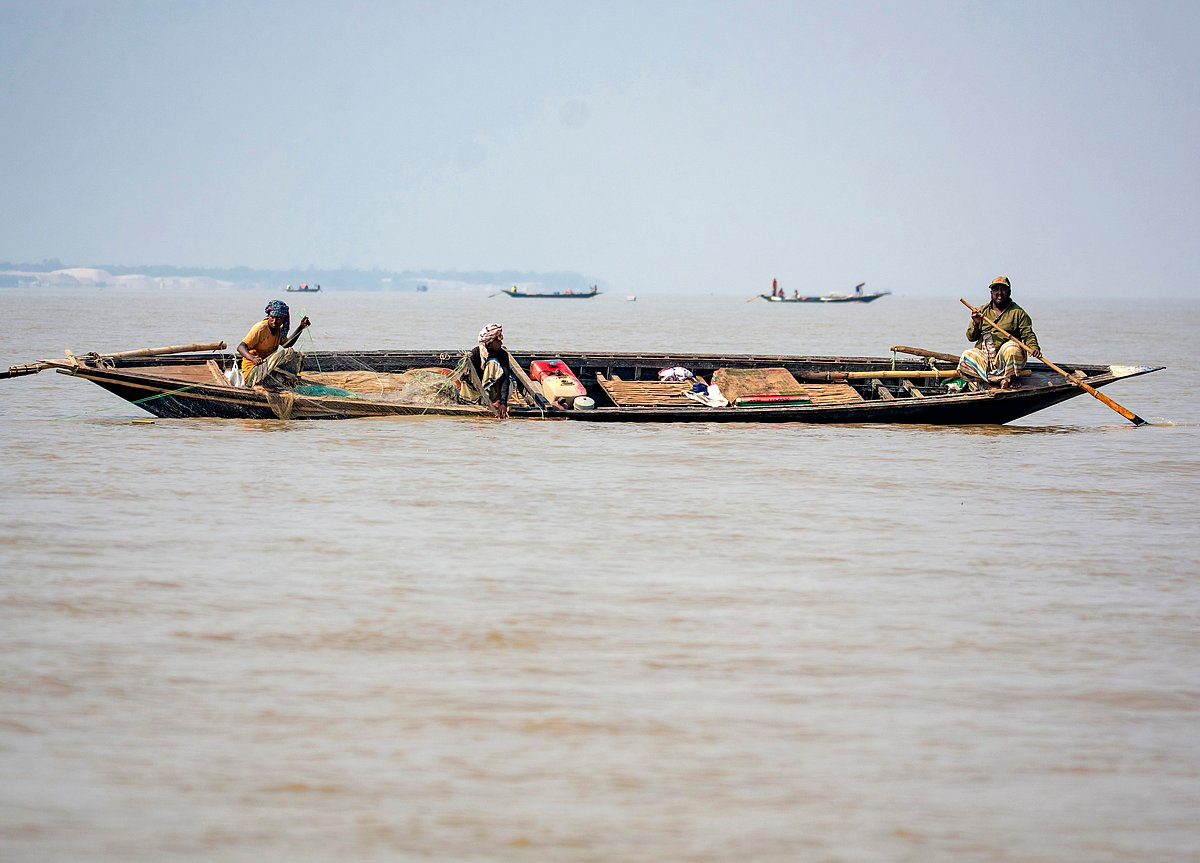
The government has banned hilsa fishing across the country for 22 days, from 8 to 29 October, to protect the spawning of mother hilsa. Transporting, storing, marketing, buying, selling and exchanging hilsa will also be prohibited during that period.
The decision was taken on Tuesday, 15 September, at a meeting of the national task force on hilsa resource development in the conference room of the Ministry of Fisheries and Livestock, chaired by Mohammad Amin Ur Rashid, minister for fisheries and livestock and for agriculture.
The meeting decided that a nationwide drive to protect mother hilsa will run through the ban, and that fishermen who refrain from fishing will receive food assistance under the VGF programme. There will be no concession on protecting mother hilsa, the minister said; surveillance and operations must be intensified in the main spawning grounds including Barishal, Chandpur and Bhola, and district administrations, the river police, the Coast Guard and the fisheries department must work together. Extra vessels and logistics will be provided in key areas if needed.
To keep illegally caught fish off the market, the minister ordered closer watch on ice factories, wholesale yards and markets, and tough drives to remove illegal nets from the spawning grounds including the Chandpur estuary. If the coordinated effort continues, he said, hilsa production will rise further next season.
State Minister for Fisheries and Livestock Sultan Salauddin Tuku said research must establish why hilsa production is falling year on year, that effective steps are needed to stop the manufacture and sale of banned nets, and that fishermen must be made aware not to buy them. That fish is now being imported because hilsa output has fallen is a matter of concern, he said. Monitoring will be tightened so that ban-period support reaches genuine fishermen, and an integrated plan will be drawn up to protect hilsa as a national asset and GI product.
Fisheries and Livestock Secretary Md Delwar Hossain, Bangladesh Fisheries Development Corporation chairman Md Mir Hossain, Department of Fisheries director general Dr Md Khaled Kanak and Bangladesh Fisheries Research Institute director general Dr Md Latiful Islam attended, along with representatives of district administrations, RAB, the Coast Guard, the Air Force, the river police, BGB, Dhaka University and the national fishermen's association.
For the fishing families of the coast and the river belts the 22-day pause means no income; whether the VGF rice reaches the right boats on time is what decides whether the ban holds.
Source: banglanews24
Comments
(0)