
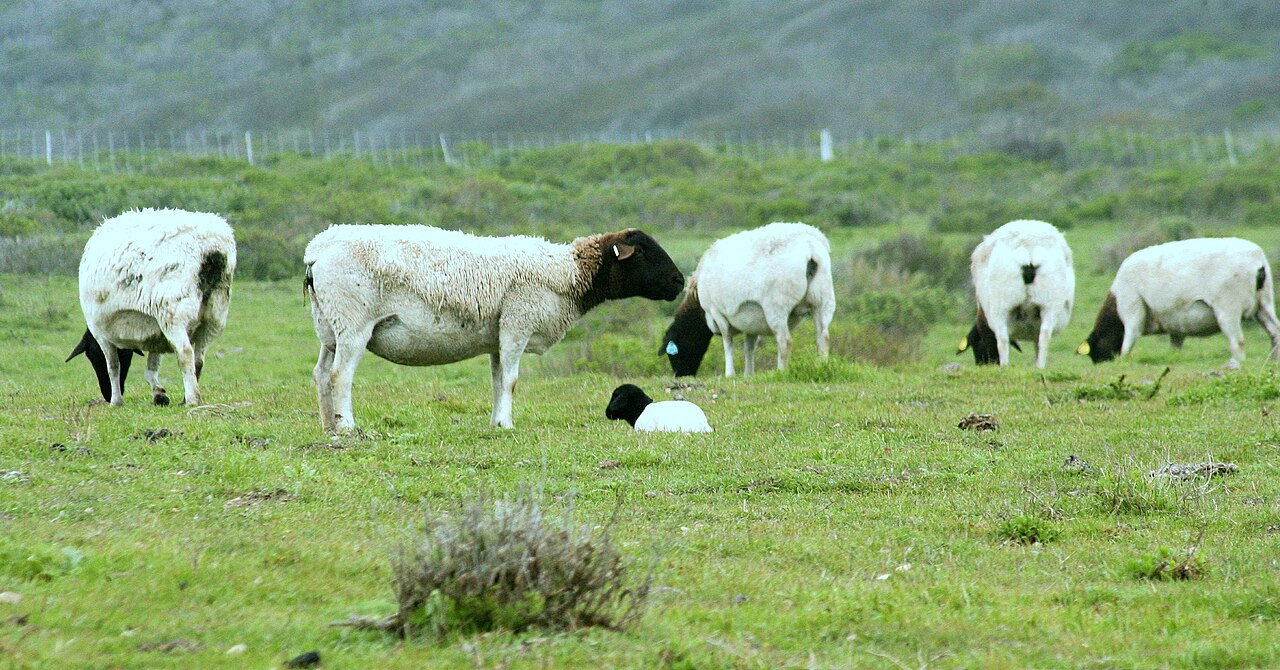
The most damaging livestock losses are often the ones farmers do not see, says Dr Dave Midgley, chief executive of the Ruminant Veterinary Association of South Africa. A ewe that eats less, a calf that lags or a ram that never quite performs are early signs of real costs. "Healthy animals are supposed to stay healthy. If they're getting sick, the system has already failed," he told Glenneis Kriel of Farmer's Weekly.
Animals that are mildly ill or only partly recover erode profit over time. In wool sheep, illness lowers wool yield and increases wool break; in meat animals it slows growth, lengthens finishing and lowers carcass weight and quality; dairy cows and breeding females give less, and poorer, milk. A cow may look healthy after a reproductive infection yet fail to conceive, and a ram or bull whose fever during respiratory disease hurt its fertility may show it only next season, in fewer lambs or calves.
Disease also knocks the farm calendar out of step. Calving and lambing are timed to rain, pasture and markets such as the Easter and Christmas trade. This year's heavy rain favoured parasites and parasite-borne disease, and on some farms that pushed reproduction off schedule. Late-born animals miss peak pasture, need more bought feed, grow more slowly and often miss the best markets.
Midgley jokingly names the biggest risk "gatsakilitis", a word he invented for reluctance to spend on prevention. Vaccination, parasite control, nutrition and biosecurity look like costs, he says, but skipping them leads to outbreaks and fertility losses that far outweigh the savings. The second threat is a mismatch between an animal's genetics and its environment: "The best genetics are not always the most expensive genetics. They are the genetics that fit the environment and production system."
He also urges farmers to call a vet early instead of turning to social media groups, internet searches, AI tools or the local co-operative for a remedy. The vet's bill is usually a fraction of the cost of treatment, he says, while misdiagnosis and delay are the real expense. On a well-run farm, good health shows as consistency: steady growth, predictable fertility and stable production.
Photo: Teddy Llovet / Wikimedia Commons (CC BY 2.0)
Source: Farmers Weekly South Africa

Comments
(0)