
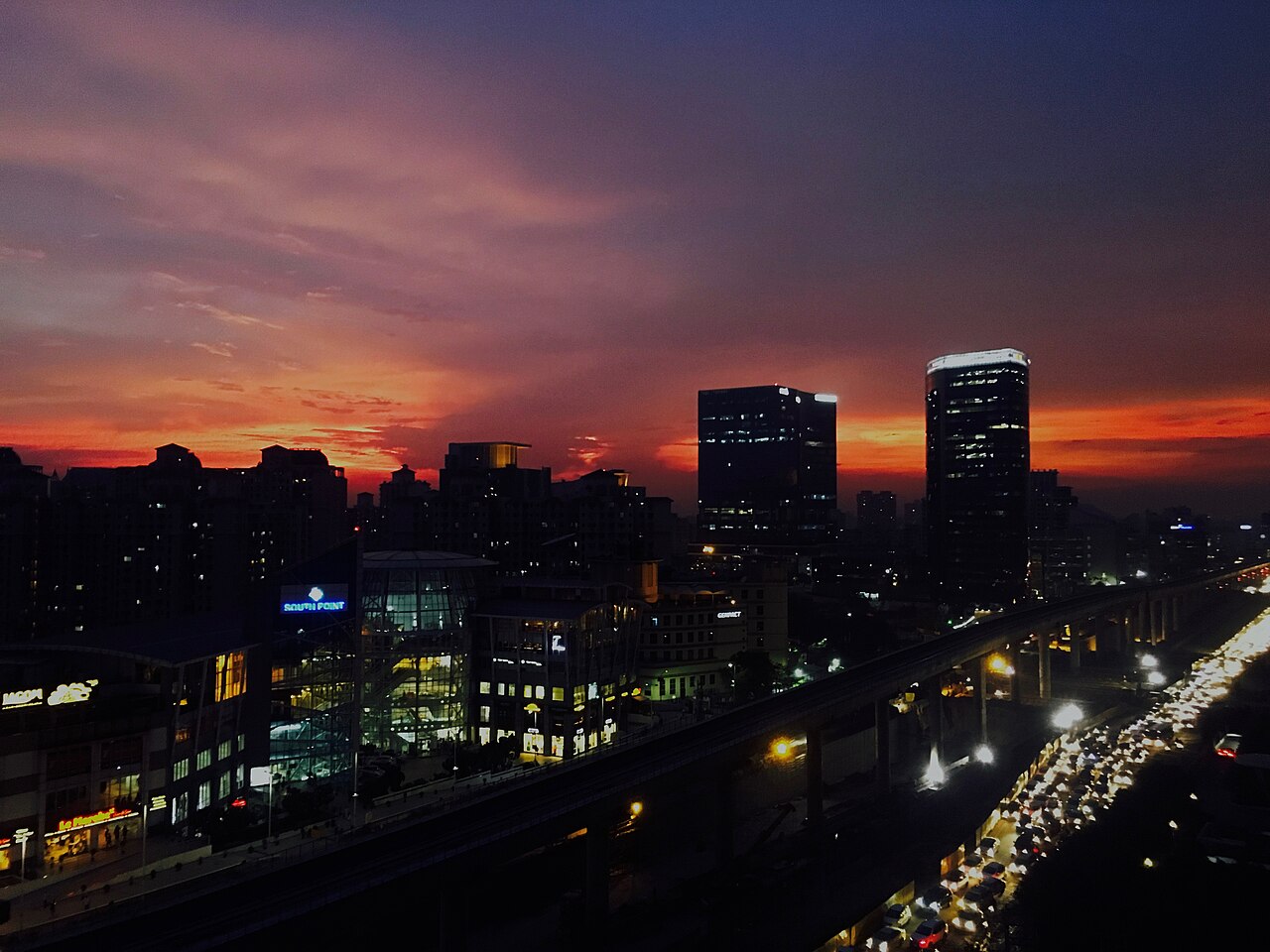
Exhaust from vehicles on Gurugram's roads caused one in four of the new asthma cases linked to air pollution among the city's children and teenagers in 2025, and made them miss an estimated 94,859 school days through illness, equal to a full academic year for 431 students, according to a study released on 5 October by the International Council on Clean Transportation (ICCT), Down To Earth reports.
Private cars were the biggest source of traffic emissions; the Delhi satellite city now has 323 cars for every 1,000 residents, one of the highest rates in India. More than 80% of emissions came from newer BS IV and BS VI vehicles, which the study takes to mean that age-based bans on older vehicles have largely done what they can.
The researchers found that switching every vehicle registered in Gurugram to electric would deliver three-quarters of the possible health gains. The rest depends on the roughly half a million vehicles that drive into the city each day from Delhi and elsewhere in the National Capital Region. Gurugram, one of India's most polluted cities, has never had an official study of where its pollution comes from, and the findings come as vehicle registrations hit a seven-year high with electric vehicles only 4.3% of new sales.
"Children are particularly vulnerable to health impacts of air pollution, with road transport an important contributor," said Moorthy Nair, an ICCT researcher and co-author. Rajesh Verma, chairperson of the Commission for Air Quality Management, said vehicles are the number one source of pollution in Delhi NCR and that the commission has directed states to bring in incentives for electric vehicles.
The study calls for a faster move to zero-emission vehicles across segments, including two- and three-wheelers and school buses, and for measures covering vehicles that enter and operate in Gurugram from neighbouring areas.
Photo: Mbhushan21 / Wikimedia Commons (CC BY-SA 4.0)
Source: Down To Earth




Comments
(0)