
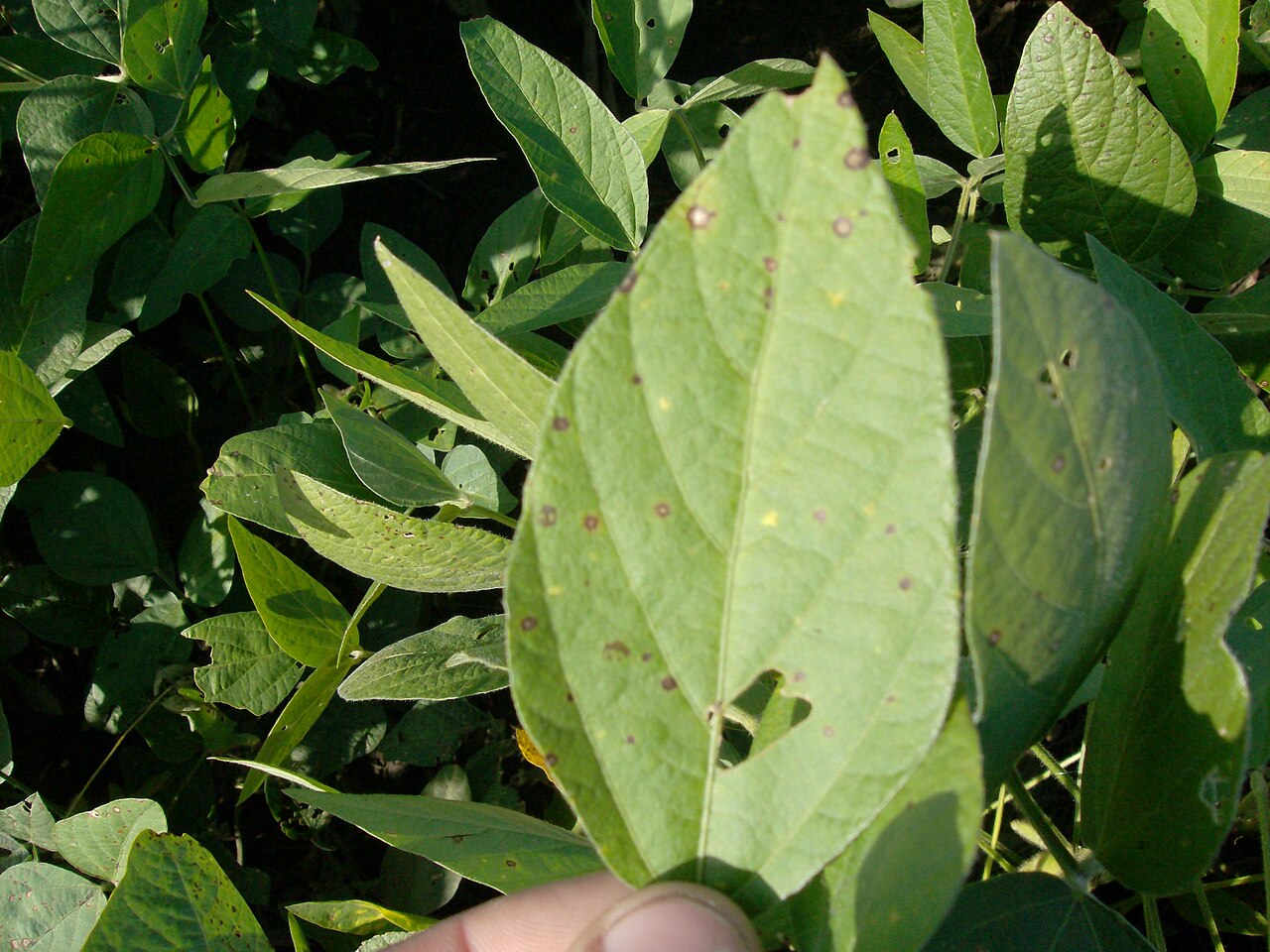
Engineers at Southern Illinois University Carbondale have built a four-wheeled, battery-powered ground robot to spot soybean diseases before visible symptoms appear, after drone-mounted cameras failed to see enough of the undersides of leaves, Global Agriculture reported. The project, funded through the Illinois Soybean Center, targets frogeye leaf spot, a fungal disease that can cut soybean yields by 60% to 70% once established.
The work is led by Billy Ram, assistant professor of precision agriculture at SIU; doctoral student Samuel Singh built and operates the robot. Many soybean fungal diseases persist in the soil for years and reinfect fields in wet weather. By the time lesions show on the upper leaf surface, where most scouting and aerial imaging looks, a late fungicide spray may come too late, Ram said.
The team first flew a drone with hyperspectral and multispectral cameras over test plots to map disease. Even close to the canopy, it could not see the leaf undersides and lower stems where frogeye lesions often appear first, so it could not flag the disease before it was obvious from above.
The robot runs on GPS and follows crop rows on its own once a field map is uploaded. It carries several cameras aimed at both the tops and the undersides of the plants. Ram called the current phase "an engineering problem more than an agronomic problem": camera placement, navigation and data collection come first. Singh said the goal is maps that show farmers exactly where disease pressure is building.
The hardware, camera layout and autonomous navigation are built and working in the field, but the artificial intelligence models that would identify disease type and severity from the images have not yet been developed or tested, so there are no accuracy figures or detection lead times yet.
Photo: Maggilautaro / Wikimedia Commons (Public domain)
Source: Global Agriculture

Comments
(0)