
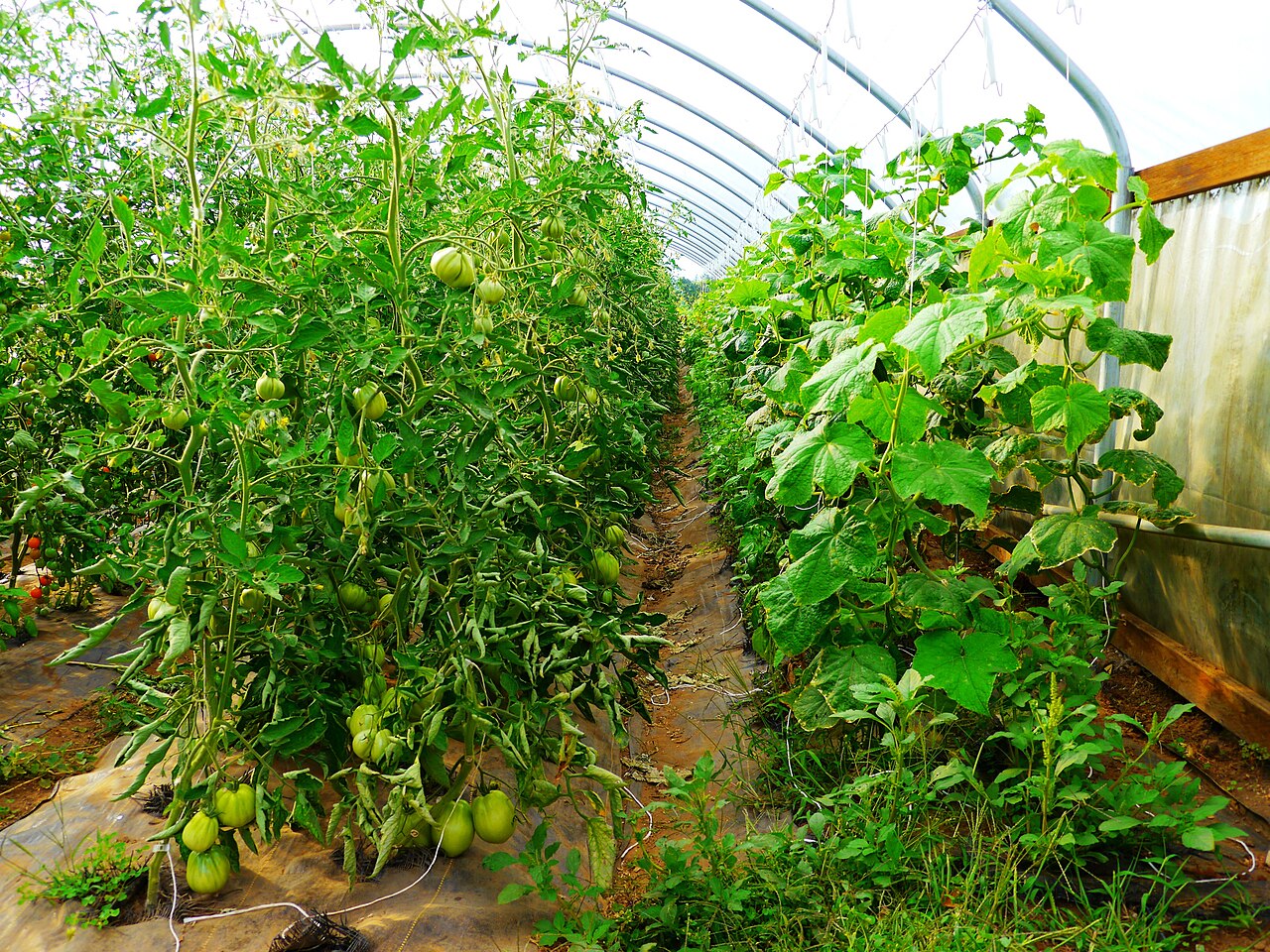
Greenhouses today are steered by the air around the plants. A five-year Dutch project called GreenControl wants them steered by the plants themselves. Wageningen University & Research (WUR), Delft University of Technology, Eindhoven University of Technology and the University of Twente are working with greenhouse builders, technology developers, growers and breeders to find out how sensors and cameras can tell what a crop needs, and to use that to control heating, ventilation and lighting.
"One limitation of current control systems is that the greenhouse climate is measured at a single location using one sensor unit," said Leo Marcelis, professor of horticulture and product physiology at WUR. Conditions differ across a greenhouse, and a single reading does not show whether they suit the plants at that moment. Growers therefore build in safety margins, keeping a section warmer or drier than needed to avoid mould, which costs energy.
The project combines technologies that already exist: sensors for photosynthesis, air movement and transpiration, thermal cameras and cameras that track growth, together with algorithms. It focuses on tomatoes and lettuce. The researchers are testing how many sensors are enough, where to place them on the plant and in the greenhouse, how many plants per hectare must be watched for a representative picture, and how to keep readings reliable when warm, humid conditions dirty or shift the equipment.
The targets are a 25% cut in energy use and a 35% cut in energy costs, the latter partly by growing to the energy market: power is often cheaper when it is sunny or windy, and on Sundays. "An important question is how far we can go without compromising production, quality or plant health," Marcelis said.
The system will also explain its advice, because growers need to understand why it recommends a change before they trust it. Fully automated control is the later step, once the system is proven robust. Partners include Ridder, KUBO Group, Glastuinbouw Nederland, Sigrow, KWS Group and others.
Photo: Rick Obst / Wikimedia Commons (CC BY 2.0)
Source: Wageningen University & Research

Comments
(0)