
Grain SA, the organisation of South Africa's grain producers, asked the court for an interim interdict against the Johannesburg Stock Exchange's decision to drop the multiple reference point (MRP) model for soya bean pricing and return to a single reference point. The hearing, postponed from 8 October, was set for 6 November, Farmer's Weekly reported.
Dr Dirk Strydom, managing director of Nampo, said the pricing framework must reflect where soya beans are grown, where they are processed and how the crop moves from producers to buyers. The hearing concerns temporary relief only, pending a separate application to review and set aside the JSE's decision, which was filed on 26 October and served on the exchange. It will not settle the underlying dispute.
At the centre is the location differential, the adjustment to the futures price for delivery at a particular place. It does not fix every farmer's selling price, Strydom said, but it shapes the offers producers receive in the physical market, and farmers should be able to deliver with their own transport to a point with a zero differential when that pays better. Grain SA fears a method that does not follow actual trade could leave farmers worse off while other market participants gain.
Lower income would reach beyond one harvest, he said, leaving less working capital for seed, fertiliser, equipment and the next crop, and weakening the bargaining power of farmers with few marketing options. "Lower prices paid to producers don't automatically translate into cheaper food," he said, since the gain can be kept elsewhere in the value chain.
The stakes are rising. The Crop Estimates Committee's ninth forecast, published on 27 October, puts South Africa's 2025/26 soya bean crop at more than 3.1 million tons, up 7.51% from 2.8 million tons in 2024/25 and 13.1% above February's first forecast of about 2.7 million tons. Planting intentions for 2026/27 are around 1.2 million hectares, 0.6% below the 1.21 million hectares planted in 2025/26.
Grain SA presented a petition and memorandum to the JSE in August and supported the testing of an alternative model. AgriSA, TLU SA, the African Farmers' Association of South Africa and Senwes have backed its concerns and the legal action. Grain SA said it remains open to talks with the JSE and will report after the hearing.
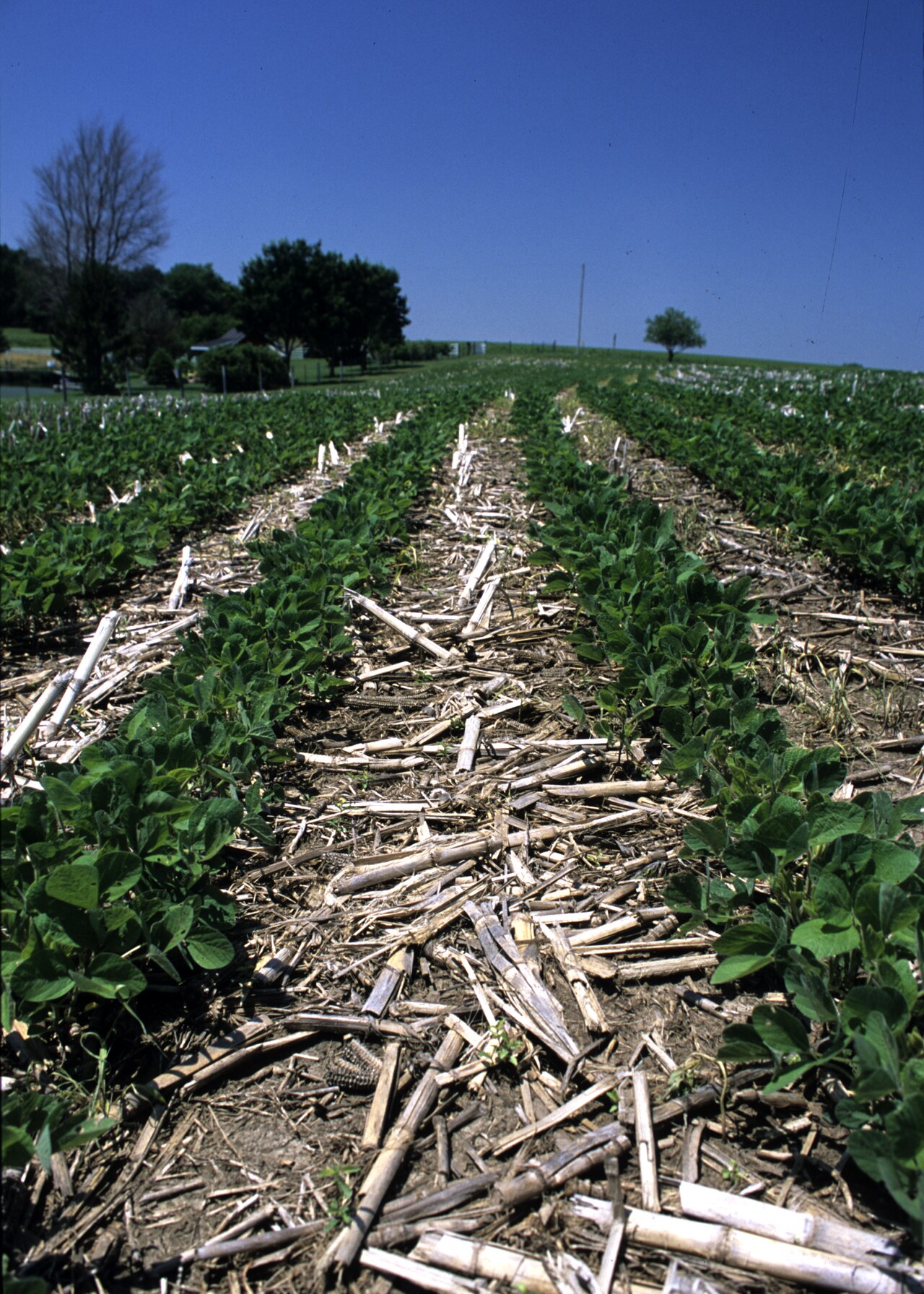
Photo: Lynn Betts, USDA Natural Resources Conservation Service / Wikimedia Commons (public domain), soya beans in a no-till field in the United States, used to illustrate the crop
Source: Farmers Weekly South Africa

Comments
(0)