
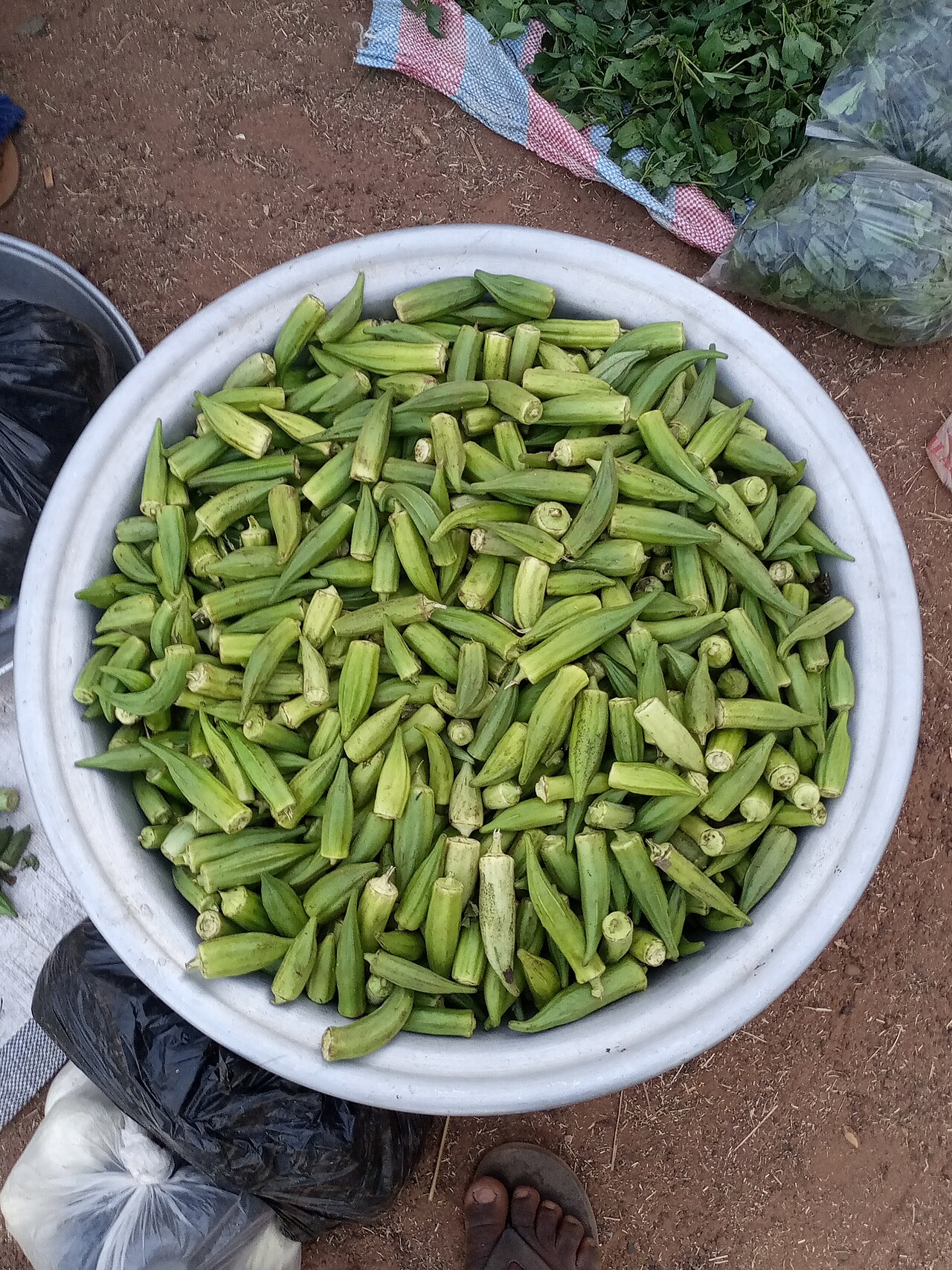
Researchers in Ghana have genetically fingerprinted 81 okra varieties from ten countries and matched the DNA data against two years of field performance, producing a public resource that points breeders to the best parent lines for new, higher-yielding varieties. The study was published in the journal Discover Agriculture in June 2026.
The work was led by Jacinta Adoma Opoku of the West Africa Centre for Crop Improvement (WACCI) at the University of Ghana, with scientists from Ghana's CSIR-Crops Research Institute, the Cocoa Research Institute of Ghana and Uganda's National Crops Resources Research Institute. Okra is a staple vegetable for smallholders across West Africa, South Asia and parts of the Americas, but has had far less investment in modern breeding tools than the major grains.
The 81 accessions came from Ghana, Nigeria, Uganda, Senegal, India, Bangladesh, the Philippines, Thailand, the United States and Vietnam. They were grown at the CSIR-Crops Research Institute station at Fumesua, near Kumasi, in a 9x9 alpha lattice design with three replicate plots each, and scored for 16 measured traits such as fruit yield, plant height, stem girth and days to flowering, plus 10 traits such as stem and pod colour.
The same accessions were genotyped with DArTseq, which reads small DNA differences called SNPs that work as genetic markers. After filtering, the team had 19,951 high-quality markers. Grouping the varieties by field traits and by DNA gave largely the same result, four major clusters, which means breeders can use a cheaper, faster DNA test to judge which varieties are distinct enough to cross instead of relying only on multi-season trials.
The variation is large. Fruit yield ranged from about 504 to 3,139 kilograms per hectare and flowering from 37 to 82 days. Plant height, fruit weight, stem girth and hundred-seed weight showed high heritability and high genetic advance, so selection for them should pay off within a few generations. The authors name JKOH540, Asontem 2, Asontem 4, JA2133 and CRI-OFK as strong candidate parents that combine earlier flowering with higher yield.
This is conventional marker-assisted breeding: no genes are inserted or removed, and the markers only guide which natural varieties are crossed, so it faces none of the regulatory hurdles of genetically modified crops. With Bangladeshi and Indian lines among the accessions, the dataset is open to breeders in South Asia, where okra (bhindi) is grown on several million hectares in India alone.
Photo: Sir Amugi / Wikimedia Commons (CC BY-SA 4.0)
Source: Global Agriculture


Comments
(0)