
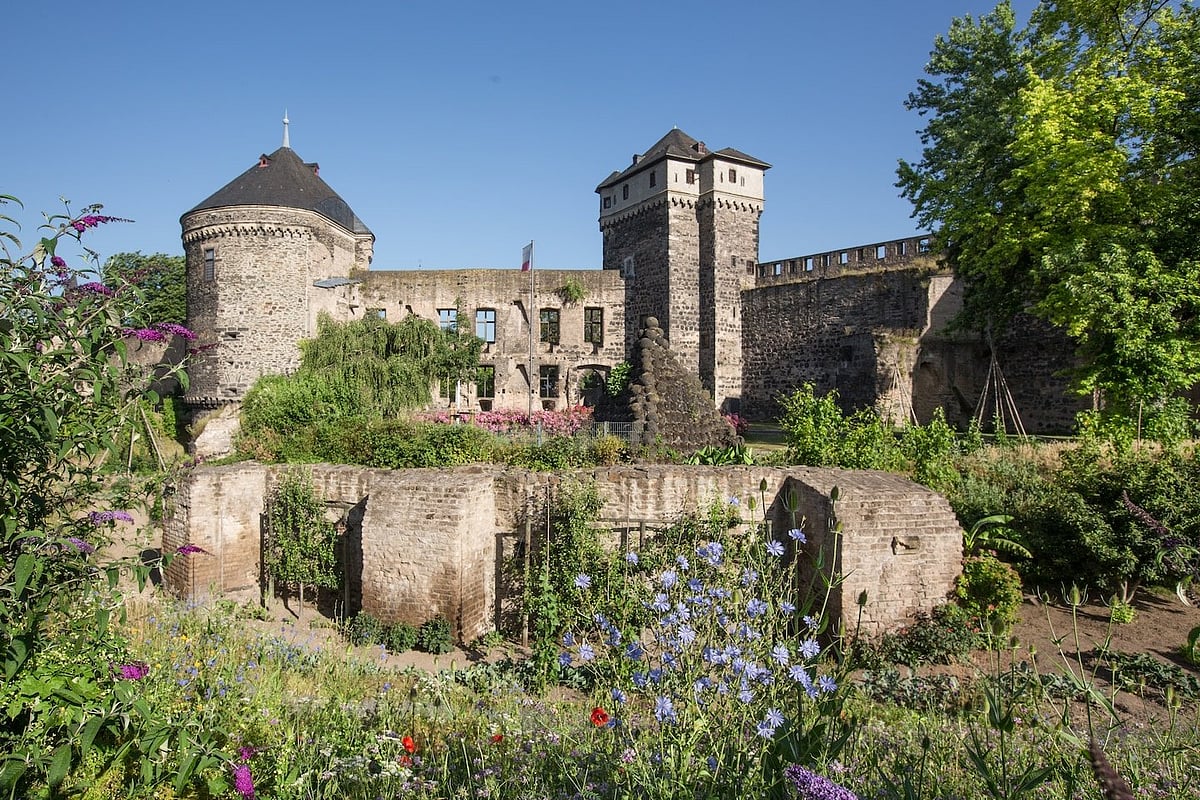
The German town of Andernach has cut down the purely ornamental plants in its parks and squares and put fruit and vegetable beds in their place. Since 2010 the initiative has made it the best-known example of a food-producing town: whatever grows along the streets, residents may pick for free. Its roads, lined with carrots and bright flowers, now draw tourists as well.
Vegetables are grown on 8,000 square metres within the town. On 13 hectares of public land just outside it, poultry, cattle and sheep are kept and a range of crops grown, with the farms looked after by people who had been out of work for a long time. The farm's vegetables, fruit, eggs and meat are sold cheaply in the town's own shop. Heike Boomgaarden, a garden engineer and one of the project's initiators, said the most surprising thing by the fourth year was how actively townspeople took part: at harvest and garden-care time everyone gathers and swaps ideas.
At first residents assumed the street plants and their fruit belonged to the authorities and left them alone, so the council removed the "keep out" signs and put up others inviting people to pick and eat freely. Introducing people to plant diversity was as much the aim as growing food. One year the town grew 400 varieties of tomato so that people could taste the differences in colour, flavour and shape; another year it planted many kinds of bean, among them the spaghetti bean; another was given over to strawberries of every sort. The moat of the town's medieval castle now grows vegetables too.
Unlike the hardy perennials of a conventional park, vegetables do not look after themselves; without regular care and proper planning, the harvest may not come in on time. With little open land in the centre, the town has trained grapevines up house walls, which live long, need little care and fruit heavily. Its newest initiative, the Big Bee Project, is placing hives and bee-friendly plants with local schools, and a mobile school garden built on a trailer introduces children to growing.
Urban farming of this kind is spreading fast in Britain too: Londoners are growing food in the empty space around bus stops, and organisations such as Incredible Edible are building large networks of shared fruit and vegetable growing in cities like Leeds and Bristol. In Bangladesh, reels now show shopkeepers tending data shak, red amaranth, chillies and tomatoes planted in the gaps of road dividers, eating the produce and selling some at market; with little land to farm in the city, many are turning to whatever vacant ground they can find. Prothom Alo compiled its report from The Washington Post and The Telegraph.
Source: Prothom Alo
Comments
(0)