
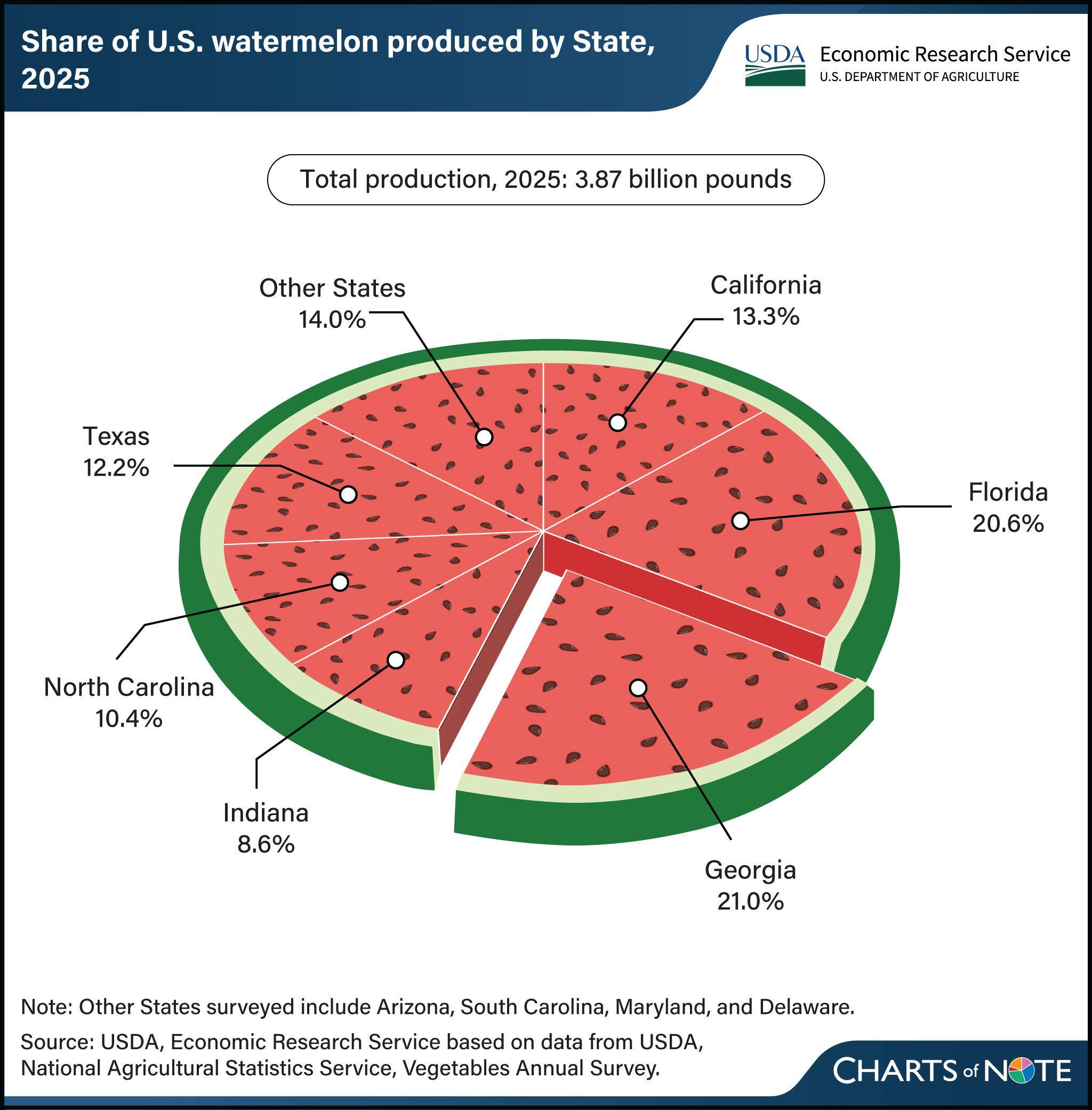
Georgia became the largest watermelon-producing state in the United States in 2025, overtaking Florida, according to a Chart of Note from the US Department of Agriculture's Economic Research Service (ERS).
The country produced 3.87 billion pounds of watermelons in 2025. Georgia grew 813 million pounds, 21.0% of the total, after both its acreage and its yields rose year on year, with yields above average. Florida produced 798 million pounds, or 20.6%. California, Texas, North Carolina and Indiana together harvested another 44.4% of the crop.
Watermelon is grown on more than 100,000 acres across the country. It is a warm-season crop: planting starts in the spring and harvest ends in early fall, with shipments usually peaking around July.
Home production does not cover the whole year. Imports of fresh watermelon peak in May and rise again in October as the domestic season winds down. In 2025 they totalled 1.8 billion pounds, 34% of domestic supply.
Demand is steady. In 2024 watermelon ranked third among fresh fruits in US per capita availability, behind bananas and apples, at just over 15 pounds a person, twice as much as all other melon varieties combined.
For growers the shift is a reminder of how close the two southern states are: a single season's acreage decisions and yields were enough to change the order at the top. The chart is drawn from the ERS Fruit and Tree Nuts Outlook of March 2026.
Source: ers_usda


Comments
(0)