
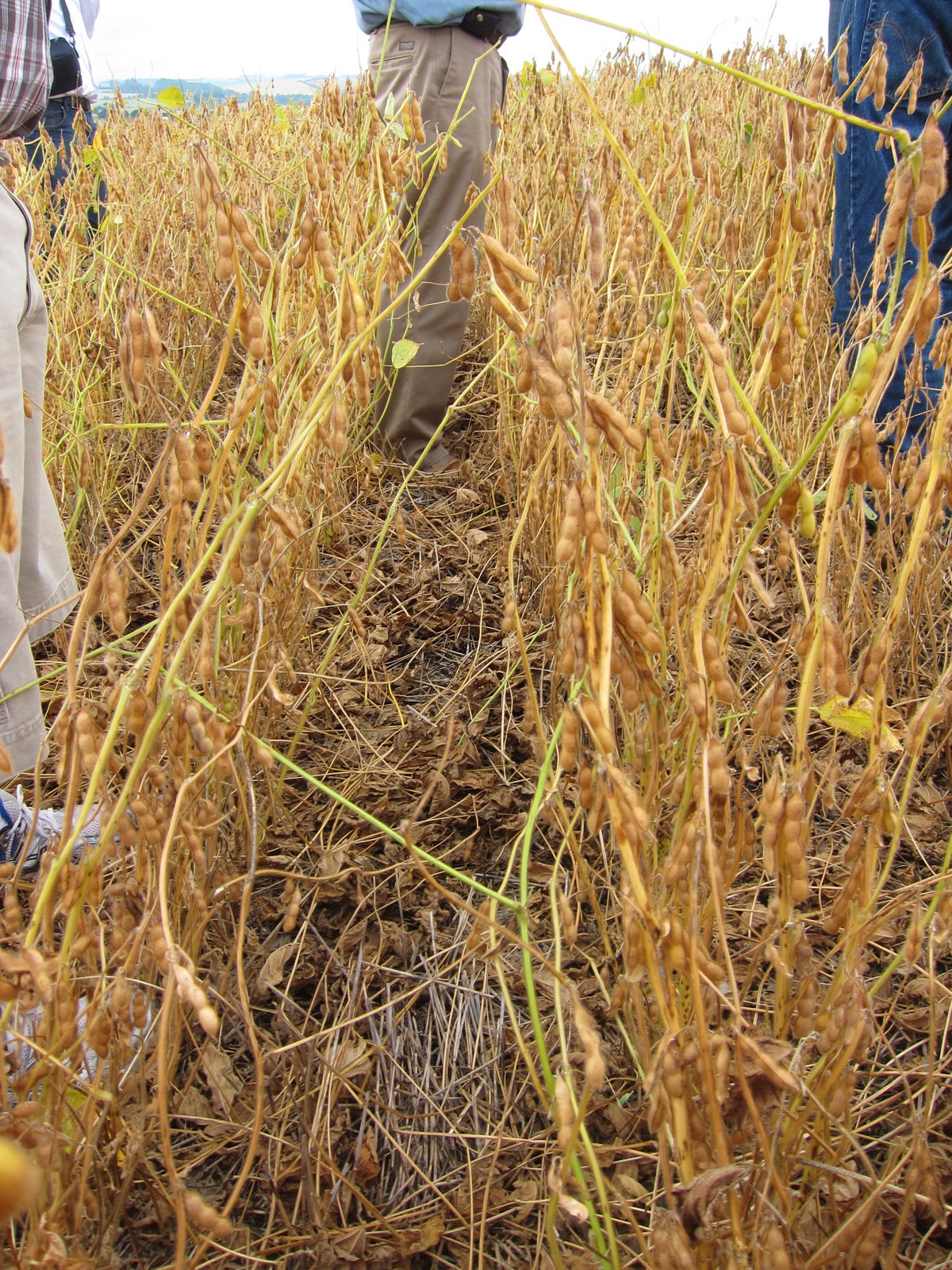
Brazil could double its agricultural production on land it already farms over the next 50 years, largely through biological control of crop diseases and pests, according to Dr Carlos Alberto Labate of the Department of Genetics at the University of Sao Paulo.
The university is involved in Genica, a Brazilian agricultural biotechnology company that marked its 10th anniversary in 2025. Genica identifies strains of bacteria that protect crops against diseases and pests, as a possible alternative to chemical controls. "What we are doing with Genica is to exploit the native microbiota," Labate said.
The need is sharp in the tropics. Brazil's climate lets farmers grow two crops a year on the same field, typically soya followed by second-crop maize, and then graze cattle on the stalks, but with no winter to kill off pests and diseases, crop protection is a constant concern.
Labate, who studied at the University of Sheffield about 40 years ago, said he was taught to prepare soil with huge machines and later understood that this was wrong for tropical farming. "Minimum cultivation is what we have to do to protect this soil," he said, adding that Brazil's output has grown as it learned how to farm in a tropical environment.
Under the sector's slogan of 'intensification not deforestation', he said Brazil farms about 80 million to 100 million hectares and has at least 160 million hectares of low-producing pasture, of which 50 to 70 million hectares could be improved with new regeneration technologies. "Brazil has no limit without going into the Amazon," he said.
Labate acknowledged the challenge of climate change but said Brazil's knowledge of tropical agriculture could also be passed on to Africa, and that new technologies in plant disease management could "double the capacity".
The report is by Breifne O'Brien for Agriland, which visited the university on a trip to Brazil.
Photo: Uaequals42 / Wikimedia Commons (CC BY-SA 3.0)
Source: Agriland

Comments
(0)