
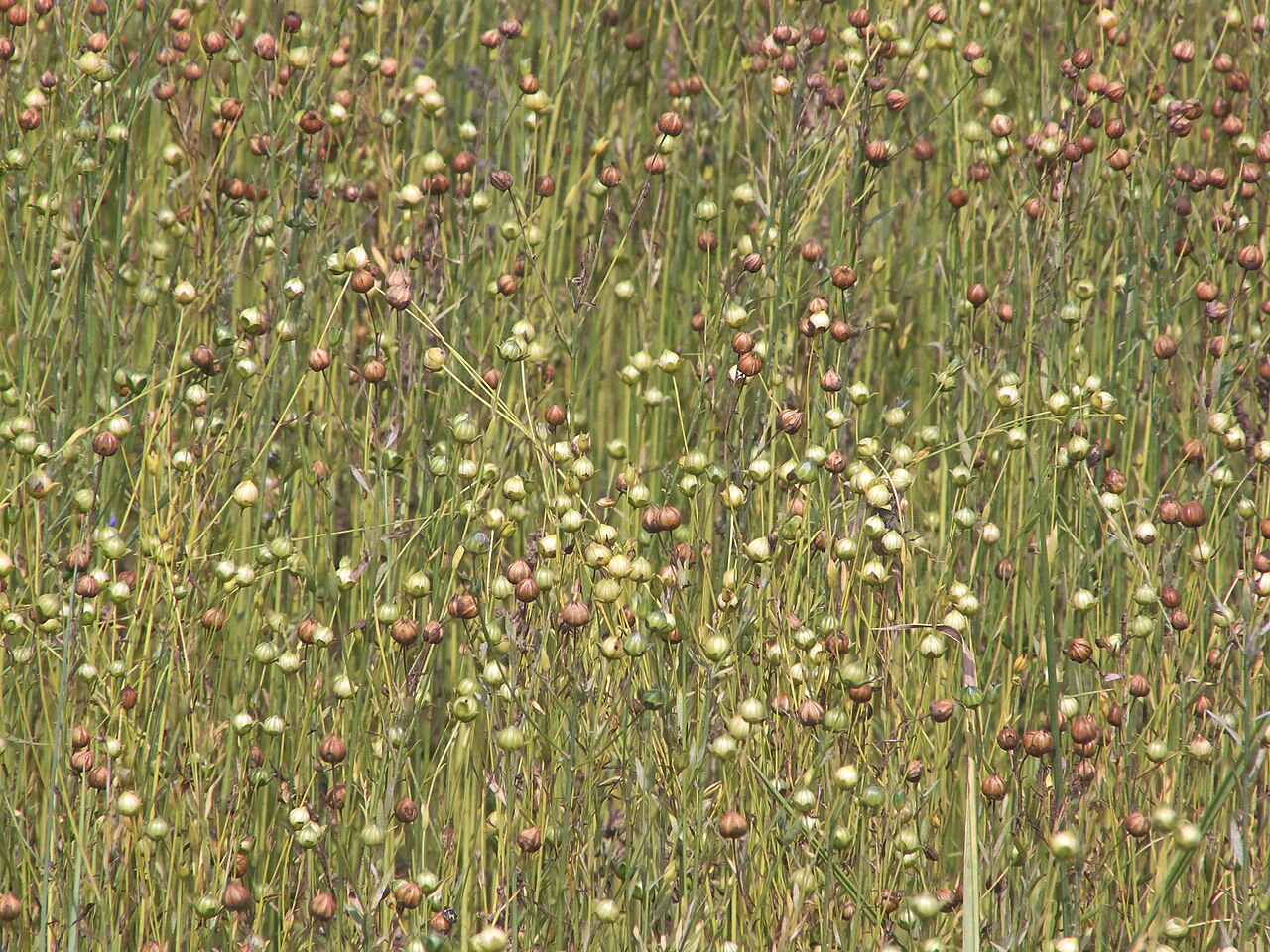
The first sign that pasmo is hurting a flax crop may be the crop falling over, and harvest is a good time to look for it, Ian Epp, extension agronomist with Sask Oilseeds, told a canola and flax disease workshop at the Melfort Research Farm, the Manitoba Co-operator reported.
Pasmo is the most common flax disease, found in roughly 40% of fields on average. It favours humid conditions and tends to appear late in the season. At this time of year the clearest symptom is banding on the stem, alternating dark and light bands. "If you have lodging in your fields, your flax starting to fall over, high humidity, high moisture conditions, you're going to probably see more pasmo," Epp said.
Growers can scout from swathing or pre-harvest decisions through combining, starting in lodged patches where disease pressure tends to be higher. No flax variety offers resistance, so the growing environment matters most. The disease weakens plants, can bring on premature ripening and can make bolls drop after rain or wind. "It all accumulates to yield loss," Epp said. "Late-season yield loss from the disease. That's the biggest impact."
Fungicides are registered for pasmo, but they must go on earlier in the season; by the time stem banding is obvious, the job is to identify the problem rather than control it. Checking stems now can explain a disappointing yield and inform next year's management.
Kara Annand, an independent agronomist with AgGrow Consulting, said this year's wet, stormy and variable weather brought a range of diseases and insects at the same time. Epp said pasmo is not getting worse through resistance; its impact still depends on the weather. "The biggest lead home message I would be is get out and scout for these diseases," he said.
The report was written by William DeKay.
Photo: Rasbak / Wikimedia Commons (CC BY-SA 3.0)
Source: Manitoba Co-operator

Comments
(0)