
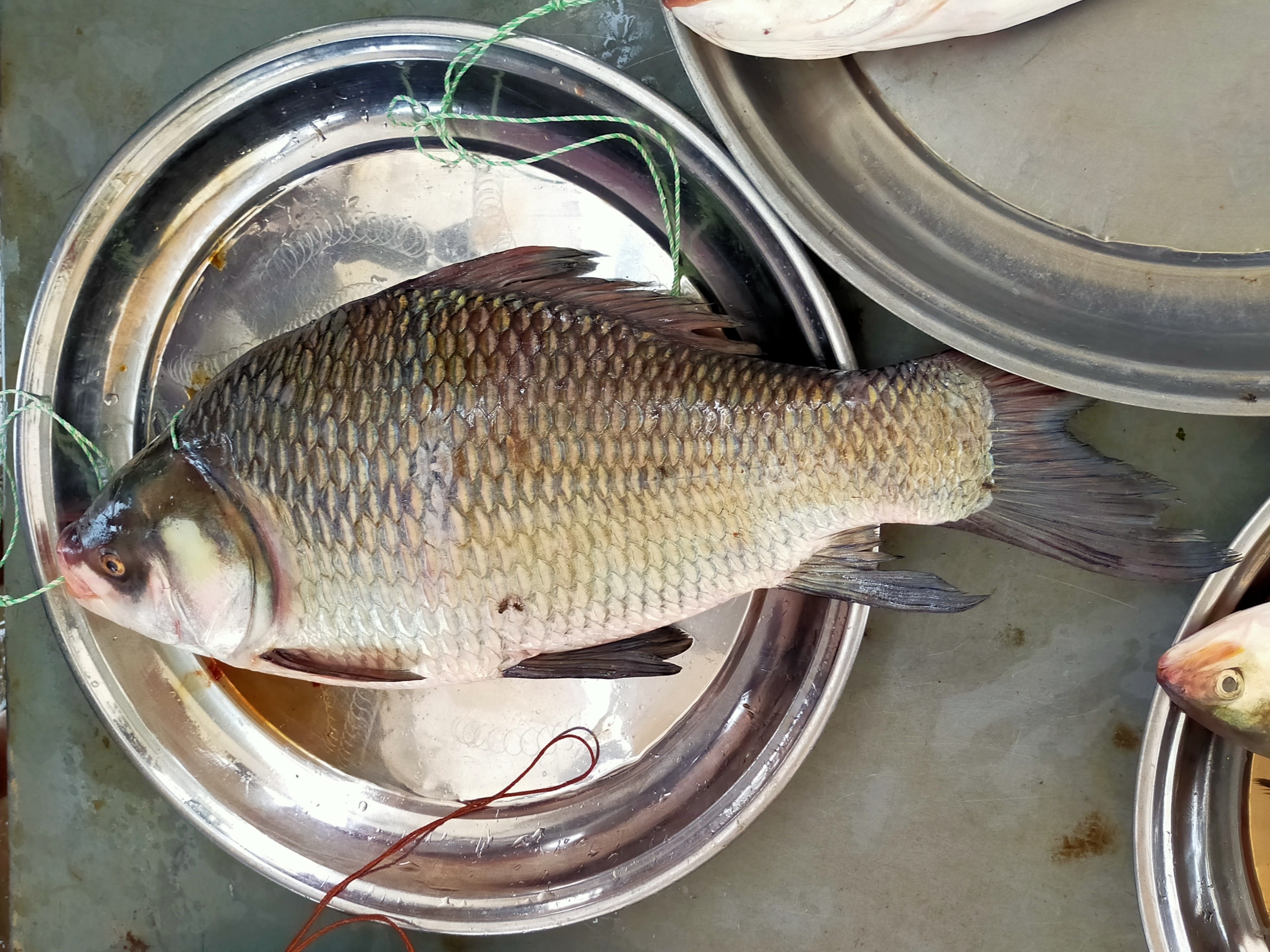
On 12 April 2026 the lifestyle desk of the Bengali news site Jagonews24 published a recipe for fish khoya polao (machher khoya polao), a rich rice dish meant for special days and for entertaining guests. Pieces of catla, one of the carps farmed in ponds across Bangladesh, are rubbed with salt, turmeric, chilli powder and lemon juice and fried in ghee. Basmati rice is mixed with ginger and green chilli pastes, ground spices, saffron-soaked milk, nuts, raisins and khoya kheer, fried in the same ghee, cooked in measured hot water, and finished with the fish laid over it and a scattering of fried onion.
The writers described the dish as regal and fragrant: soft, separate grains of polao paired with spice-coated fish, a dish that can easily become the centrepiece of a family occasion. The quantities and steps below are those of the original recipe. The sections that follow explain what the fish, the rice, the milk product and the spices are, where they come from, what the official food tables say about them, and the food-safety basics that apply to any fish dish.
The recipe as published
Ingredients
- Basmati rice: 300 g
- Catla: 6 pieces
- Ginger paste: 1 tablespoon
- Green chilli paste: 1 tablespoon
- Powdered khoya kheer: 3-4 tablespoons
- Turmeric powder: 1 teaspoon
- Chilli powder: 1 tablespoon
- Cashew nuts: 10 g
- Raisins: 10 g
- Almonds: 10 g
- Bay leaves: 3-4
- Shahi jeera: 1 teaspoon
- Black cardamom powder: half a teaspoon
- Mace powder: 1 pinch
- Nutmeg powder: 1 pinch
- Lemon juice: 2 tablespoons
- Ghee: 4-5 tablespoons
- Salt and sugar to taste
- Milk with saffron soaked in it: 3-4 tablespoons
- Beresta (fried onion): 3-4 tablespoons
Method
- Rub the pieces of catla with salt, turmeric, chilli powder and lemon juice, fry them in ghee and set them aside.
- Take rice that has been washed and drained in advance and mix it well with the ginger paste, green chilli paste, black cardamom powder, nutmeg powder, mace powder, saffron milk, chopped cashew nuts, raisins and khoya kheer.
- In the ghee left in the pan from frying the fish, temper the bay leaves and shahi jeera.
- Add the mixed rice and fry it for a while over a medium flame.
- Pour in hot water exactly twice the quantity of the rice and add salt to taste. Lower the flame and cover the pan.
- When the rice is half cooked, arrange the fish on top, cover the pan again and cook for a while longer.
- When the rice is fully cooked, scatter fried onion (beresta) over it and serve.
The ingredient list also names almonds and sugar, but the method does not say at which stage they go in, and the original gives no number of servings or cooking times; those are left to the cook's judgement.
Polao in Bangladesh's kitchens
Banglapedia, the national encyclopaedia of Bangladesh, explains that the country's rivers, floodplains and rainfall made rice growing and fishing the chief occupations of its people through the ages, so that rice and fish figure prominently in everyday meals. Fish, it notes, is generally eaten cooked as a curry or fried with spices. Polao belongs to another register of the same cuisine. In Banglapedia's account of food habits, a bhoj, or formal feast, brings out elaborate dishes, and Muslim hosts take pride in offering rich Mughlai dishes such as kabab, chicken roast, mutton rezala, biryani or plain polao, served with borhani, a spiced yoghurt drink. The dessert at such meals is often zarda, saffron-coloured sweetened rice, or firni-payesh, a rice pudding.
Banglapedia's entry on rice describes polao, morog polao, biriani and tehari as special dishes of aromatic small grains cooked with chicken, beef or mutton, butter oil (ghee) and spices. Fish khoya polao brings the two everyday staples, rice and fish, into that festive register: the fish is cooked as it would be for a fry, with turmeric, chilli and salt, while the rice is enriched with ghee, dried milk, nuts and the warm spices used in Mughlai cooking.
The dish belongs to a wide family. Pilaf, pilau or pulao is the general name for rice cooked in stock or water with spices and other ingredients by a method that keeps the grains from sticking together. The English word pilau came from Persian by way of Turkish. According to food historians, such methods of cooking rice spread during the Abbasid Caliphate across a territory reaching from Spain to Afghanistan, and the South Asian pulao and biryani evolved from them. The technique in this recipe follows the classic pattern: the raw rice is first fried in fat with whole spices, then cooked in a fixed measure of hot water in a covered pan over low heat until the grains are tender and separate.
Catla, the fish at the heart of the dish
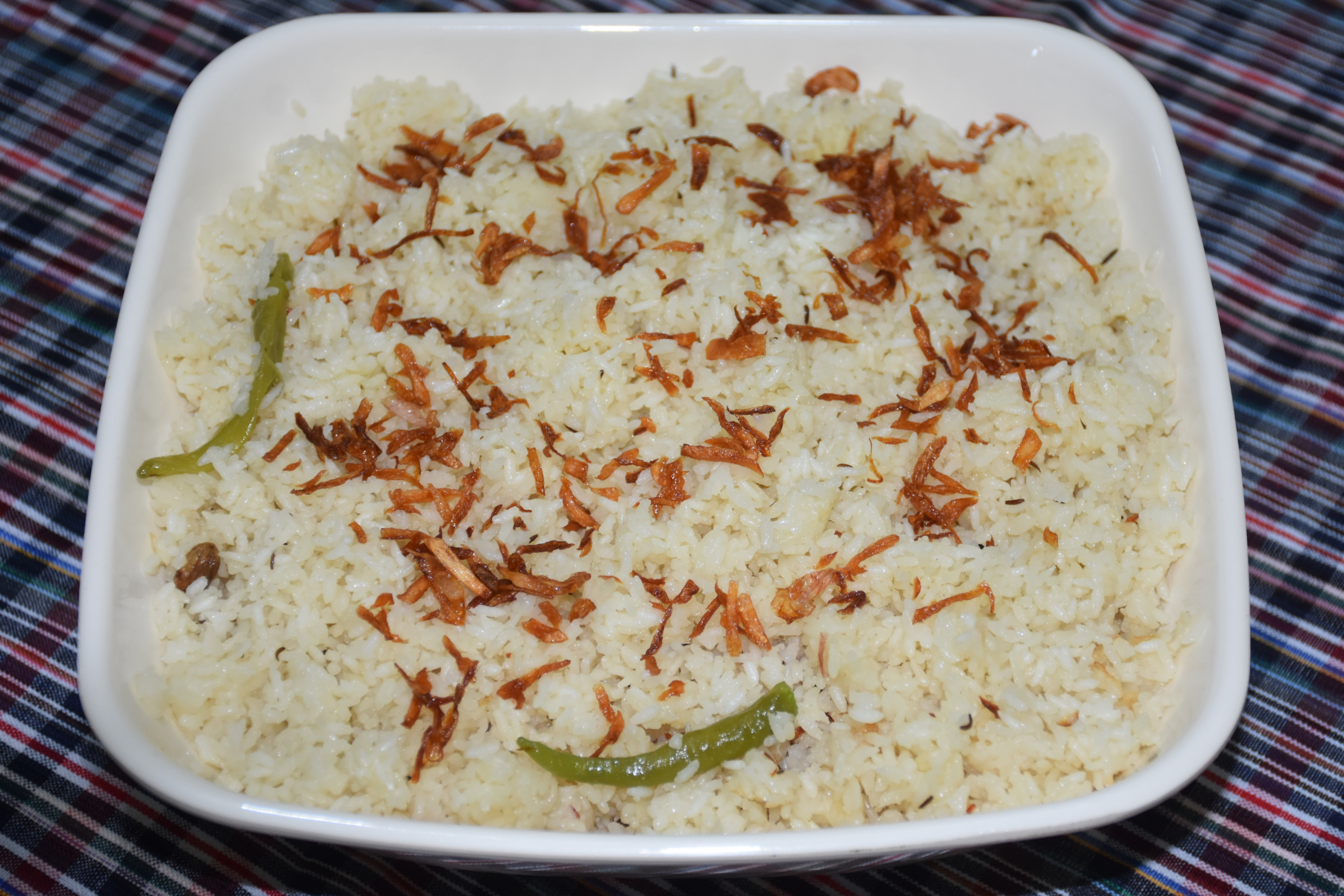
Catla, known in Bengali as katla or katal, is a freshwater carp of the family Cyprinidae. The fact sheet of the Food and Agriculture Organization of the United Nations (FAO) on cultured aquatic species lists it as Catla catla (Hamilton, 1822); some recent fish catalogues place it in the genus Labeo as Labeo catla. Its body is short and deep, its head very large, and its wide, upturned mouth has a prominent protruding lower jaw. The scales are large, the back and flanks greyish and the underside silvery-white. Banglapedia lists catla among the carps commonly found in the freshwaters of Bangladesh, with a usual length of 38 to 46 cm and a wide distribution across the country.
FAO describes catla as native to the river systems of northern India, the Indus plain and the adjoining hills of Pakistan, Bangladesh, Nepal and Myanmar. It is a surface and mid-water feeder. The young fry eat mainly zooplankton such as rotifers and cladocerans; adults strain zooplankton, chiefly small crustaceans, rotifers, insects and protozoa, along with a considerable share of algae and plant material, through their long, fine gill rakers. The fish grows best in water between 25 and 32 degrees Celsius and tolerates a minimum of about 14 degrees.
Catla reaches maturity in its second year and migrates upstream to spawn in the monsoon. In north-eastern India and Bangladesh, FAO notes, the spawning season coincides with the south-west monsoon and runs from May to August, with males and females breeding in shallow margins of rivers. The eggs and young are carried downstream, where seed collectors catch them. Because the fish needs a riverine environment to spawn, it does not breed naturally in ponds even when mature, so hatcheries induce spawning with hormones. Of the three Indian major carps, catla, rohu (rui) and mrigal, it is the most difficult to breed, because it needs precise conditions. It is also the fastest-growing of the three: under normal conditions catla reaches 1 to 1.2 kg in its first year, against 700 to 800 g for rohu and 600 to 700 g for mrigal.
From pond to market
In Bangladesh catla is above all a pond fish. Banglapedia describes the common practice in ponds, lakes and ditches as the culture of the Indian major carps, catla, rui and mrigal, together with indigenous small fish such as mola, punti and kholisa, while exotic carps such as silver carp, common carp and grass carp, and catfish, tilapia and prawns, are also stocked to raise production per unit of water. Fish culture in the country gained momentum after induced breeding of carps with pituitary extract was introduced in 1967. FAO's fact sheet adds that in Bangladesh the three Indian major carps form the principal species of polyculture, with silver carp, grass carp, common carp, orange-fin labeo (kalibaus), tilapia and several minor carps stocked alongside.
Each species fills a layer of the pond. Catla is the surface feeder of the mix and, in six-species composite culture, shares the upper feeding zone with silver carp. In India, FAO notes, catla usually makes up 30 to 35 per cent of the fish stocked in three-species systems and 15 to 20 per cent in six-species systems. Carp polyculture usually yields 3 to 5 tonnes per hectare a year, with catla contributing about 20 to 30 per cent of the harvest. Consumers generally prefer catla of 1 to 2 kg, so farmers often harvest it at the end of the culture period. The fish is sold mostly fresh in local markets, and large farms pack it with crushed ice for transport.
Catla is part of a national fish supply that has grown steadily. The Daily Star reported on 1 January 2025 that Bangladesh produced 50.2 lakh tonnes of fish in 2023-24 and that average fish intake had risen to 67.8 grams per person a day, above the daily requirement of 60 grams. Citing FAO's report The State of World Fisheries and Aquaculture 2024, the paper said Bangladesh had moved up from third to second place in the world in freshwater fish production, with 13.22 lakh tonnes, or 11.7 per cent of global production. Fisheries then accounted for 2.43 per cent of the country's gross domestic product, and the government's target was 65 lakh tonnes of fish by 2030.
For a dish in which the fish is the star, freshness matters. The US Food and Drug Administration's guidance on buying fish says fresh fish should smell fresh and mild, not fishy, sour or ammonia-like; the eyes should be clear and shiny; whole fish should have firm flesh and red gills; and the flesh should spring back when pressed. Fish should go on ice or into the refrigerator soon after purchase, and fish to be used within two days should be kept in a clean refrigerator at 40 degrees Fahrenheit or below.
What catla brings to the plate
The Food Composition Table for Bangladesh, compiled by the Institute of Nutrition and Food Science of the University of Dhaka and published in June 2013 with the support of the Ministry of Food, FAO and USAID, gives the nutrient content of foods eaten in the country. For raw catla it lists, per 100 grams of the edible portion, 103 kilocalories, 76.7 grams of water, 19.9 grams of protein and 2.6 grams of fat, with no carbohydrate. The table's edible-portion coefficient for catla is 0.59, the share of the fish as bought that is eaten once the head, bones, scales and other inedible parts are removed. The table also gives figures for mixed farmed carp (catla, mrigal and rohu) by cut: 100 grams of the raw back (dorsal) portion with skin holds 104 kilocalories, 19.7 grams of protein and 2.8 grams of fat, while the same weight of the belly (ventral) portion holds 130 kilocalories, 21.4 grams of protein and 4.9 grams of fat.
The richer parts of this recipe come from the dairy and the nuts. In the same table, cow's ghee is 99.8 per cent fat and provides 898 kilocalories per 100 grams. The World Health Organization's fact sheet on healthy diet, last updated on 26 January 2026, says unsaturated fats, found in fish, nuts and vegetable oils, are preferable to saturated fats, which it lists as found in fatty meat, butter, palm and coconut oil, cream, cheese, ghee and lard.
The rice: basmati and Bangladesh's own aromatic grains
The recipe calls for basmati, a long, slender-grained aromatic rice that originates in the Indian subcontinent, mainly in the Punjab, Haryana and Sindh regions of India and Pakistan. Its earliest known mention is in the Punjabi poet Waris Shah's epic Heer Ranjha, composed in 1766. Long grains that stay separate after cooking suit a polao in which the rice is fried first and then cooked in exactly twice its volume of water, as this recipe directs.
Bangladesh has its own aromatic rices, and they are the traditional grains of the country's polao. The Business Standard reported on 8 August 2025 that local varieties such as kalijira, chinigura and kataribhog rule the special menus of Bangladeshi homes, ceremonies and high-end eateries. Small-grain aromatic rice, the type mostly used for polao, is the more widely cultivated, while kataribhog, a long-grain aromatic rice, is mostly used for biryani at restaurants and wedding receptions. According to Ministry of Agriculture data cited in that report, the country produced 10.23 lakh tonnes of aromatic rice of both kinds in the 2023-24 fiscal year, up from 5.79 lakh tonnes in 2017-18.
The same report explained that small-grain aromatic rice had been grown only in the Aman season and that the widely grown variety BRRI dhan34 yields about 3.5 tonnes per hectare. It added that the National Seed Board, at its 114th meeting, had approved ACI dhan2, an aromatic small-grain variety for the Boro season with a yield potential of up to 7 tonnes per hectare and a growing period of 135 to 140 days. Earlier, in 2008, the Bangladesh Rice Research Institute (BRRI) released Bangla Moti, BRRI dhan50, a long-grain aromatic rice for the Boro season, as a letter in The Financial Express recalled in September 2023. Cooks who prefer a local grain can therefore choose between long-grain and small-grain aromatic rice; the original recipe specifies basmati.
Khoya kheer and ghee
Khoya kheer, also written khoa or khowa and in some regions called mawa, is milk boiled down until most of its water is gone. FAO's study The technology of traditional milk products in developing countries describes khoa as a product obtained from cow, buffalo or mixed milk by thermal evaporation to 65 to 70 per cent solids in an open pan, which normally needs about a five-fold concentration of the milk. It has been prepared for centuries in the subcontinent as the base of many sweets, and making it was the easiest way of preserving rural milk in the season of plenty. This recipe uses powdered khoya kheer, three to four tablespoons of it, mixed into the raw rice with the saffron milk, so that the dried milk melts into the grains as they cook.
Banglapedia notes a difference in the region's sweet-making: while the sweets of northern India and Pakistan are largely made from thickened milk (ksir), most Bengali sweetmeats are made from chhana, curdled milk. Khoya still has its place in Bangladesh; Banglapedia mentions the granules of mawa, dried milk, sprinkled over the chamcham of Porabari in Tangail.
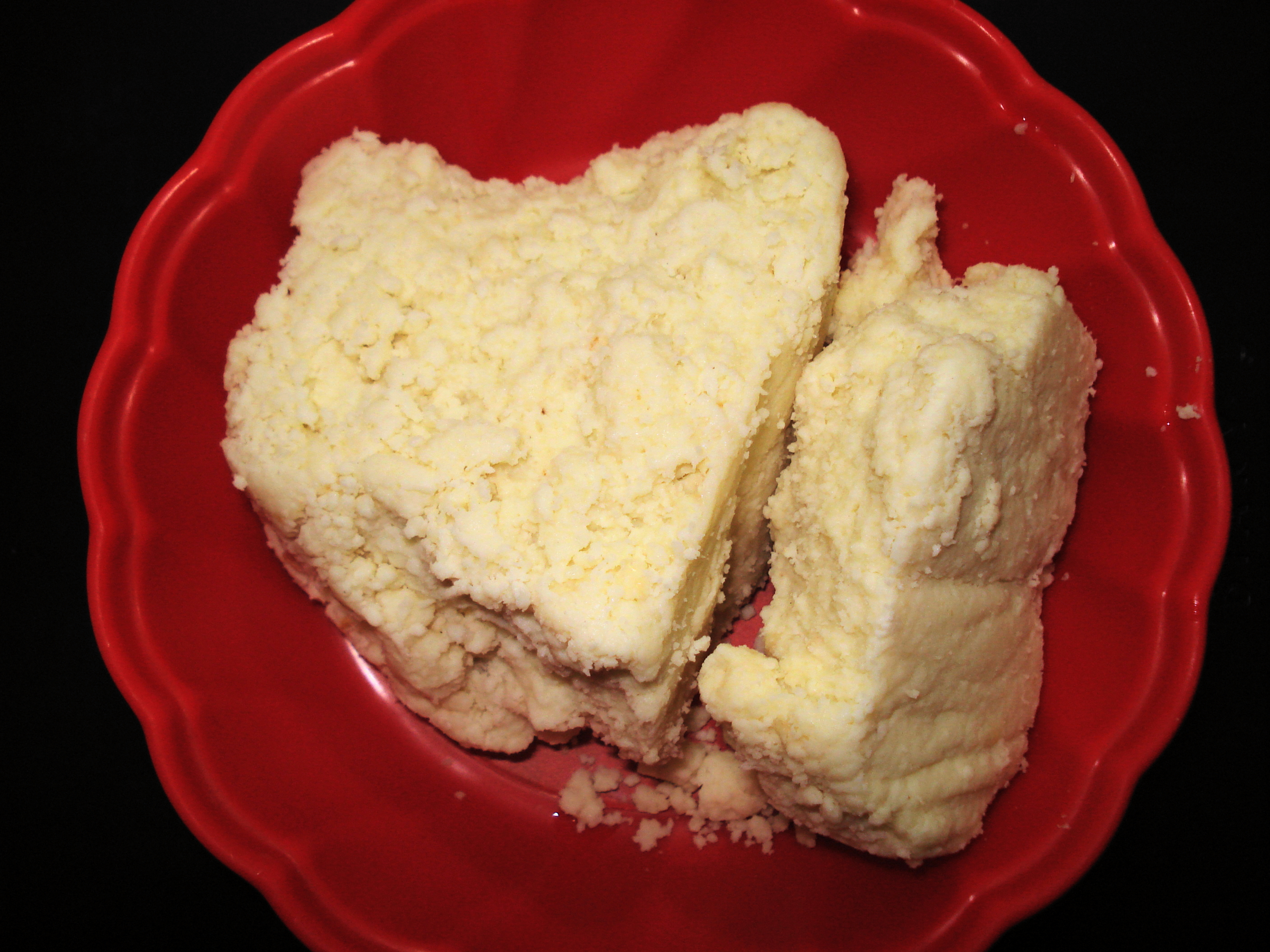
Ghee is the fat of the dish: the fish is fried in it and the rice is fried in what remains. Banglapedia describes ghee, or butter oil, as clarified butterfat that may contain about 99.7 per cent milk fat, made from cow or buffalo milk, and widely used in Bangladesh to prepare polao, biriani, roasts and korma. It is made by simmering butter, skimming off impurities and keeping the clear fat while the solids settle; its nutty flavour and high smoke point allow frying at high heat without burning.
The spices and what they are
Banglapedia defines a spice as an aromatic plant, plant part or plant product used to flavour food, its value lying in its aroma, the essential oil. Ginger, turmeric, chilli and onion, all used in this recipe, are among the spices commonly cultivated in Bangladesh, while a large number of others are imported from India, Malaysia and Indonesia. The warm spices of this polao belong to the second group.
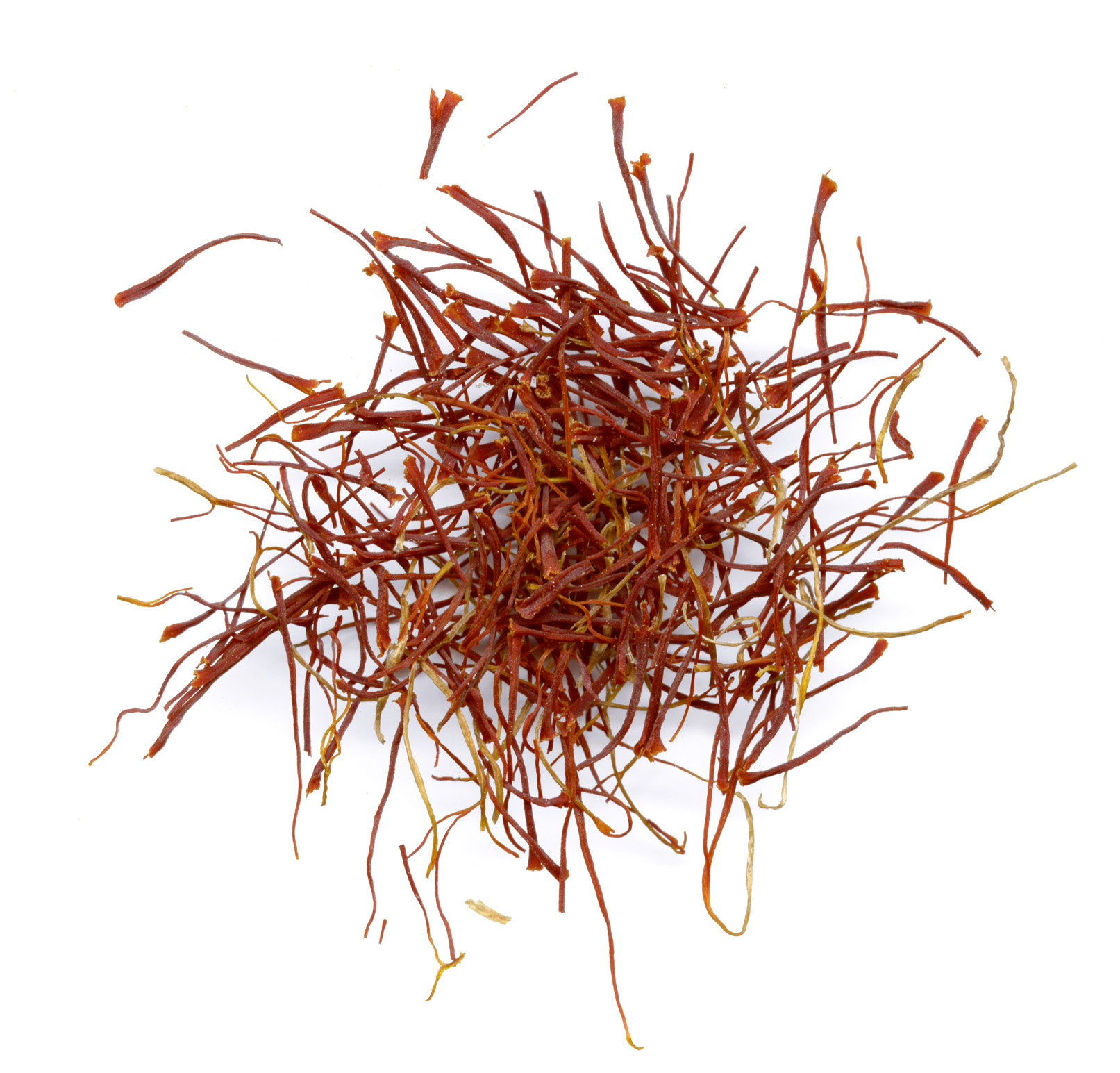
- Saffron (kesar or jafran): the dried crimson stigmas and styles of the saffron crocus, Crocus sativus. Its colour comes from the pigment crocin, its taste from picrocrocin and its aroma from safranal. It originated in Iran and spread to Kashmir and the Mediterranean, and its flowers are harvested by hand. The recipe soaks it in milk so that the colour and aroma spread evenly through the rice.
- Nutmeg (jaiphal): Banglapedia describes it as the dried ripe seed of the evergreen tree Myristica fragrans, native to the Molucca Islands of Indonesia, and notes that it is highly prized in Bangladesh for flavouring polao, biriyani and tehari.
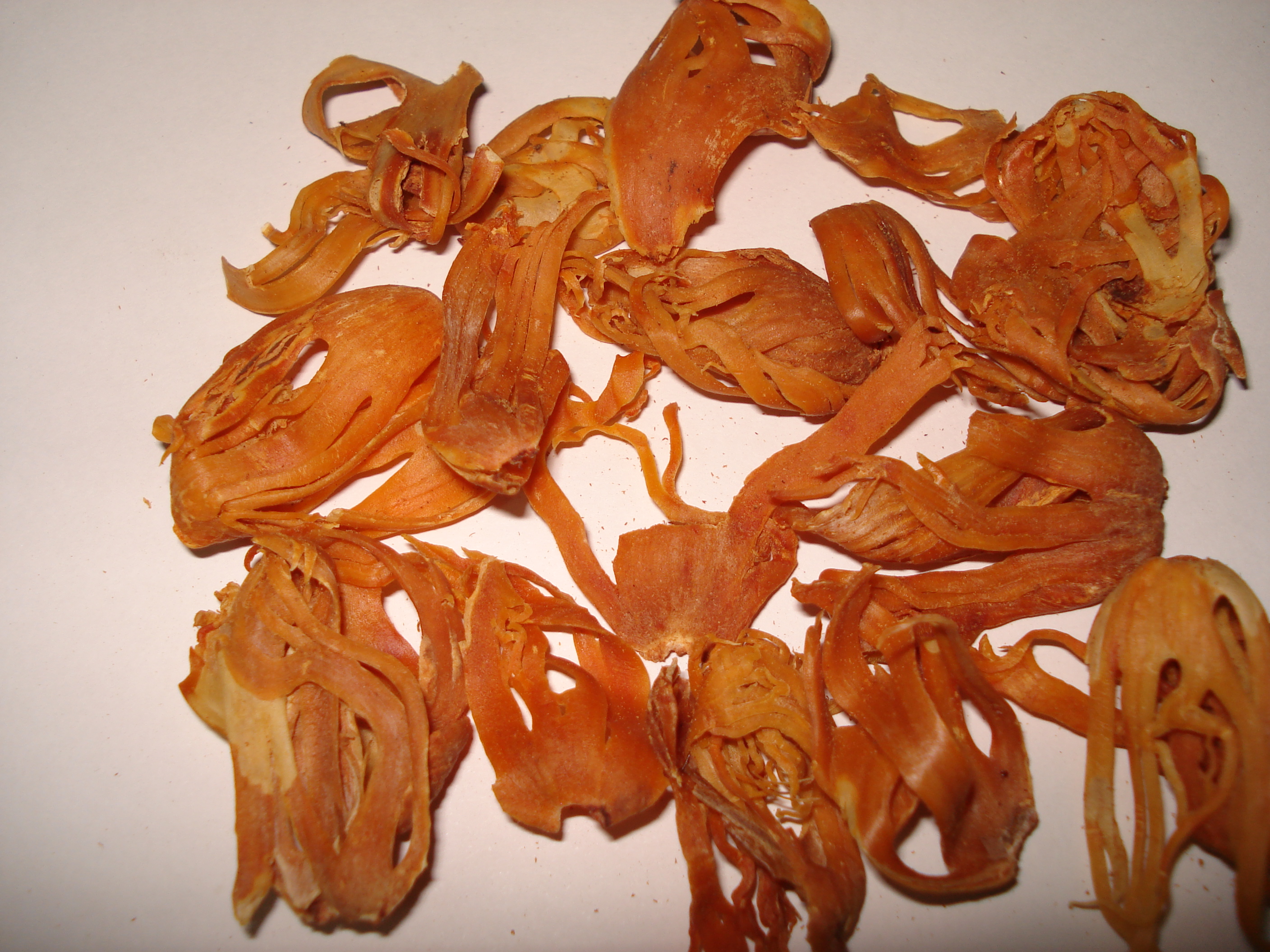
- Mace (joyitri): the same tree gives a second spice, made from the red, net-like covering (aril) around the nutmeg seed. The aril is flattened and dried for 10 to 14 days, turning from crimson to pale yellow, orange or tan; its flavour is like nutmeg's but more delicate. The recipe uses only a pinch of each.
- Black cardamom (boro elach): the seed pods of Amomum subulatum, a plant of the ginger family. Its smoky, camphor-like flavour comes from the traditional drying of the pods over open flames, and unlike green cardamom it is rarely used in sweet dishes.
- Shahi jeera: the fruits of Elwendia persica (also known as Bunium persicum), a relative of cumin with a smoky, earthy taste, used in northern India, Pakistan, Bangladesh, Afghanistan, Tajikistan and Iran. It is not the same as kalojira, which in Bengali refers to nigella seed. Its seeds are valued whole, since grinding reduces the flavour, which is why the recipe fries them whole in ghee.
- Bay leaf (tejpata): the dried leaf of Cinnamomum tamala, a small tree of the laurel family. Banglapedia notes that it is one of the most common spices in Bangladeshi cooking and is grown commercially in the uplands and hillocks of Sylhet, as well as in orchards and homestead gardens.
Banglapedia also notes that the popular garam masala, a combination of clove, black pepper, cinnamon and cardamom, is used mostly in special meat curries and rice preparations. This recipe takes a different route: it builds its aroma from black cardamom, nutmeg, mace and saffron mixed into the rice, and from bay leaf and shahi jeera fried in ghee, while the fish itself carries only turmeric, chilli, salt and lemon. Cashew nuts and raisins, which Banglapedia lists among the flavourings and decorations of Bengali sweets, give the polao its festive richness.
Cooking and serving it safely
The World Health Organization's Five Keys to Safer Food, published in 2006, sum up home food hygiene in five messages: keep clean; separate raw and cooked food; cook thoroughly; keep food at safe temperatures; and use safe water and raw materials. In this recipe the raw fish is handled first, so hands, knives and boards that touched it should be washed before they touch the rice, the nuts or the cooked dish.
On cooking, the FDA advises that most seafood be cooked to an internal temperature of 145 degrees Fahrenheit; without a thermometer, fish is done when the flesh separates easily with a fork. In this recipe the fish is fried first and then steamed again on the rice, but large pieces of catla should still be checked at the thickest point. WHO's manual describes the range of 5 to 60 degrees Celsius as the temperature zone in which microorganisms grow and multiply very fast; leftovers should be stored in a cool place within two hours of cooking and reheated until piping hot throughout.
A festive polao is rich by design. WHO's healthy diet fact sheet advises that no more than 10 per cent of total energy intake come from saturated fat, and suggests replacing butter, lard and ghee with oils rich in polyunsaturated fat as one way to reduce it. It also advises adults to keep salt below 5 grams a day and to limit free sugars, including sugar added by the cook, to less than 10 per cent of total energy intake. The salt and sugar in this recipe are left to taste, so they can be kept low. People with heart disease, diabetes, high blood pressure or a prescribed diet should ask their doctor how dishes rich in ghee fit into their meals.
Photo: Salim Khandoker / Wikimedia Commons (CC BY-SA 4.0)
Sources: Jagonews24, Banglapedia, Food and Agriculture Organization of the United Nations (FAO), Institute of Nutrition and Food Science, University of Dhaka (Food Composition Table for Bangladesh), The Daily Star, The Business Standard, The Financial Express, World Health Organization (WHO), US Food and Drug Administration (FDA), Wikipedia

Comments
(0)