
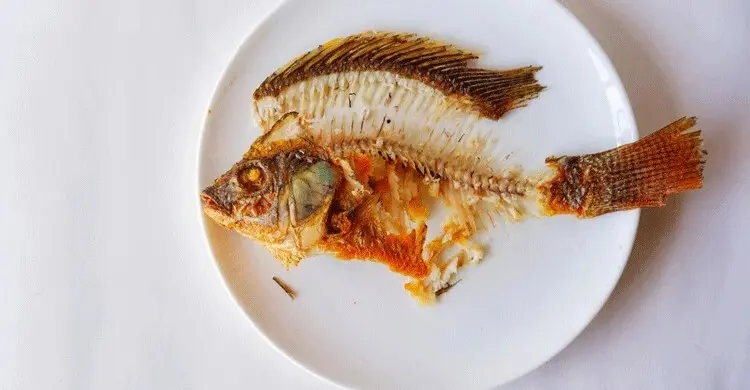
Fish has an important place in the Bengali diet. Besides the soft flesh, many people like to chew the bones of small fish, and sometimes people swallow fish bones by accident. Many wonder whether fish bones do any harm in the stomach, or whether they have some benefits too.
According to experts, the soft bones of small fish contain certain minerals that can be good for the body. But not all fish bones are safe to eat, so it is important to know the risks as well as the benefits.
What fish bones contain
Fish bones mainly contain calcium, phosphorus, sodium and collagen-type substances, which play an important role in keeping bones and teeth strong. Chewing the soft bones of small fish well in particular can give the body some extra calcium.
Research has found that calcium powder made from fish bones is also used as a food supplement, and it can help make up a calcium deficiency.
Enough calcium and phosphorus help maintain bone density, so eating the soft bones of small fish regularly and safely can be good for bone and dental health. Experts believe it may help lower the risk of age-related bone loss or osteoporosis, but it is not a substitute for treatment.
Research notes that although fish bones are usually thrown away, they contain high levels of minerals, so they could be considered a promising source of natural calcium.
Besides calcium, fish also contains zinc, iron and other essential minerals that help run various important body functions. According to nutritionists, fish cooked in a light curry often retains its nutrients well.
Risks to watch
Although fish bones contain useful substances, care is needed when eating them. Large or hard bones can accidentally get stuck in the throat, which may need emergency treatment. Before chewing a bone, make sure it is soft and can be chewed properly. Extra care is needed for children and older people.
Experts warn against eating the bones of preserved fish or fish kept in cold storage for a long time. The quality of fish stored for long periods can fall, and if it is not stored properly there is a risk of germs growing, which can cause digestive problems or foodborne illness.
Care is also needed with low-quality or chemically preserved fish in the market, so buying fresh fish from a trusted source is always the safest option.
Eating fish bones can be beneficial, but they must be small and soft and chewed safely. If you swallow a large bone by mistake or it gets stuck in your throat, seek a doctor's advice quickly rather than trying to force it down with home remedies.
The information is drawn from Healthline and NDTV.
Source: Jagonews24. First published in Bengali on The Agro News.


Comments
(0)