
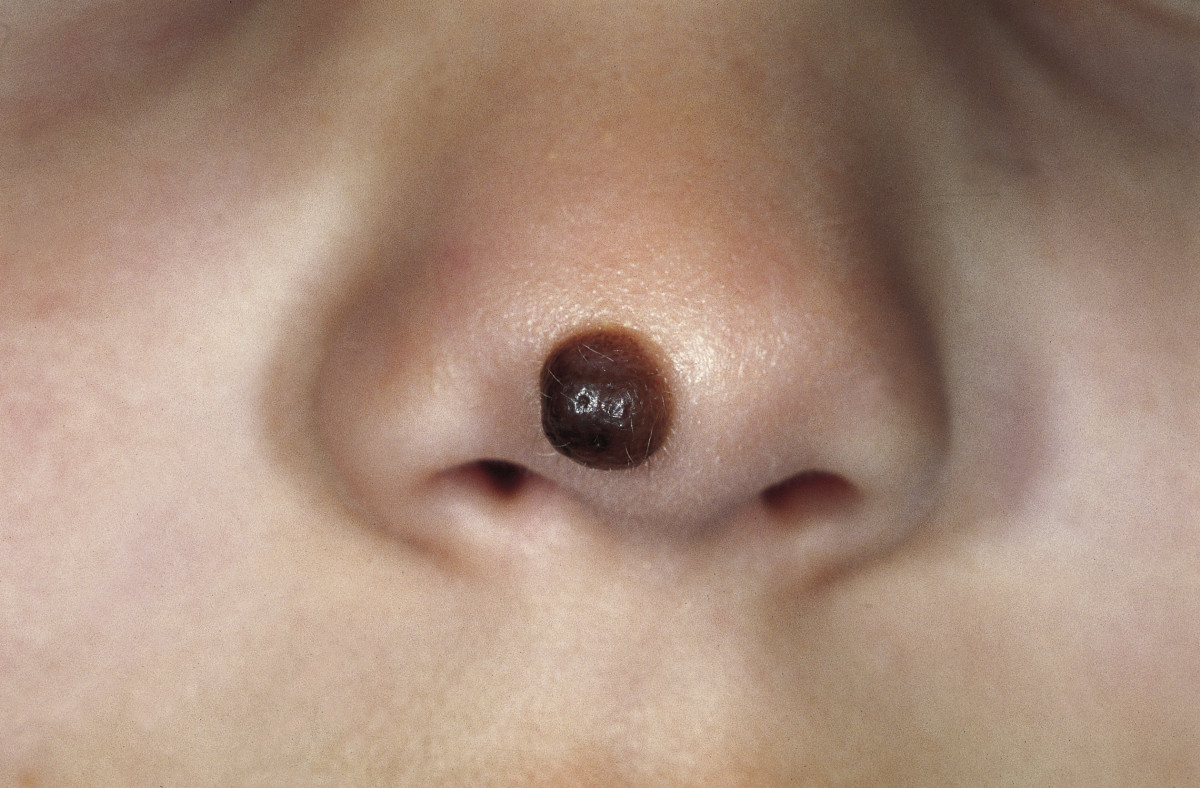
A baby may be born with one or more moles, or with none. Moles multiplying in childhood and adolescence is perfectly normal, but new ones can appear at any age. Rafia Alam wrote about it in Prothom Alo after speaking to Prof Dr Syed Afzalul Karim, former head of dermatology at Holy Family Medical College and Hospital.
With age a mole can fade, and some disappear. During pregnancy existing moles may darken. All of this is normal.
Scientists still do not know exactly why moles increase with age. Exposure to sunlight is known to raise the number in some people, and genes may play a part: a parent with many moles can pass the trait on to a child.
More moles alone do no harm. A mole may be slightly raised or have a hair growing from it without cause for fear. If one looks unsightly it can be removed under a specialist's care, but removal is a personal choice, not a medical necessity.
Some signs call for a doctor quickly: an irregular border; a change in the size, shape or overall colour of an existing mole; more than one colour in a mole; pain, itching or bleeding; swelling and redness; peeling skin or a sore at the spot; or any unusual mark that does not heal within a few weeks.
Such signs do not mean cancer, so there is no need to panic. A doctor can confirm the diagnosis with dermoscopy or a biopsy if needed. Whatever the problem, prompt and correct treatment usually cures it easily.
Photo: M. Sand et al. / Wikimedia Commons (CC BY 2.0)
Source: Prothom Alo

Comments
(0)