
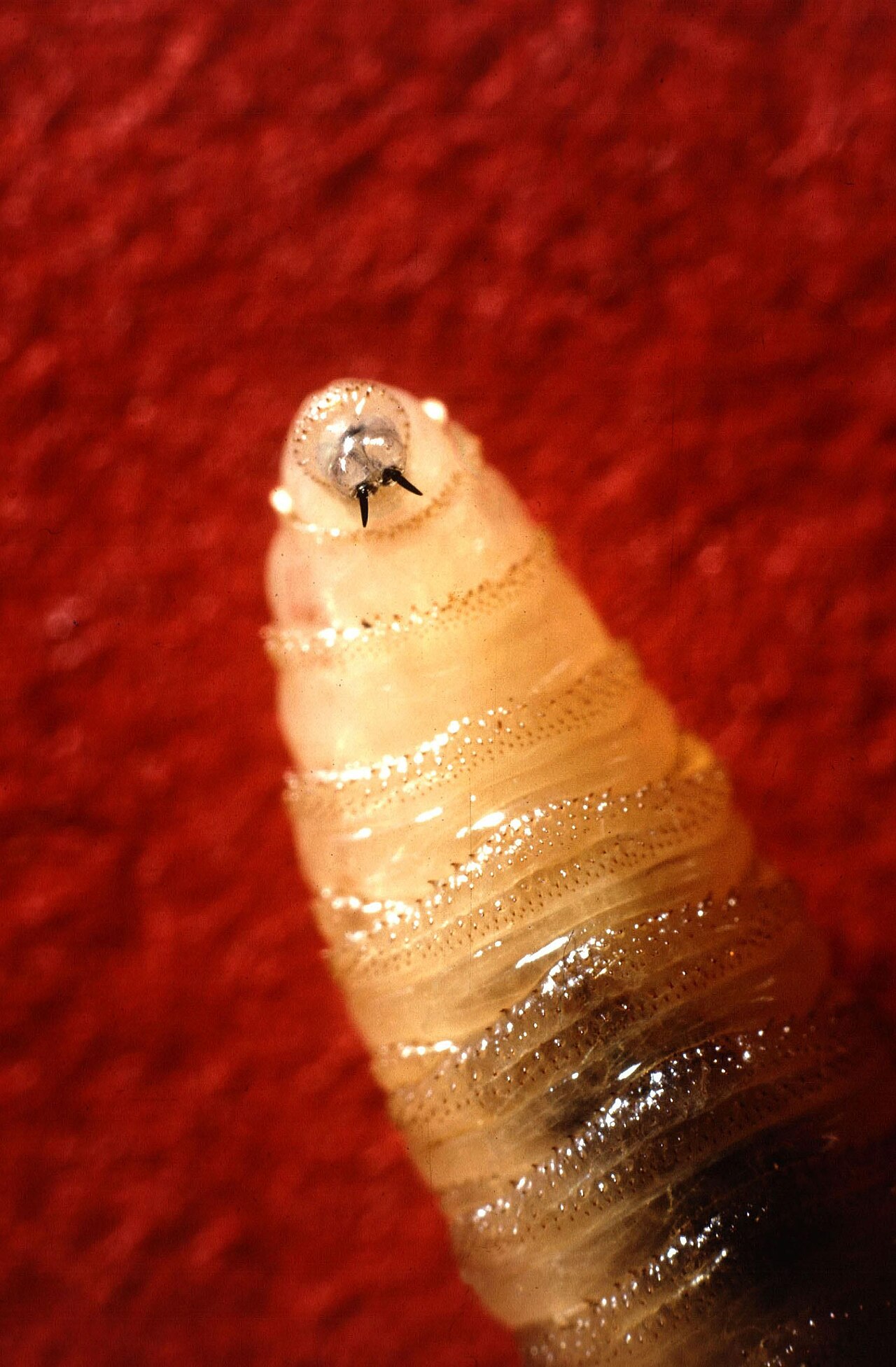
The first equine case of New World screwworm in the United States this century has been confirmed in a working ranch horse in West Texas, giving horse owners a new worry as animal health officials try to contain the flesh-eating parasite.
The infestation was detected on 9 September on the hind limb of a ranch horse in Presidio County, according to US Equestrian; Reuters reported that US Department of Agriculture data also confirmed the case. Screwworm larvae feed on the living tissue of warm-blooded animals, so even a small wound can become a site of infestation. Horses, cattle, wildlife, pets and people can all be affected.
The parasite was eradicated from the United States in the 1960s after an outbreak that killed thousands of animals, Reuters reported. Following the horse case, the Texas Animal Health Commission has restricted the movement of warm-blooded animals out of a designated infested zone covering parts of Presidio and Jeff Davis counties. How the horse became infested has not been made public; Reuters said neither USDA nor the Texas authorities had addressed the question.
The case matters to the horse world because horses move constantly between ranches, competitions and breeding facilities. US Equestrian says its protocols for licensed competitions can include inspecting horses for wounds on arrival and monitoring them throughout an event, and state animal health officials may impose entry requirements on horses coming from areas where screwworm has been found.
Owners are being urged to inspect their horses daily for wounds, swelling, drainage, foul odours or visible maggots, paying particular attention to cuts and surgical sites, the umbilical area of foals and the moist skin around the lips, nostrils, eyes and genitals. Any maggots or unusual signs should be reported to a veterinarian at once, because rapid identification lets officials respond with eradication measures such as sterile fly releases.
"We encourage every horse owner to help protect their horses and the broader equine community by practicing good wound care, fly control, and biosecurity," US Equestrian said, recommending clean, covered wounds, veterinarian-approved fly control, fly masks and sheets and clean stabling. The body has also issued screwworm guidance for competition organisers and participants.
AGDAILY Reporters wrote the account, drawing on US Equestrian and Reuters.
Photo: John Kucharski, USDA Agricultural Research Service / Wikimedia Commons (Public domain)
Source: AGDAILY

Comments
(0)