
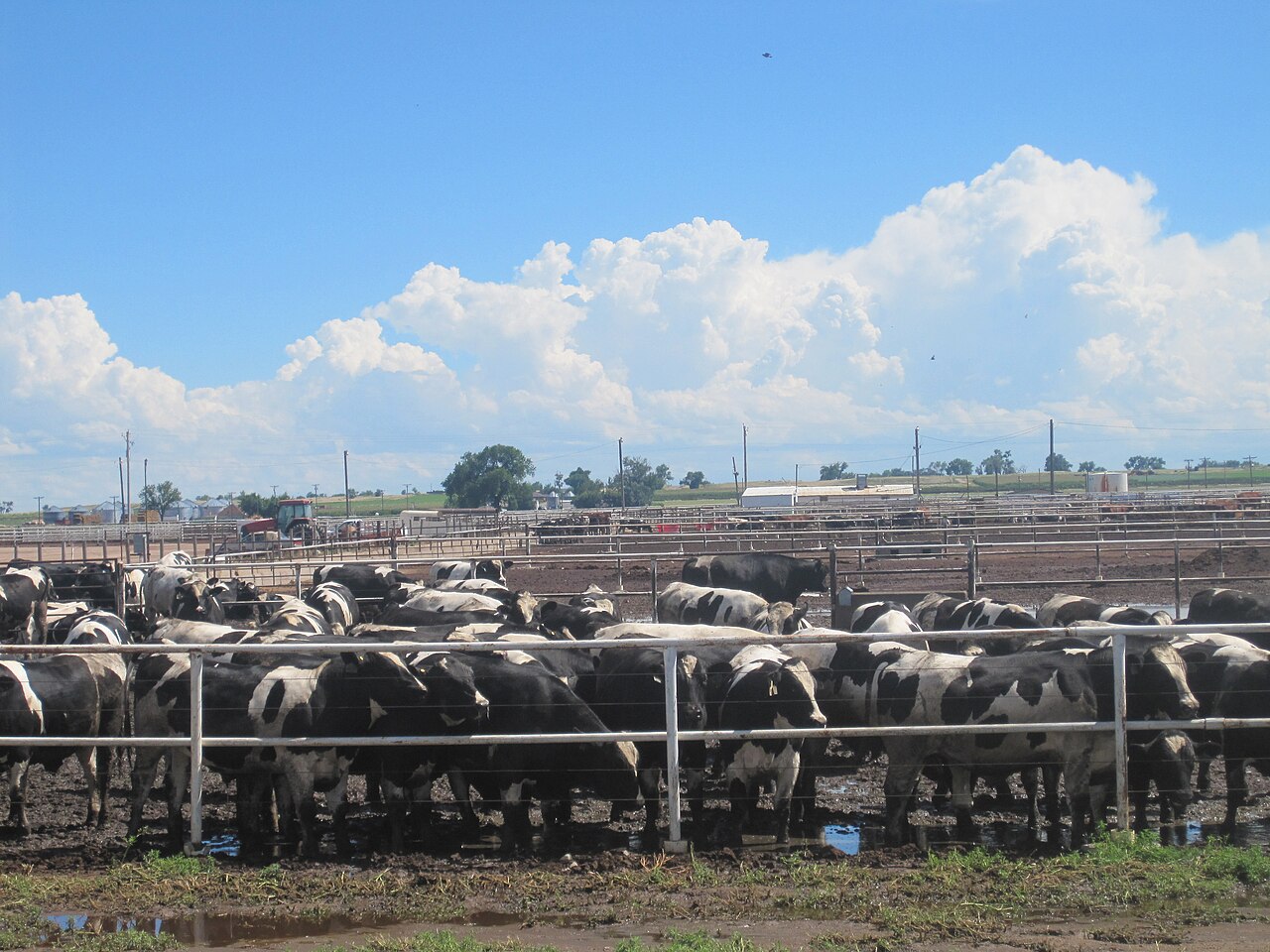
Near-record rain across the US High Plains in September eased drought but left many cattle feedyards deep in mud, and extension specialists say pen conditions can matter as much for profit as the ration.
Mud makes feed bunks harder to reach, according to a report by Stephen Boyles, Ohio State University Extension beef specialist. Muddy lots bring lower feed intake, lower average daily gain and more feed for every pound of gain. Stressed cattle eat less while their maintenance needs rise, and feed intake can become erratic, leading to digestive upsets. Boyles notes that some feeders also hesitate to add cattle to a pen that is already muddy.
Drainage comes first, writes Connor Biehler, University of Nebraska-Lincoln Extension educator. Producers should check whether water leaves pens quickly after rain, where it pools, whether drainage channels are open and whether runoff from roads, fields or neighbouring pens is getting in.
Practical steps include levelling pens to remove low spots, keeping a proper slope towards channels, cleaning ditches regularly, diverting outside runoff, removing manure that blocks water and repairing high-traffic areas where cattle have changed the drainage.
Even well-drained pens benefit from dry resting places. Dirt mounds should generally be about five feet tall with at least 25 square feet per head, shaped so water drains away, and repaired when they flatten, collect manure, have standing water at the base or crowd cattle onto a small area. "The best strategy for managing mud is mitigating it before it becomes a problem," Biehler wrote.
Photo: Billy Hathorn / Wikimedia Commons (CC BY-SA 3.0)
Source: DTN / Progressive Farmer

Comments
(0)