
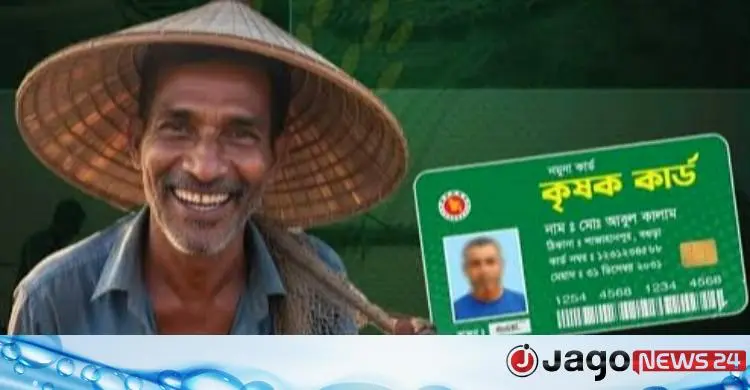
Agriculture is the backbone of Bangladesh's economy, culture and rural life, and a large share of the population depends on it directly or indirectly. Among the government's efforts to solve farmers' problems, one of the most important is the introduction of the "farmer card". It works like an identity card but does much more: it is a single platform for a range of benefits and services.
Why the card is needed
Farmers have long faced problems identifying genuine farmers, distributing fertiliser fairly, finding quality seed and paying fair prices for pesticides, with allegations of irregularity and corruption. Genuine farmers are often left out while middlemen benefit. The card builds a database of farmers through which the government can deliver services directly, increasing transparency and accountability.
What it can deliver
- **Fertiliser on time:** knowing how much land each farmer has lets the government supply the right amount of fertiliser at the right time and at a fair price, countering shortages, black marketing and overpricing.
- **Quality seed:** registered farmers can receive improved seed directly from the government or approved suppliers, protecting them from fake or substandard seed.
- **Fairly priced pesticides:** approved sellers can supply quality pesticides at fair prices.
- **Easier financial support:** subsidies, crop insurance, incentives and loans can be paid directly by mobile banking or bank account, reducing brokers and corruption.
- **Freedom from middlemen:** buying inputs from government or approved sources improves farmers' prices and incomes.
- **Social status:** the card recognises the holder as a registered farmer who plays an important role in the economy.
A digital transformation
The card is part of a digital system that stores, updates and analyses farmer data, making it easier to plan and act, for example by showing which crops dominate in which region and where problems lie. The writer argues that linking it to Fourth Industrial Revolution technologies would revolutionise farming: Artificial Intelligence (AI)-based apps that diagnose crop disease and advise on fertiliser and timing, weather forecasting, Internet of Things (IoT)-based digital soil sensors that measure moisture, nutrients and temperature in real time, spray drones that save time and labour, and big data analysis of production, demand and price trends.
Challenges
Errors in identifying genuine farmers, outdated data, technical limits and low awareness must be tackled through regular data updates, training, better technical infrastructure and awareness campaigns so farmers understand and use the card. Properly implemented, the writer concludes, the farmer card could open a new horizon for Bangladesh's agriculture.
Source: Jagonews24. First published in Bengali on The Agro News.

Comments
(0)