
Writing after US Ambassador Brent T. Christensen visited the Paragon Agro and Dairy farm at Gangachara, Rangpur, on 30 August, Farida Akhter of UBINIG argues that American feed and cattle genetics are about building a market for American farmers. The column says the farm keeps about 1,200 cattle imported from the United States.
At the centre of her case is the Bangladesh-US Agreement on Reciprocal Trade signed on 9 February 2026. By her account, Bangladesh must buy at least 700,000 tonnes of wheat a year for five years, and soybeans and soy products worth $1.25 billion or 2.6 million tonnes a year, whichever is less. The total potential value is $3.5 billion, against about $1 billion a year bought now.
Her main objection is to clause 1.6 on agricultural biotechnology. She writes that within 24 months Bangladesh must adopt a policy letting products legally sold in the US be imported and marketed without its own pre-market review, extra labelling or separate approval. The Biosafety Rules 2012 require ministry permission, and section 31 of the Safe Food Act 2013 bars genetically modified food without approval.
She puts genetically modified soybeans at more than about 90% of US soybean land and maize at about 94%. The health concerns she raises about GM food are her own view; the column says the question of whether it is safe for people remains unresolved.
On the farmers' side, she counts more than 25 million cattle in Bangladesh and says about 20% of the rural population keeps livestock. Those cattle eat straw, Napier and para grass, silage, bran and oilcake, which ties them to farmers' own crops. Citing the Feed Industry Association of Bangladesh, she says 70-75% of feed ingredients for industrial farms are already imported.
She argues the government cannot set aside these public-health laws because a trade agreement has been signed.
The views are the writer's own. Written by Farida Akhter, UBINIG.
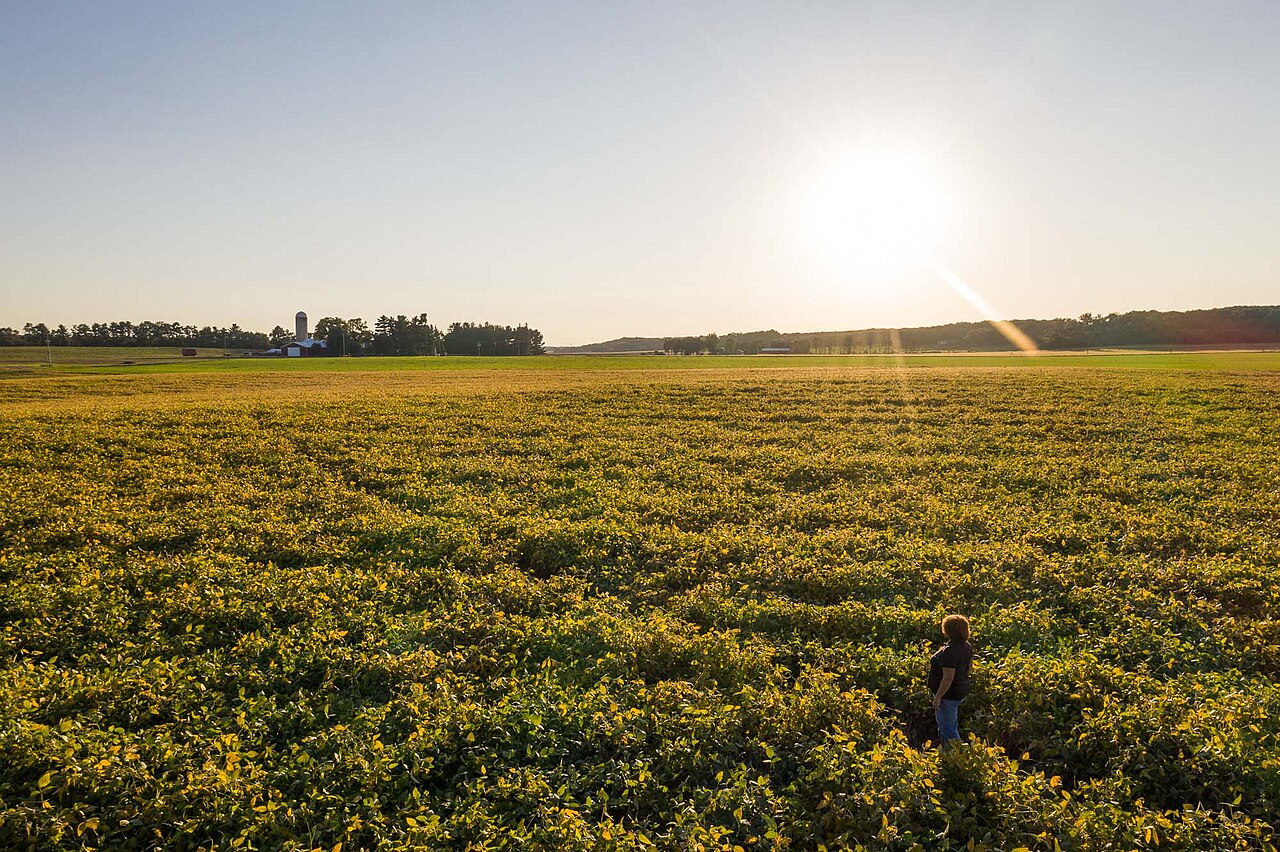
Photo: United Soybean Board / Wikimedia Commons (CC BY 2.0)
Source: UBINIG

Comments
(0)