
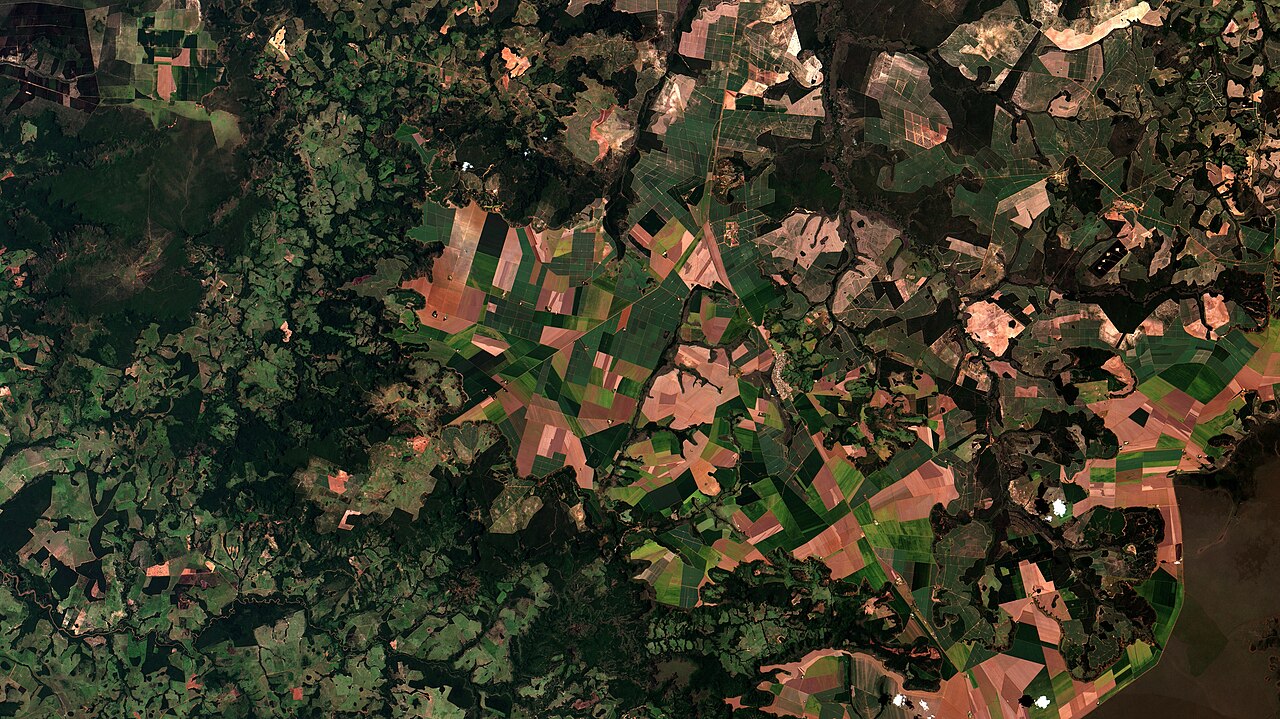
Brazilian farmers generally produce corn and soybeans at lower cost per acre than American farmers, but US farmers keep important advantages in yields and operating efficiency, according to a new study by the USDA's Economic Research Service (ERS), Farms.com reported. Together the two countries supplied nearly 83% of world soybean exports and 58% of corn exports in the 2025/26 marketing year.
The study compared the US Heartland with Brazil's Mato Grosso, a leading region for soybeans and second-crop corn, alongside national data. Total soybean costs averaged $558.97 an acre in Brazil against $656.16 in the US. For corn the gap was larger: $420.57 an acre in Mato Grosso against $951.82 in the US Heartland. Lower land costs and widespread double cropping, which spreads fixed costs over two harvests a year, explain much of Brazil's advantage.
But US corn yields are nearly double Brazil's, so total US corn costs per bushel, while higher than Mato Grosso's, are similar to Brazil's national average. US soybean growers have lower operating costs per acre and per bushel, though their total costs are higher because of overheads such as land. In Mato Grosso, fertilizer makes up about 35% of operating costs and chemicals 34%, against about 23% and 22% in the US Heartland, where seed takes a larger share. Brazil's safrinha corn benefits from nitrogen left by the preceding soybean crop, while soybeans on the Cerrado's weathered tropical soils need more fertilizer.
Returns depend on the crop and the measure: Mato Grosso earned more over total economic costs for corn than the US Heartland, while US national corn returns beat Brazil's. Brazil's road improvements to northern export ports have also cut shipping costs. The authors conclude that competition increasingly depends on land costs, currency and cropping systems as well as prices, and that US growers must protect their yield advantage and control overheads.
Photo: Coordenação-Geral de Observação da Terra/INPE / Wikimedia Commons (CC BY-SA 2.0)
Source: Farms.com
Comments
(0)