
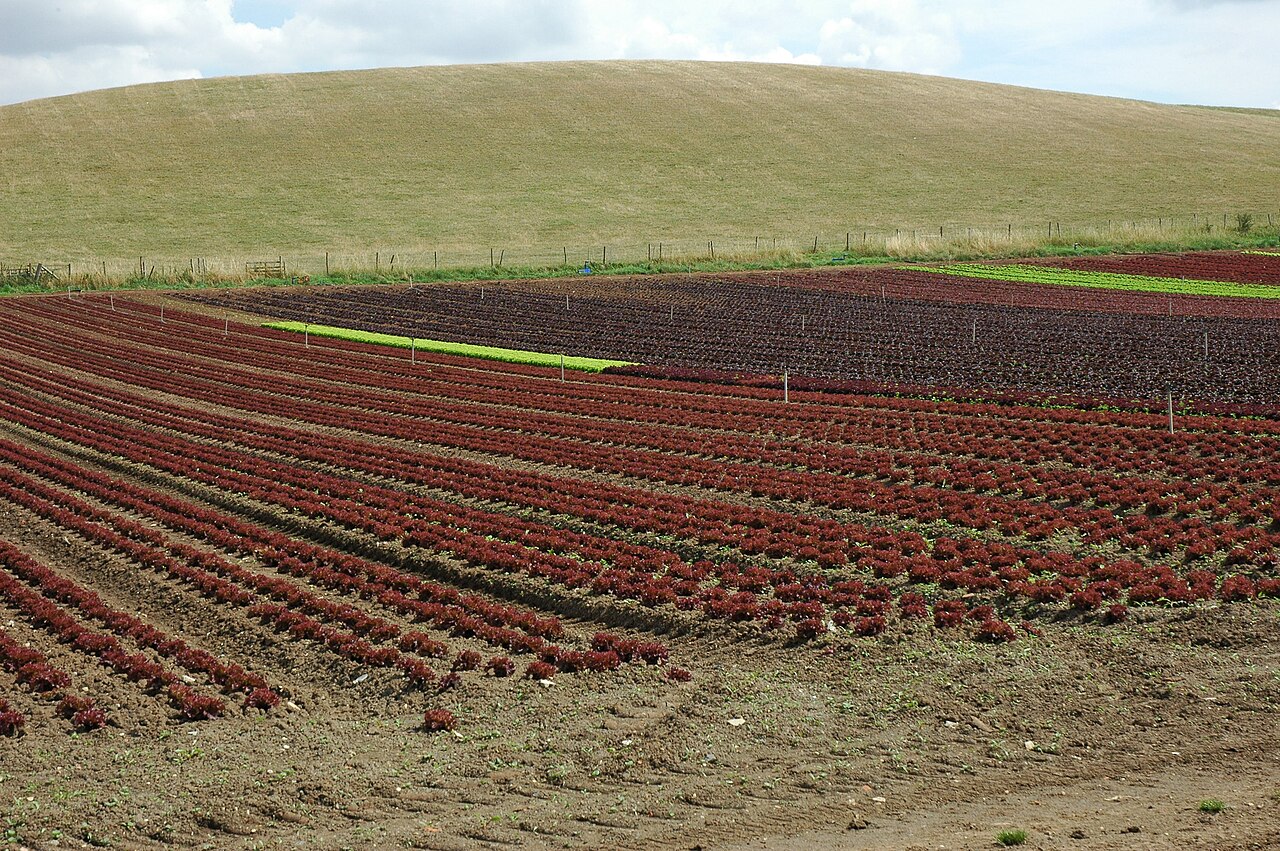
Earth Rover, a UK startup, is selling an autonomous weeding robot that kills weeds with a short pulse of concentrated light instead of herbicide. The machine, called CLAWS (Concentrated Light Autonomous Weeding and Scouting), runs on solar power and batteries and can work for up to 16 hours without a battery swap, the company says.
Chief executive James Miller described how it works to AgFunderNews at the World Agri-Tech Innovation Summit in London. The robot travels up and down the beds, identifies weeds, and aims enough focused light at each one to boil its meristem, the growing tip. Cameras at the front and back collect per-plant data at the same time, so the machine also counts plants and records their position and NDVI crop health.
Unlike a laser, the light is converged to a point and then spreads out again, much like a magnifying glass, which Miller said makes it eye-safe beyond a set distance. He said the method uses much less energy than laser weeding, which is why the robot can run on batteries and solar panels, and that the company aims for the fewest kilowatt-hours per hectare.
CLAWS was built for vegetable, salad and specialty crops in bed and open-field systems. Its track width adjusts from 1.5 to 2 metres and its height can be set for different beds, such as carrot ridges. Miller said the algorithms can now pick out emerging onions and hit a weed right beside them with millimetre precision, and that the light works in rain and wind and kills herbicide-resistant weeds as well as any other.
The original customer problem came from an organic farmer whose only options were mechanical weeding in dry weather or hand weeding. Earth Rover now gets more inquiries from conventional growers who are losing herbicides to bans and resistance. The company has sold its first 10 pilot units outright and has 15 more being built. The price is about £150,000, with a discount for early buyers, and Miller said payback has ranged from one to three years, depending on a farm's weeding costs.
The robot was designed around a 100-hectare vegetable or salad farm, but customers on 5 and 15 hectares have bought it too. Founded in 2017 and funded by equity and grants from Innovate UK and the Forestry Commission, Earth Rover plans a Series A round next year and wants to move beyond vegetables into broadacre crops.
Photo: Philip Halling / Wikimedia Commons (CC BY-SA 2.0)
Source: AgFunderNews

Comments
(0)