
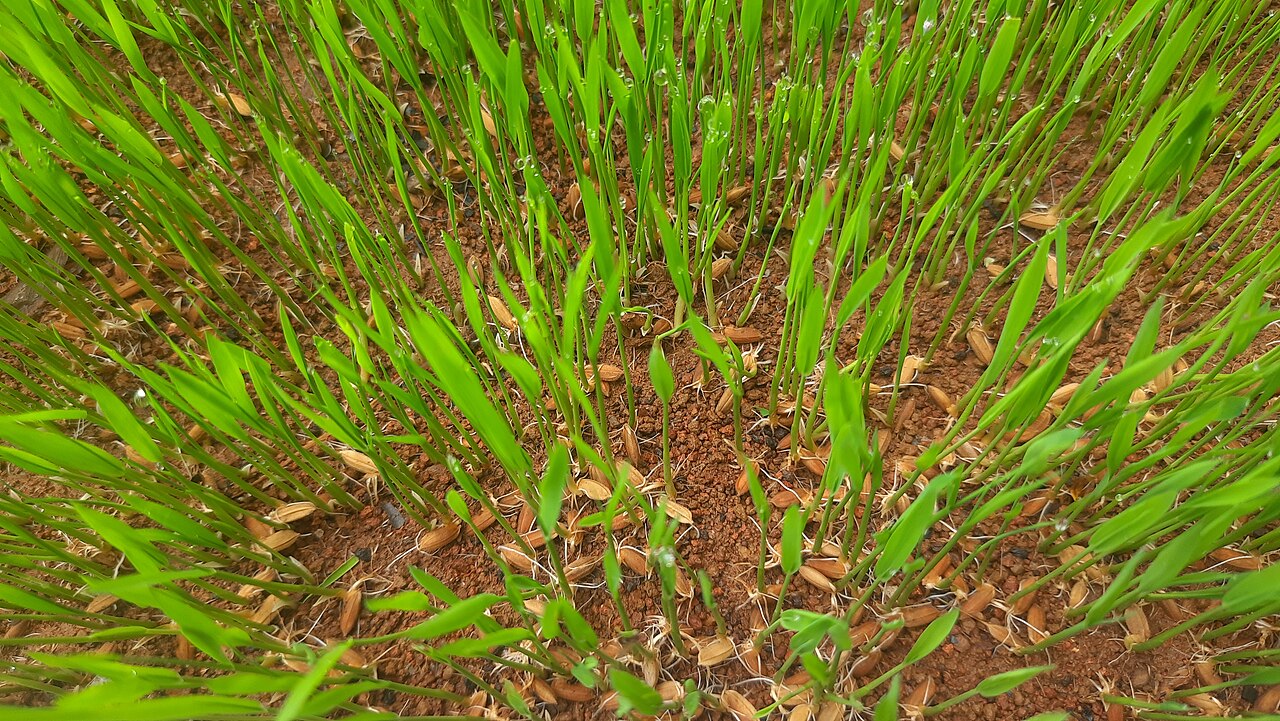
Modern machinery is making farming quicker, easier and more profitable, and the drum seeder is one of the simplest examples: a row of perforated drums on an axle, pulled across a puddled field, that drops pre-germinated rice seed in straight lines at a set rate.
What it saves
- Time and labour: sowing takes half the time of the old methods and about 30 per cent less labour.
- Seed: dropped in the right amount at the right spacing, with none wasted — and the seed that is sown grows better.
- Quality: evenly spaced plants share nutrients evenly; yield and grain quality rise.
- Cost: the right plant population means fertiliser, water and pesticide are used more efficiently, so the cost of production falls and profit rises.
Where it works
Rice above all — also wheat, jute, mustard and other small-seeded crops, on small fields and large.
What it is
Simple to use and maintain, durable, portable, and needing no fuel at all: one person pulls it.
Straight rows make weeding easier too, by hand or by hoe. For a smallholder the drum seeder is the cheapest step into mechanisation there is.
Photo: Pre-germinated paddy seed, the kind a drum seeder sows — Prajna Prabhu / Wikimedia Commons (CC BY-SA 4.0)

Comments
(0)