
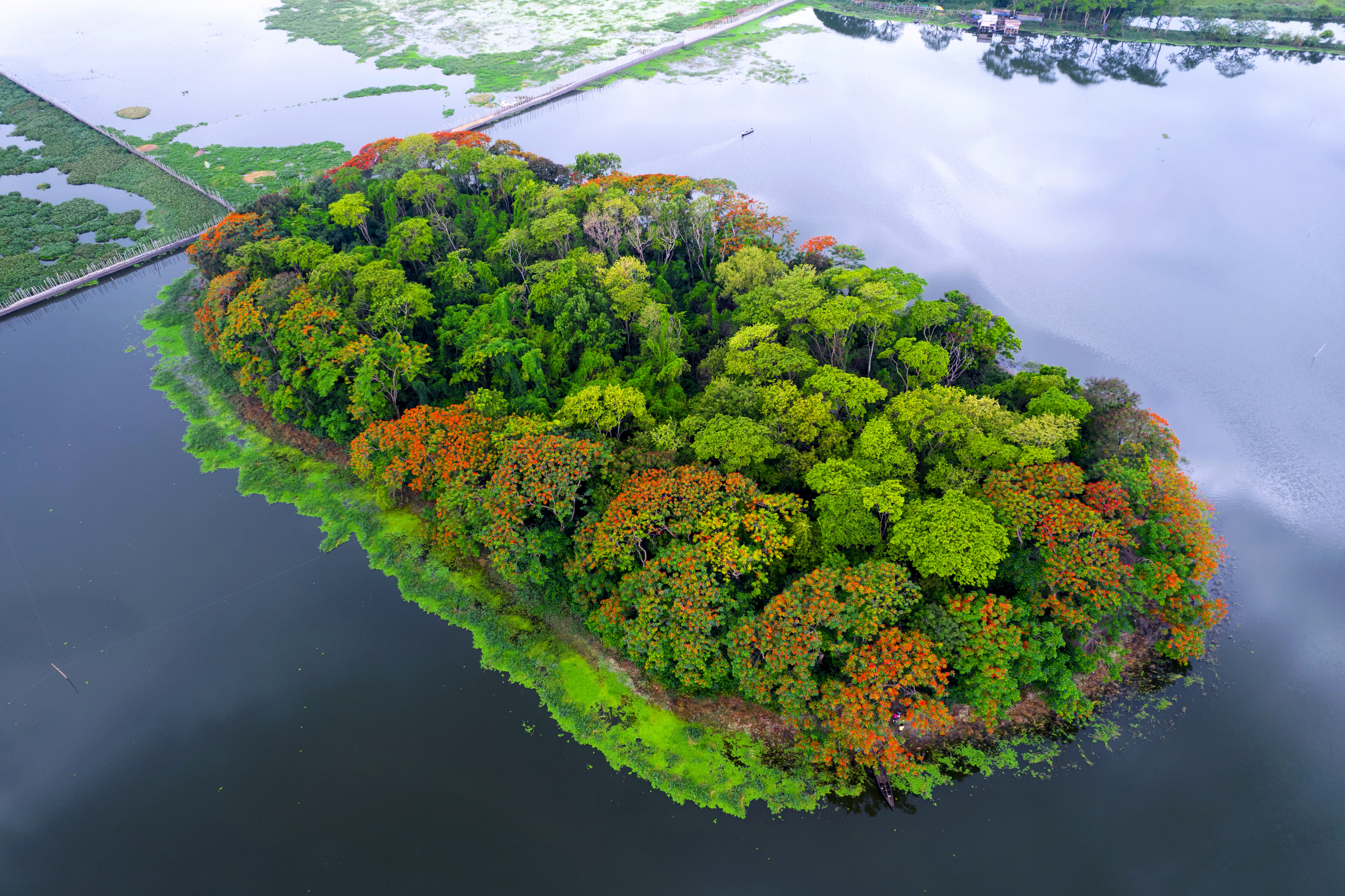
On 29 April 2026 Prime Minister Tarique Rahman set out in the Jatiya Sangsad a 12-point set of measures that, he said, the government had adopted to make Dhaka a "clean and green city". He gave the details during the prime minister's question time in the morning sitting, in reply to a starred question from Md Abul Kalam, the member for Cumilla-9. The measures ranged from weekly awareness drives, mosquito control and new tree planting in the two Dhaka city corporations to a plan for the Matuail landfill, electric buses, action against polluting brick kilns and the monitoring of factory effluent along the rivers around the capital.
The sitting began at 11am with Speaker Hafiz Uddin Ahmed in the chair, and 40 minutes were set aside for the prime minister's questions. Eight questions had been listed for him that Wednesday; within the time allowed he answered two of them along with supplementary questions. Much of the detail on the Department of Environment's work came from his written reply, which was laid on the table of the House.
What the prime minister told parliament
"Various measures are being taken through Dhaka North and Dhaka South City Corporations under the Local Government Division to build Dhaka as a clean and green city," the prime minister said, as quoted by the state news agency BSS. According to his reply, the city corporations were holding public awareness programmes every week to raise citizens' awareness and involvement, and had stepped up special cleanliness and mosquito control drives.
He said the secondary transfer stations, described in the reply as waste dumping points, were being modernised with landscaping, greening and awareness graffiti so that waste could be handled in an environmentally sound way. Dhaka South City Corporation (DSCC), he said, had taken up a plan, with investment from a Korea-based private company, to turn the Matuail landfill into an integrated waste management and energy production centre based on the circular economy, with the aim of turning all waste into "zero waste". He told the House he hoped that these activities and integrated management would gradually make a clean and green Dhaka possible.
On greening, he said tree planting had been taken up on road medians, traffic islands and open spaces in the DSCC area. In parts of Dhaka North City Corporation (DNCC) urban forests were being created by the Miyawaki method, and open medians were being covered with plants under a "zero soil" approach, leaving no bare soil. DNCC had set a target of planting 5 lakh (500,000) trees in its area over five years, and trees would also be planted in the vacant land under the metro rail between Mirpur-12 and Mirpur DOHS and under the elevated expressway between Abdullahpur and Farmgate.
In his written reply he said the Department of Environment (DoE) had given priority to controlling pollution in Dhaka. The measures he listed for the department were these:
- The DoE and the Dhaka Transport Coordination Authority (DTCA) were jointly working to introduce a modern bus service and 250 electric buses to curb air pollution.
- The main sources of Dhaka's air pollution had been identified with World Bank support, and the DoE was working on them accordingly.
- Mobile courts were being run regularly against vehicles emitting black smoke and against air pollution from construction work and building materials.
- Steps had been taken to shut illegal polluting brick kilns around Dhaka, with regular mobile courts and enforcement drives.
- Savar upazila had been declared a degraded airshed, and brick kiln operation and open burning of waste had been banned there.
- Effluent treatment plants (ETPs) had been made mandatory for establishments discharging liquid waste; 248 establishments had installed them so far, and cameras were being installed to monitor them in real time.
- The DoE had identified the sources and nature of pollution in the Buriganga, Shitalakshya, Balu and Turag rivers, and in 19 main canals flowing through the city.
He also said the Forest Department, under memoranda of understanding with the two city corporations, the Bangladesh Water Development Board and the Roads and Highways Department, had carried out tree planting and zero-soil programmes on road medians, U-loops, ponding areas and canal banks. Under that programme 41,565 saplings of fruit, timber, medicinal and ornamental species had been planted, and the ground had been covered with creepers, shrubs and grasses to reduce pollution. As part of a programme to plant 25 crore (250 million) trees over five years, he said, trees were to be planted on vacant land suitable for afforestation in Dhaka.
Prothom Alo reported that Abul Kalam followed up with a supplementary question on how to reduce the flow of people moving to the capital. The prime minister replied that this needed long-term measures: jobs, medical care and education had for many years been concentrated in Dhaka, which drew people from across the country, and the government's long-term plan was to build basic facilities, industrial zones, health services and good educational institutions in other parts of the country step by step, so that fewer people would feel the need to come to Dhaka and the pressure on the city would ease over time.
The two city corporations and Dhaka's waste
Most of the measures fall to the two bodies that run the capital's civic services. The former Dhaka City Corporation was split into Dhaka North and Dhaka South by an amendment to the Local Government (City Corporation) Act passed on 29 November 2011. After their boundaries were extended in 2016, DNCC covers about 197 square kilometres in 54 wards and DSCC about 109 square kilometres in 75 wards. The 2022 Population and Housing Census counted 5,990,723 people in DNCC and 4,305,063 in DSCC. In 2025 and 2026 both bodies were run by administrators rather than elected mayors.
On 25 February 2026 the newly appointed DSCC administrator, Md Abdus Salam, set four priority programmes at meetings with senior officials and the waste management department: tree planting and wide greening, restoring the flow of canals through excavation, modern waste management and effective mosquito control. The meeting decided to draw up a full work plan within a week and send it to the Prime Minister's Office, and to form a monitoring team of senior officials for mosquito control, The Business Standard reported.
Four days before the question in parliament, on 25 April 2026, DSCC inaugurated a modernised secondary transfer station at Kalabagan alongside a cleanliness and mosquito control drive at Dhanmondi Lake. Road Transport and Bridges Minister Shaikh Rabiul Alam said there that waste management had become a major challenge because Dhaka was housing three to four times the population it was meant for, and that public awareness was a bigger challenge than waste management itself. The administrator said the Kalabagan station, which had earlier drawn complaints over its foul smell, had been rebuilt as a neat and working facility.
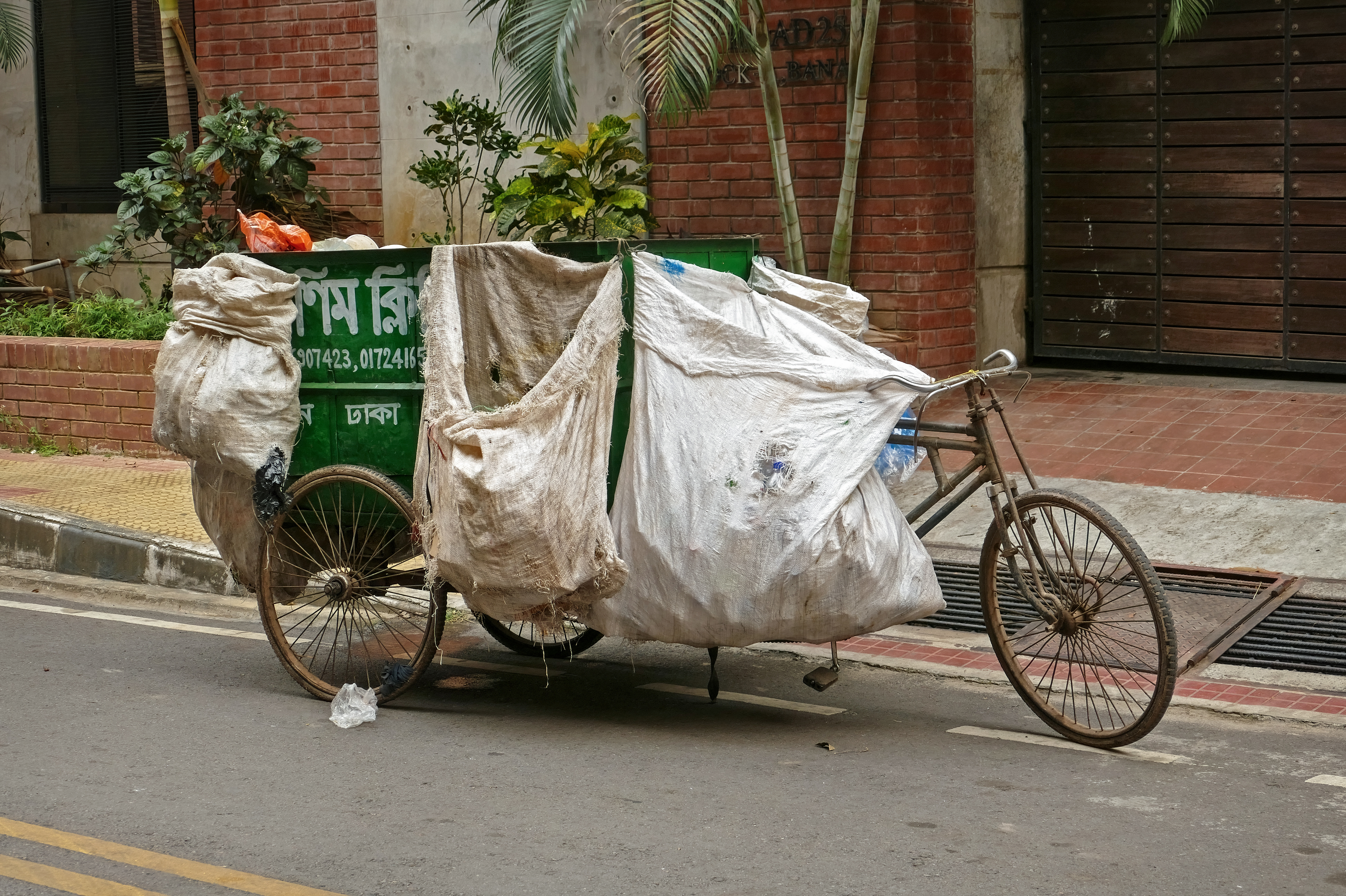
The scale of the task was described in a report by The Business Standard in November 2025: the two corporations together collect and dump more than 7,500 tonnes of waste a day, most of it taken to four landfills at Amin Bazar, Matuail, Beribandh and Uttara. Citing the Waste Management Report 2019-2020, the paper said waste generation per person had risen from 0.575 kg a day in 2017-2018 to 0.72 kg in 2019-2020. Collection improved over the years with support from the Japan International Cooperation Agency (JICA), which helped prepare the Clean Dhaka Master Plan, supplied vehicles and supported regional sanitation offices; the paper reported that collection rose from 40 percent in 2005 to 85 percent in 2021.
The Matuail landfill plan
Matuail is DSCC's landfill. At a press conference on 2 April 2026 the administrator described it as a 181-acre site. He said a 20-tonne compost plant had been opened there to turn biodegradable waste into organic fertiliser, that water hydrants were being installed at 40 points with pipelines and reservoirs to fight the frequent fires, and that about 40 percent of the dumped waste had been covered with soil to limit methane emissions and the risk of fire, the Dhaka Tribune reported.
The Korean investment the prime minister mentioned had been discussed in public a few weeks earlier. UNB reported on 12 March 2026 that DSCC officials had met a technical team from the Korea-based firm B&F Company at Nagar Bhaban, where the company presented a master plan for a "Dhaka Resource Circulation Park" at Matuail. Under the proposal, landfill gas would be extracted from 100 acres of the old dump, with the aim of collecting about 15,000 tonnes of methane a year, which could generate 81,000 megawatt-hours of electricity; solar panels could add 28,000 megawatt-hours. A pilot material recovery facility would process 300 tonnes of household waste a day into biogas, compost, biofuel, eco-bricks, black soldier fly larvae and solid refuse fuel. If carried out, the project was expected to cut about 515,000 tonnes of carbon dioxide equivalent a year.
DSCC officials told UNB that the corporation produces about 3,200 to 3,500 tonnes of waste a day across its 109.24 square kilometres, and that if the pilot succeeded the whole daily output could be turned into resources. The report added that the ruling party's election manifesto had listed four waste measures: a circular model, regional material recovery facilities, the 3R principle of reduce, reuse and recycle, and energy from waste. The 2 April briefing said DSCC had signed an agreement with the Korean company.
The proposal followed a long debate on how to deal with Dhaka's dumps. In the November 2025 report, DSCC's chief waste management officer said most proposals the corporation received were for burning waste to make electricity, but Dhaka's waste had a calorific value of only 600 to 700, while power generation needed at least 1,500, which is why the corporation would accept only projects that made environmental sense. The same report cited a 2021 Jahangirnagar University study that found lead, cadmium, nickel and manganese above WHO limits in soil, shallow groundwater and crops around the landfills, and quoted a professor who said the sites had no protective liners and were dumping grounds rather than engineered landfills.
Greening the medians, Miyawaki forests, metro and expressway
The Miyawaki method that DNCC was using is named after the Japanese botanist Akira Miyawaki (1928-2021), professor emeritus at Yokohama National University. Starting from the idea of potential natural vegetation, he developed a way of restoring native forest by planting a wide mix of local pioneer and secondary species very densely on a small plot, and he restored protective forests at more than 1,300 sites in Japan and tropical countries.
DNCC began what it called the country's largest Miyawaki forest on 26 November 2025 in Diabari, Uttara, on about 54.63 katha of land on the east side of Lake 11 next to Bridge 4, Jagonews24 reported at the time. The plan was to plant about 14,000 saplings of around 225 species, including native fruit, berry, flower, medicinal, timber, ornamental and conifer trees, shrubs and understorey plants. Artificial mounds were built for natural drainage, and the soil was mixed with loam, vermicompost, organic fertiliser, bone meal, coco dust and rice husk. DNCC said it was working within the green belt areas designated by the capital's development authority, RAJUK.
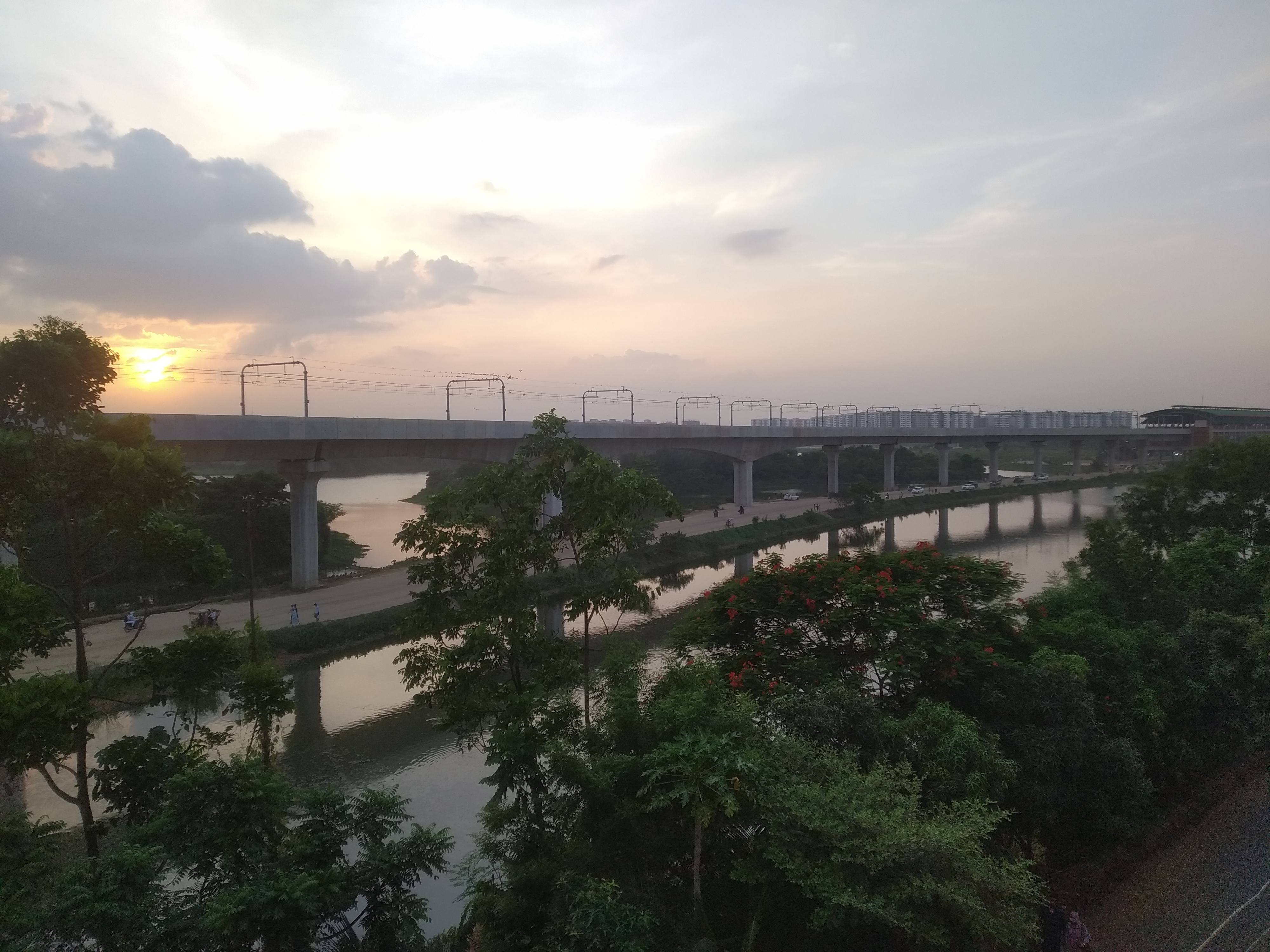
The two new planting strips the prime minister named lie under the city's newest elevated transport lines. One is the stretch of the metro rail between Mirpur-12 and Mirpur DOHS. The other is the Dhaka Elevated Expressway, a 19.73 km toll road regarded as the country's first elevated expressway, which partly opened in 2023 and connects Hazrat Shahjalal International Airport with Farmgate; the reply named the section from Abdullahpur to Farmgate.
Dhaka's air and the Department of Environment's measures
The DoE, the government's environmental regulator under the Ministry of Environment, Forest and Climate Change, was formed in 1989 and can fine polluting industries; factories need its clearance to operate. Its focus on Dhaka's air reflects how poor that air had been for years. In its World Air Quality Report released in March 2026, the Swiss monitoring firm IQAir ranked Bangladesh the second most polluted country in 2025, with an annual average PM2.5 concentration of 66.1 micrograms per cubic metre, more than 13 times the World Health Organization guideline of 5. It said Dhaka was one of three capitals, with Dushanbe and Delhi, that recorded at least two months above 100 micrograms per cubic metre, and named industrial and vehicle emissions, brick kilns, construction dust and crop burning among the drivers. In the 2024 report, Dhaka had been the world's third most polluted capital, with an average of 78 micrograms.
The World Bank, whose support the prime minister cited, published "Breathing Heavy: New Evidence on Air Pollution and Health in Bangladesh" in December 2022. It found the highest fine-particle levels at sites in Dhaka with major construction and persistent traffic, on average 150 percent above the WHO guideline, followed by sites near brick kilns in Greater Dhaka at 136 percent above it. It estimated that air pollution caused between 78,145 and 88,229 deaths in Bangladesh in 2019, and said that in the Dhaka division up to one-fifth of PM2.5 came from across the border. A Financial Express report of November 2025, citing the World Bank, gave a wider estimate of more than 159,000 premature deaths and 2.5 billion days of illness in 2019, with health costs equal to 8.3 percent of GDP.
Electric buses and the Clean Air Project
The DTCA, which the prime minister named alongside the DoE, was set up on 2 September 2012 under the Dhaka Transport Coordination Authority Act 2012. It coordinates transport projects in Dhaka and the neighbouring districts of Gazipur, Manikganj, Munshiganj, Narayanganj and Narsingdi, and oversees the Revised Strategic Transport Plan approved in 2016.
Electric buses for Dhaka had been planned for some time under the World Bank-financed Bangladesh Clean Air Project. In May 2025 the Financial Express reported that the government had finished negotiating a 290 million dollar loan, under which DTCA would first buy 100 electric buses to run on a trial basis, the Bangladesh Road Transport Authority would set up vehicle inspection centres, and 20 emission detectors would be installed. In the national budget speech of 2 June 2025 the government announced 400 electric buses for Dhaka's public transport. By November 2025, the Financial Express reported, the World Bank had approved the 290 million dollars in June, but the development project proposals of the implementing agencies were still awaiting approval; DTCA officials said bus procurement was planned to begin in 2027 and finish by 2030.
In December 2025 The Business Standard reported, from project documents, that DTCA would set up a Public Transport Fund with Tk 427 crore plus Tk 244 crore of seed capital to support 400 electric buses run by franchisees on fixed fees, a Tk 85.40 crore scheme to scrap old diesel buses and compensate their owners, and three electric bus depots on government land, with sites to be chosen from Kanchpur, Gabtoli, Kalyanpur, Purbachal and Joar Shahara. The prime minister's reply in April 2026 spoke of a modern bus service and 250 electric buses; it did not say how that figure related to the 400 in the earlier project documents.
Brick kilns and Savar's degraded airshed
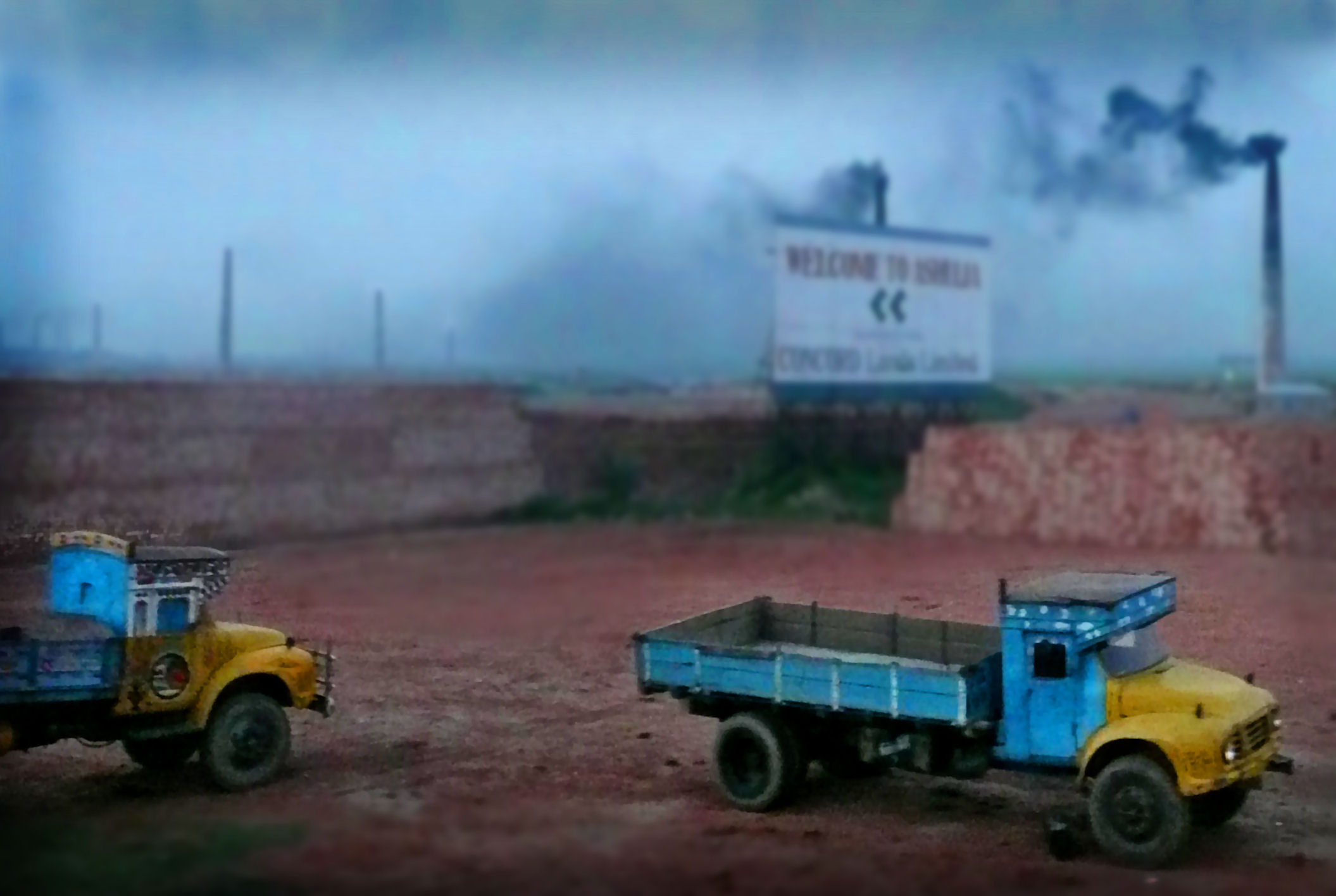
Brick kilns have long been named as a main source of Dhaka's polluted air. Brick making is governed by the Brick Making and Brickfield Establishment (Control) Act 2013, which replaced the Brick Burning (Control) Act 1989 with stricter rules. Under the law, kilns may not be set up near residential, protected or commercial areas, municipal towns, educational institutions or farmland. In a column in 2019 the Financial Express cited a DoE count of about 6,500 brickfields in the country, while environmentalists put the number nearer 10,000 and said half of them ringed the capital. The Business Standard, reporting in August 2025, said kilns in and around Dhaka were responsible for 58 percent of the city's air pollution.
The Savar measure the prime minister mentioned dates from August 2025. Under Rule 5 of the Air Pollution (Control) Rules 2022, the DoE declared the whole of Savar upazila in Dhaka district a "degraded airshed" by a circular signed on 17 August 2025 by its director general. From September 2025 all brick kilns in Savar except tunnel kilns and hybrid Hoffman kilns were barred from operating, and open burning of solid waste and new clearances for industries likely to pollute the air were also banned. DoE data from its continuous air monitoring stations showed Savar's annual average pollution to be almost three times the national standard, and for nearly five months of the dry season north-westerly and north-easterly winds carry that pollution into Dhaka, the ministry said.
The order built on earlier steps. In September 2024 the environment adviser of the interim government announced that no new brick kiln permits would be issued and that 3,491 kilns operating without environmental clearance would be shut; on 24 February 2025 the High Court ordered the removal of illegal brick kilns across the country, The Business Standard reported.
Rivers, canals and effluent treatment
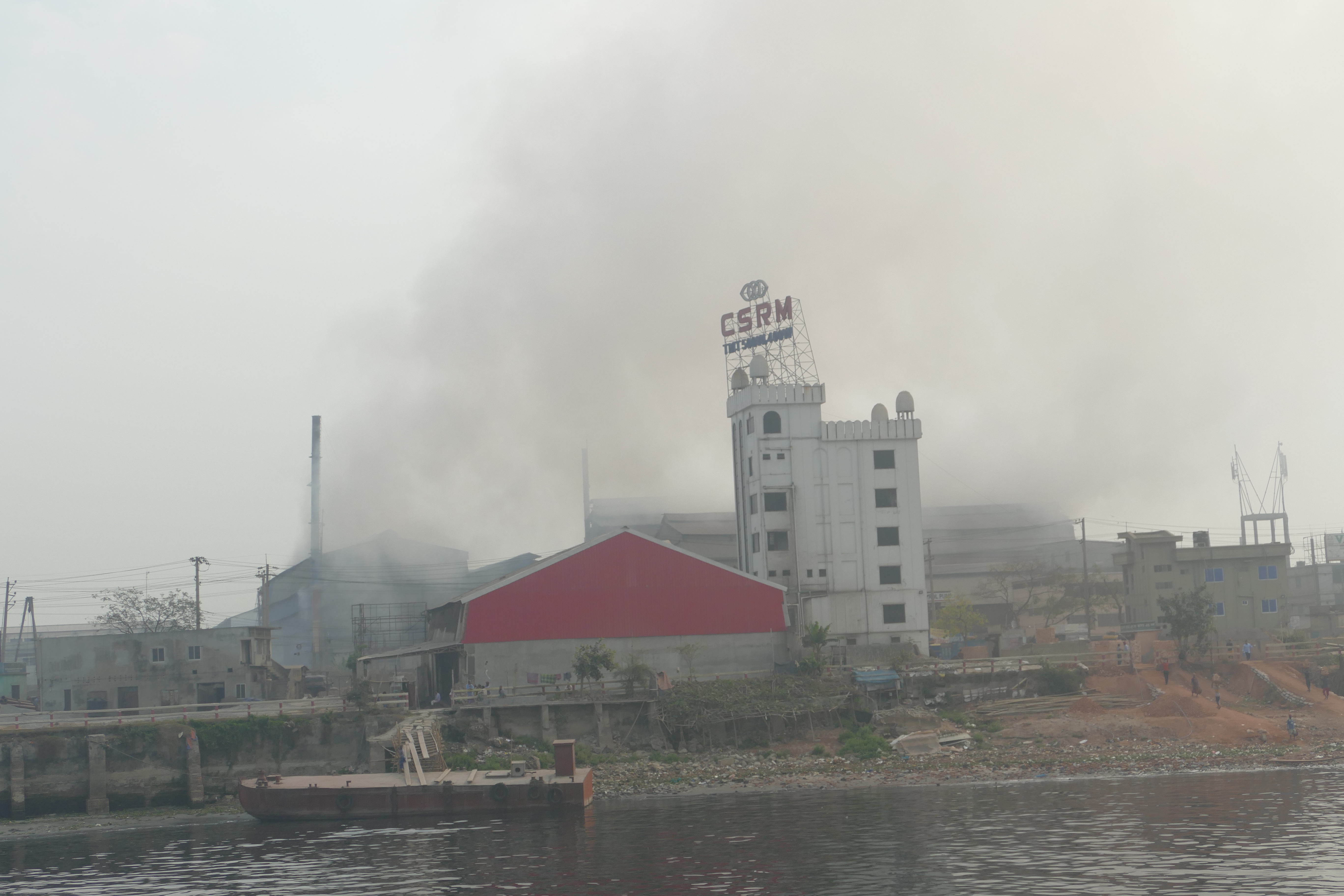
The four rivers the prime minister named encircle the capital. The Buriganga, a tidal river about 27 km long that passes west and south of the old city, gets most of its flow from the Turag; Banglapedia notes that its pollution is among the worst in the country, with the tanneries of Hazaribagh long its largest source, and that in the dry season dissolved oxygen can fall to almost nothing. The Turag joins the Buriganga near Mirpur and is tidal in its lower reaches. The Balu drains the wetlands east of Dhaka and joins the Shitalakshya near Demra.
Researchers had mapped the scale of the problem a year before the reply. A study by the River and Delta Research Centre, carried out in January 2025 with satellite images and field surveys and reported by The Daily Star on 3 February 2025, found that pollution sources around Dhaka's rivers had nearly doubled in five years, from 608 to 1,024. They included 102 industrial waste outlets, 75 municipal sewerage lines and 216 small private sewer outlets. The Buriganga had 506 sources, the Shitalakshya 173, the Turag 97 and the Balu 33. The DoE's director general said then that the department would act once it received the full report. In 2019 the High Court had declared rivers legal entities and made the National River Protection Commission their legal guardian.
Against this background, the reply said 248 establishments had installed effluent treatment plants, which treat liquid waste before it is discharged, and that cameras were being installed so that the plants could be watched in real time. The Business Standard and Prothom Alo described these as internet protocol (IP) cameras. The DoE had also identified the sources and nature of pollution in the four rivers and in 19 main canals flowing through Dhaka, the prime minister said; the reply did not name the canals.
Forest Department planting and the 25 crore programme
The 41,565 saplings the Forest Department had planted with the city corporations, the Water Development Board and the Roads and Highways Department were set within a much larger national target. On 4 March 2026 the prime minister chaired a review meeting at the Cabinet Division on two flagship government programmes, "25 crore trees in five years" and a special cell for a healthy Bangladesh, Desh Rupantor reported. On 11 March 2026, speaking at a World Wildlife Day event at Ban Bhaban in Agargaon, Environment, Forest and Climate Change Minister Abdul Awal Mintoo said the prime minister had announced a five-point "National Green Mission" to protect forests, wildlife and biodiversity, under which 25 crore trees would be planted across the country over the next five years on a priority basis, BSS reported. He also said that, in line with the government's election manifesto, about 20,000 km of rivers and canals would be dug or re-dug.
In Dhaka the space for such planting is limited, which is why the reply listed narrow public strips: medians, U-loops, ponding areas and the banks of canals. The reply set no date for when the 12 measures would be completed and gave no cost figures.
Photo: Shafiul Islam Shaikot / Wikimedia Commons (CC BY 4.0)
Sources: Jagonews24, Bangladesh Sangbad Sangstha (BSS), Prothom Alo, The Business Standard, United News of Bangladesh (UNB), Dhaka Tribune, The Financial Express, bdnews24.com, The Daily Star (via Asia News Network), Desh Rupantor, World Bank, IQAir, Banglapedia, Wikipedia

Comments
(0)