
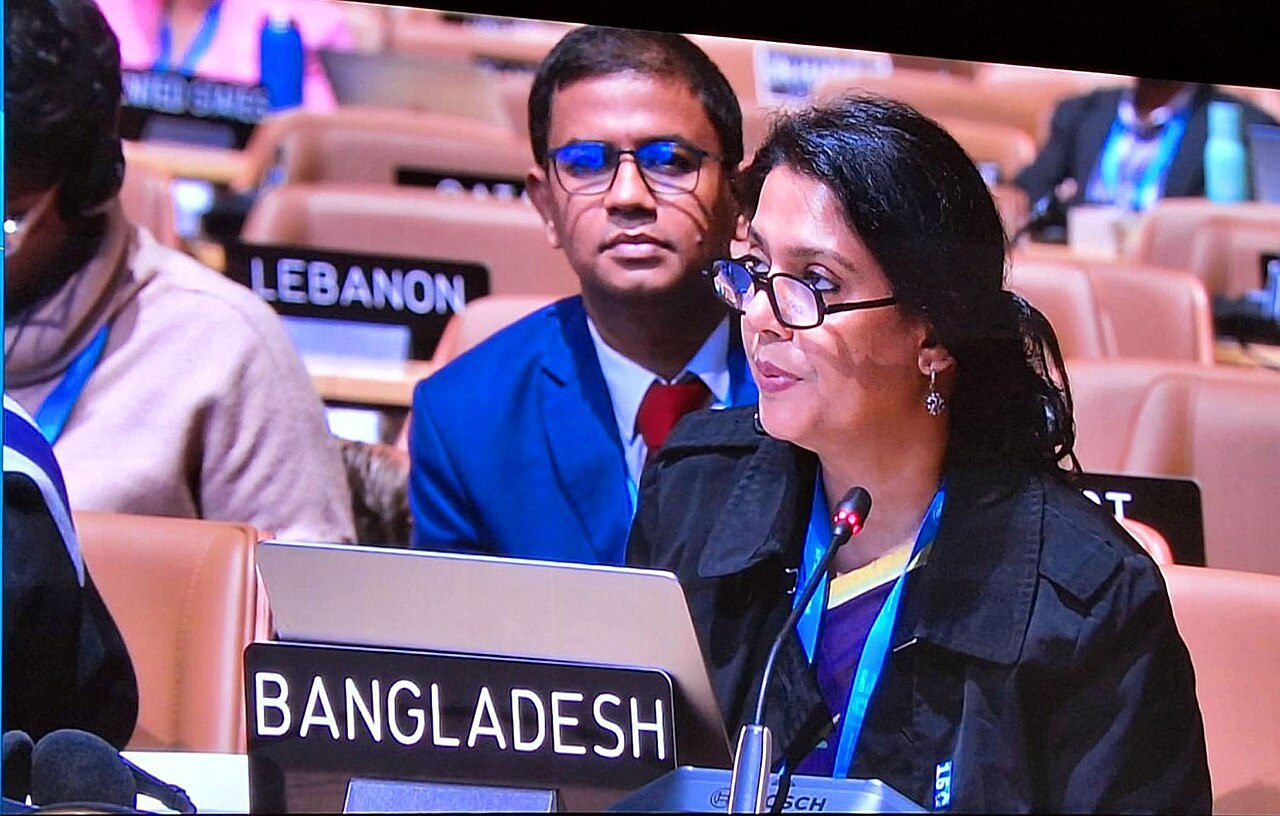
Several rich countries have still not said how much they will give developing countries, or how, to cope with climate change and build greener economies. Citing a report in Britain's Guardian, Ittefaq says that without that certainty vulnerable countries cannot draw up long-term plans and are struggling to attract private investment.
At COP29 in 2024, countries agreed that by 2035 governments of industrialised nations would provide US$300 billion a year to developing countries, with about US$1 trillion more expected from other sources, to cope with extreme weather and shift to low-carbon economies.
An analysis by the Natural Resources Defense Council (NRDC) and the think tank E3G says rich countries are on course towards the US$300 billion goal and could provide about US$229 billion a year by 2030, about US$185 billion of it through multilateral development banks. Joe Thwaites, the NRDC's director of international climate finance, told the Guardian that even if the European Union keeps up about US$36 billion a year and pledges from the UK, Canada and some smaller countries are counted, there would still be a gap of about US$7 billion.
Thwaites said a different president in the White House could help close part of the gap, and Japan and Australia could contribute. But he thought new pledges were unlikely soon and called the silence of rich countries regrettable. A separate Carbon Brief analysis found bilateral climate aid could fall by as much as 70 per cent if no new money comes once current pledges expire.
Climate finance is one of the main issues at COP31, which opened on Monday in Antalya, Turkey, with Australia presiding. Some developing countries want earlier finance decisions reopened because they fear funding will shrink. France, Germany and Australia are among the large economies that have not published new targets, and the report calls it unusual for Australia, as host, not to have announced a plan.
Under pressure from Donald Trump's White House, the World Bank dropped its formal climate finance target this year, though it will keep spending tens of billions of dollars a year on climate-related projects. The UK also cut climate finance this year. France's development agency AFD says it will provide 6 billion euros a year in climate finance from 2025 to 2027 and 800 million euros for biodiversity, and Japan says it will keep supporting developing countries under the Paris Agreement without announcing a new pledge.
Photo: Press Information Department / Wikimedia Commons (Public domain)
Source: Ittefaq


Comments
(0)