
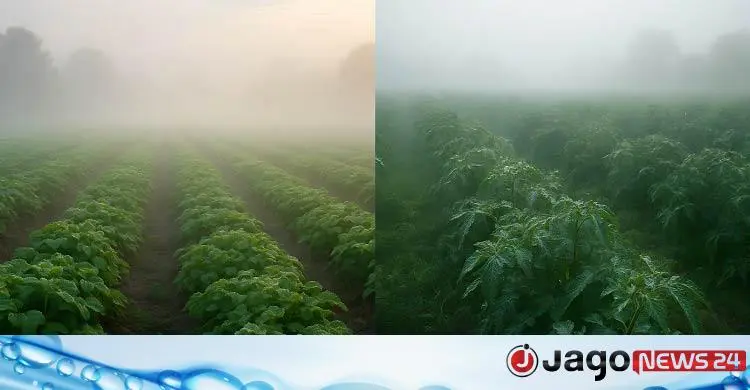
Winter is a very important season for farming in the subcontinent, with Boro rice, wheat, potatoes, mustard, pulses, vegetables and various fruits grown widely. In recent years, climate change has made excessive and prolonged fog in winter a major problem. Fog does not just reduce visibility; it has serious direct and indirect negative effects on crops' normal growth, disease resistance, yield and quality.
Scientifically, fog is a dense presence of tiny water droplets in the air, which blocks sunlight and raises the relative humidity of the air to 90-100%. Why such conditions harm crops is analysed below.
Less sunlight, less photosynthesis
Photosynthesis is the main driver of crop growth and production: plants use sunlight, water and carbon dioxide to make their own food. But heavy fog stops sunlight reaching the leaves. Light intensity falls and the rate of photosynthesis drops significantly, so the plant cannot make enough sugars and energy. If this lasts long, plants weaken, produce fewer tillers, branches and shoots, flowering and fruit setting are disrupted and in the end yields fall. In crops such as rice, wheat and mustard, the fog-related shortage of light directly harms grain formation.
Wet leaves and the spread of disease
One of the most harmful effects of fog is water staying on leaves for long periods. Normally sunlight and wind dry the dew on leaves in the morning, but in heavy fog the leaves stay wet for longer and a humid microclimate forms around leaves and stems. This is an ideal environment for fungal and bacterial diseases, such as blast and sheath blight in rice, late blight in potatoes and tomatoes, downy mildew in cucumber, pumpkin and watermelon, and leaf spot and soft rot in vegetables. Fungal spores germinate quickly on wet leaves and disease can spread across a whole field in a very short time. Farmers then have to use extra pesticides, which raises production costs and harms the environment.
Temperature and humidity out of balance
Excess fog upsets the normal balance of air temperature and humidity. Relative humidity rises too high, plants transpire less and the uptake of water and nutrients from the roots slows. When transpiration falls, the movement of water and nutrients inside the plant is disrupted, so the plant cannot grow normally. In the long term this weakens its physiological functions.
Poor pollination and less fruit
Fog is even more damaging for flowering crops such as mustard, pulses, fruit and various vegetables. In heavy fog pollen cannot dry and becomes sticky, and bees and other pollinating insects move about less. Pollination is disrupted and flowers drop, fewer fruits form and grains and seeds do not fill properly, which directly hits total production.
Pests and diseases
Damp, foggy conditions suit the breeding of many pests, such as aphids, thrips and mites. These insects do not only suck sap; in many cases they also spread viral diseases. They attack weak and diseased plants even faster, so fields suffer the combined damage of disease and pests.
Lower quality of fruit and vegetables
Heavy fog harms not only yield but also crop quality. Fruit and vegetables do not develop their normal colour, sugar and dry matter content fall, storage life shortens and rotting increases in transport and marketing. Farmers then miss out on fair prices and the market acceptability of their produce falls.
What farmers should do
The damage from heavy fog cannot be avoided completely, but proper management can reduce it considerably:
- Improve air movement by light weeding and weed control in the field in the morning.
- Avoid excess irrigation.
- Use preventive fungicides before disease appears.
- Choose disease-tolerant and short-duration varieties.
- Strengthen plants' disease resistance through balanced fertiliser management.
- Keep good drainage in the field.
In short, excessive fog reduces crops' photosynthesis, increases disease and pest attacks and harms both yield and quality. In this reality of climate change, science-based, digital and smart farm management, awareness and timely decisions are farmers' main means of survival.
Source: Jagonews24. First published in Bengali on The Agro News.
Comments
(0)