
In October 2021 the Islam page of the Bangladeshi news site Jagonews24 published a short guide to the deeds and supplications that, in Islamic teaching, help a believer stay steadfast in faith (iman). The guide named three practices: holding fast to the Quran and the Sunnah, keeping company with the truthful, and remembering Allah at all times. It closed with seven supplications taken from the Quran and the hadith collections, each given in Arabic with a pronunciation and a meaning. This report sets out what the guide said and traces every verse and supplication it quoted to its place in the Quran or in the hadith literature, using the texts and references published by Quran.com and Sunnah.com, with background from classical commentary and standard reference works.
The writer began from the premise that faith is a Muslim's greatest wealth and that no deed has value without it. As evidence the guide quoted the opening of Surah Al-Asr: "By time, all people are in loss, except those who believe and do good deeds." The guide cited the passage as verses 1 and 2. In the Quran the words "except those who believe and do righteous deeds" open verse 3, so the full reference is Quran 103:1-3.
Surah Al-Asr: faith named before deeds
The guide drew its first lesson from the order of the words. The verse mentions faith first, it said, and only the good deeds of believers will be accepted. Holding to true faith is therefore a believer's first task. To stay firm in it, the writer said, there are certain duties, which bring peace and good fortune in this life and the hereafter, and for these a person must ask Allah's help. Islam, the guide said, gives direction on both the duties and the prayers.
Al-Asr is the 103rd chapter (surah) of the Quran and has three verses. It is one of the shortest chapters: reference works list it as the third shortest, after Al-Kawthar and An-Nasr. In the Sahih International translation published on Quran.com the whole passage reads: "By time, indeed, mankind is in loss, except for those who have believed and done righteous deeds and advised each other to truth and advised each other to patience." The name comes from the word al-asr in the first verse, which translators render as time, the declining day or the afternoon.
Quran.com lists the surah as Meccan, that is, revealed in Mecca before the Prophet's emigration to Medina. In the introduction to the surah in his commentary Tafhim al-Quran, which Quran.com reproduces, Sayyid Abul Ala Maududi notes that the early authorities Mujahid, Qatadah and Muqatil regarded it as Medinan, but that a great majority of commentators hold it to be Meccan, and that its subject matter points to the earliest period in Mecca. Maududi describes the surah as a specimen of comprehensiveness and brevity in which the way to true success and the way to ruin are both stated, and he cites Imam Ash-Shafi'i's remark that if people only considered this surah well, it alone would suffice them for guidance.
The classical commentator Ibn Kathir, in the abridged English edition of his tafsir published on Quran.com, explains al-asr as the time in which the deeds of human beings, good or evil, take place, and records the view of Zayd bin Aslam that it means the evening, while calling the first view the popular one. He explains that Allah swears by time that man is in loss and destruction, and then makes an exception for those who believe in their hearts and work righteous deeds with their limbs. Advising one another to truth, in his explanation, means performing acts of obedience and avoiding what is forbidden, and advising one another to patience means bearing the harm that comes to those who call others to good. Read this way, the verse joins belief and action in the same sentence, which is the point the guide built on.
The prayer for the straight path
Because faith comes first, the writer advised readers to pray often with these words: "Ihdinas siratal mustaqim, siratallazina an'amta alaihim, ghairil maghdubi alaihim wa laddallin." The guide's meaning: "Guide us to the straight path, the path of those You have blessed, and keep us from the path of those who earned Your anger and of those who went astray." These are verses 6 and 7 of Al-Fatiha, the first chapter of the Quran (Quran 1:6-7). Sahih International translates them: "Guide us to the straight path, the path of those upon whom You have bestowed favor, not of those who have earned [Your] anger or of those who are astray." The guide gave the same prayer again as the first of its seven closing supplications.
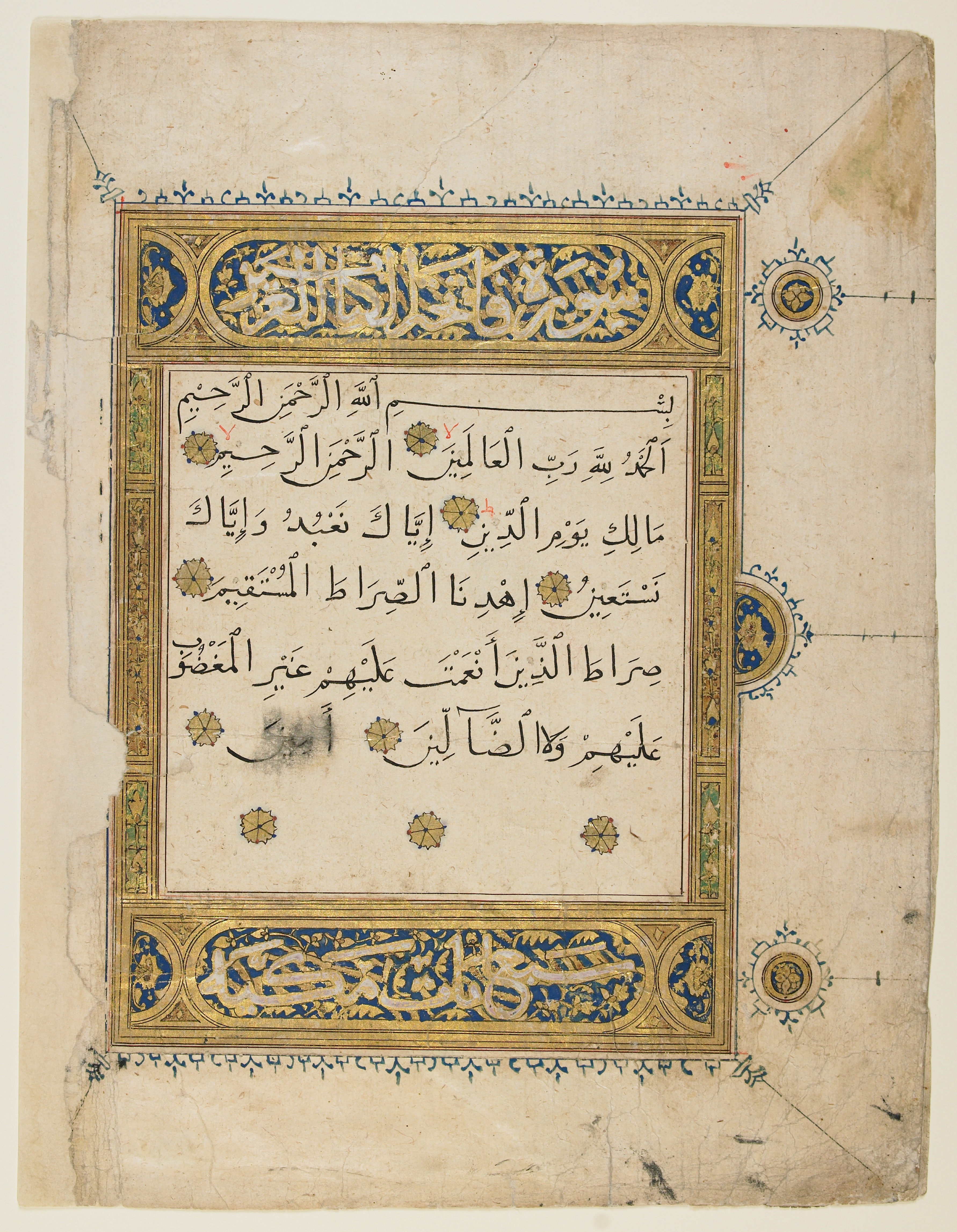
Al-Fatiha, "The Opening", has seven verses and is a prayer for guidance and mercy. Muslims recite it in every unit of the ritual prayer (salah), obligatory and voluntary alike. Its other names include Umm al-Kitab, "Mother of the Book", and Al-Hamd, "The Praise". Maududi writes that it was among the very earliest revelations and, according to authentic traditions, the first complete surah revealed to the Prophet Muhammad. He describes it as a prayer that Allah taught to all who want to study His book, placed at the start of the Quran so that the reader begins by asking for guidance; the rest of the Quran, in his reading, is the answer to that request.
Ibn Kathir explains the guidance asked for in verse 6 as being directed and led to success, and he quotes the early commentator Abu Ja'far At-Tabari, who said that the community agreed that "sirat al-mustaqim" means, in the language of the Arabs, a clear path without branches, and that the straight path mentioned in the Quran refers to Islam. Those "upon whom You have bestowed favor", in Ibn Kathir's explanation, are the people of guidance, sincerity and obedience to Allah and His messengers, who keep His commandments and refrain from what He has forbidden. The prayer for steadfastness that the guide recommended is therefore a request to be kept on that path, not merely to find it once.
What iman means in Islamic teaching
The guide's argument rests on the term iman. The Arabic word means faith or belief, and also recognition. In its simplest definition iman is belief in six articles of faith (arkan al-iman): belief in the oneness of God, in His angels, in the books He revealed, in His prophets, in the Day of Judgment and in divine decree (qadar), the good of it and the bad of it.
Sunni scholarship has generally defined iman as more than inner conviction. A definition widely attributed to Ahl al-Sunnah wa'l-Jama'ah describes it as recognition with the heart, saying with the tongue and doing with the limbs, and adds that it increases with obedience and decreases with sins. The jurist Ibn 'Abd al-Barr wrote that the people of jurisprudence and hadith were unanimous that iman is speech and action, and the early scholar Sufyan ibn 'Uyaynah said that iman is saying and deed, and that it increases and decreases. Shia theologians have proposed other theories, some of which define faith as the affirmation of the heart alone.
This is the background to the guide's statement, in its section on remembrance, that doing good greatly increases a person's faith in this world and brings peace and good fortune at death. In the Sunni view described above, faith is not a fixed quantity that a person either has or lacks: it grows with obedience and weakens with sin, which is why the guide treated steadfastness as something a believer works at through deeds and asks for through prayer.
The guide also linked the way a person lives to the way that person dies. A believer, the writer said, dies doing the work to which he gave his life: if someone lives by the Quran and the Sunnah, his death will also be in their light, and that is why it is essential to shape one's life with good deeds as the Quran and the Sunnah direct.
Holding fast to the Quran and the Sunnah
The first practice the guide named was to obey the laws and commands of Allah and His Messenger properly. A life based on the Quran and the Sunnah, it said, is the way to stay firm in faith and brings peace in this world and the next. The writer supported this with a saying of the Prophet: "You will not go astray as long as you hold fast to two things: the Book of Allah and the Sunnah of His Messenger."
The saying is recorded in the Muwatta of Imam Malik (Sunnah.com reference: Book 46, Hadith 3). In the English translation on Sunnah.com it reads: Yahya related to me from Malik that he heard that the Messenger of Allah said, "I have left two matters with you. As long as you hold to them, you will not go the wrong way. They are the Book of Allah and the Sunna of His Prophet." The compilation Mishkat al-Masabih repeats it as number 186, noting that Malik reported it in mursal form, that is, without naming the Companion in the chain of narrators. Sunnah.com shows the grading of the Mishkat entry as hasan (good) according to both al-Albani and Zubair Ali Za'i.
The Sunnah is the body of traditions and practices of the Prophet Muhammad that Muslims take as a model to follow. In classical Islamic thought it is documented mainly through hadith, the transmitted reports of his teachings, sayings, actions and silent approvals, and together with the Quran it forms the primary source of Islamic law, belief and theology. Sunni Muslims rely chiefly on six canonical hadith collections, known as the Kutub al-Sittah, to document it.
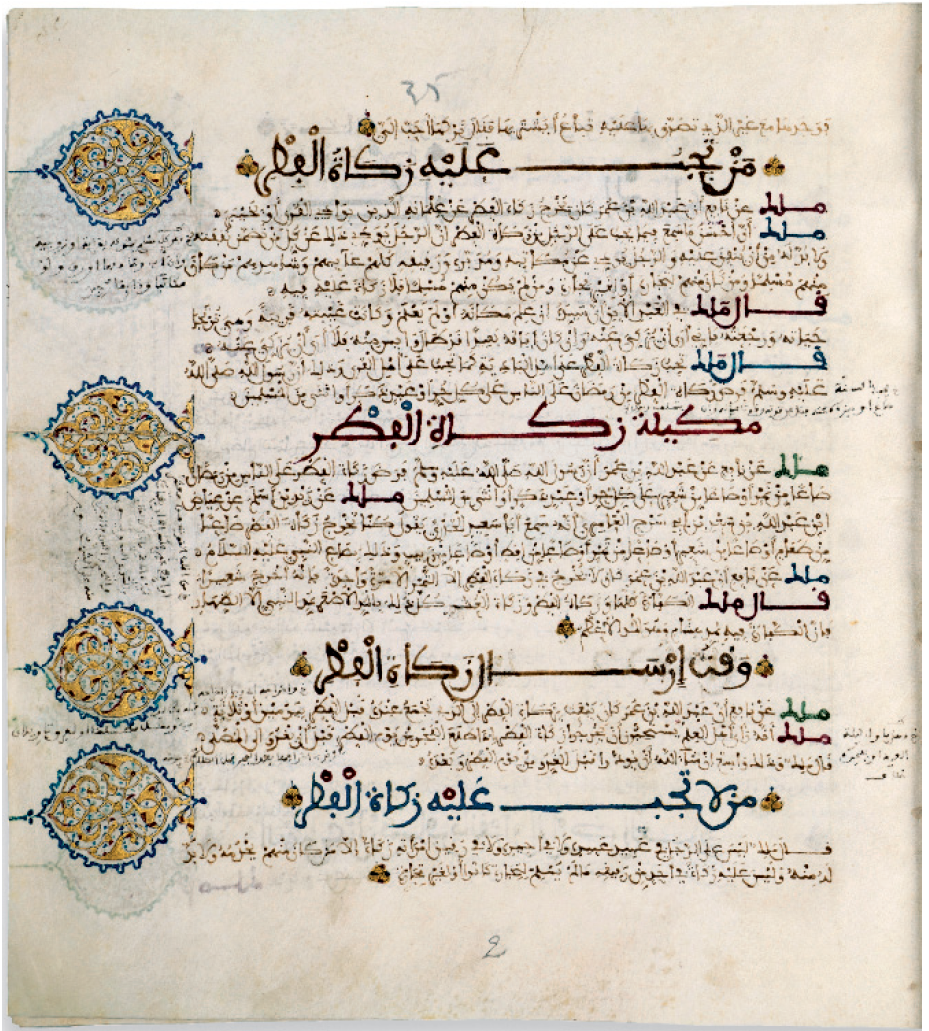
The Muwatta, whose title means "the well-trodden path", was compiled in the 8th century by Malik ibn Anas (711-795), the scholar of Medina. It is one of the earliest surviving collections of hadith and the earliest extant example of a musannaf, a collection arranged by topic, and it was the first legal work to combine hadith with jurisprudence (fiqh). Malik is reported to have selected just over 1,900 narrations for it out of the 100,000 available to him, and to have worked on it for about forty years. Imam Ash-Shafi'i said that there was no book on earth, after the Book of Allah, more authentic than Malik's. Of its many transmitted versions the best known is the one transmitted by Yahya ibn Yahya al-Laythi, which is why the Sunnah.com text begins "Yahya related to me from Malik".
Keeping company with the truthful
The second practice was to stay close to people who are firm on truth and justice, devoted to the service of the religion and representative of the Quran and the Sunnah, and to live by their advice. That, the guide said, makes it easier to stay steadfast in faith. It quoted the verse: "O believers, fear Allah and be with the truthful (sadiqin)." The verse is Quran 9:119, which Sahih International translates: "O you who have believed, fear Allah and be with those who are true."
The verse belongs to At-Tawbah ("The Repentance"), the ninth chapter of the Quran, a Medinan surah of 129 verses. Maududi notes that it is the only chapter of the Quran that does not begin with the Bismillah, and that its last section, verses 73 to 129, was revealed after the Prophet returned from the campaign of Tabuk in the ninth year after the emigration to Medina.
Ibn Kathir's commentary places verse 119 directly after two verses about that campaign. Verse 117 speaks of the hardship of the march to Tabuk, which early commentators described as a year of little rain, intense heat and scarce supplies. Verse 118 says that Allah also forgave the three who were left alone after they stayed behind, and Ibn Kathir names Ka'b ibn Malik as one of them. In the account Ibn Kathir records, Ka'b decided to tell the Prophet the truth about why he had stayed behind instead of offering a false excuse, as others did. The command to "be with those who are true" comes in the next verse.
Remembrance of Allah and renewing faith
The third practice was to remember Allah at all times. The writer said that dhikr is not only saying "subhanallah" and "alhamdulillah" while sitting in a mosque or at home. Alongside the obligatory acts of worship, it said, doing every task of life in Allah's name and according to ethics is dhikr; praying to Allah for someone who has done you good is dhikr; and helping someone in trouble while asking Allah's help for them is dhikr as well.
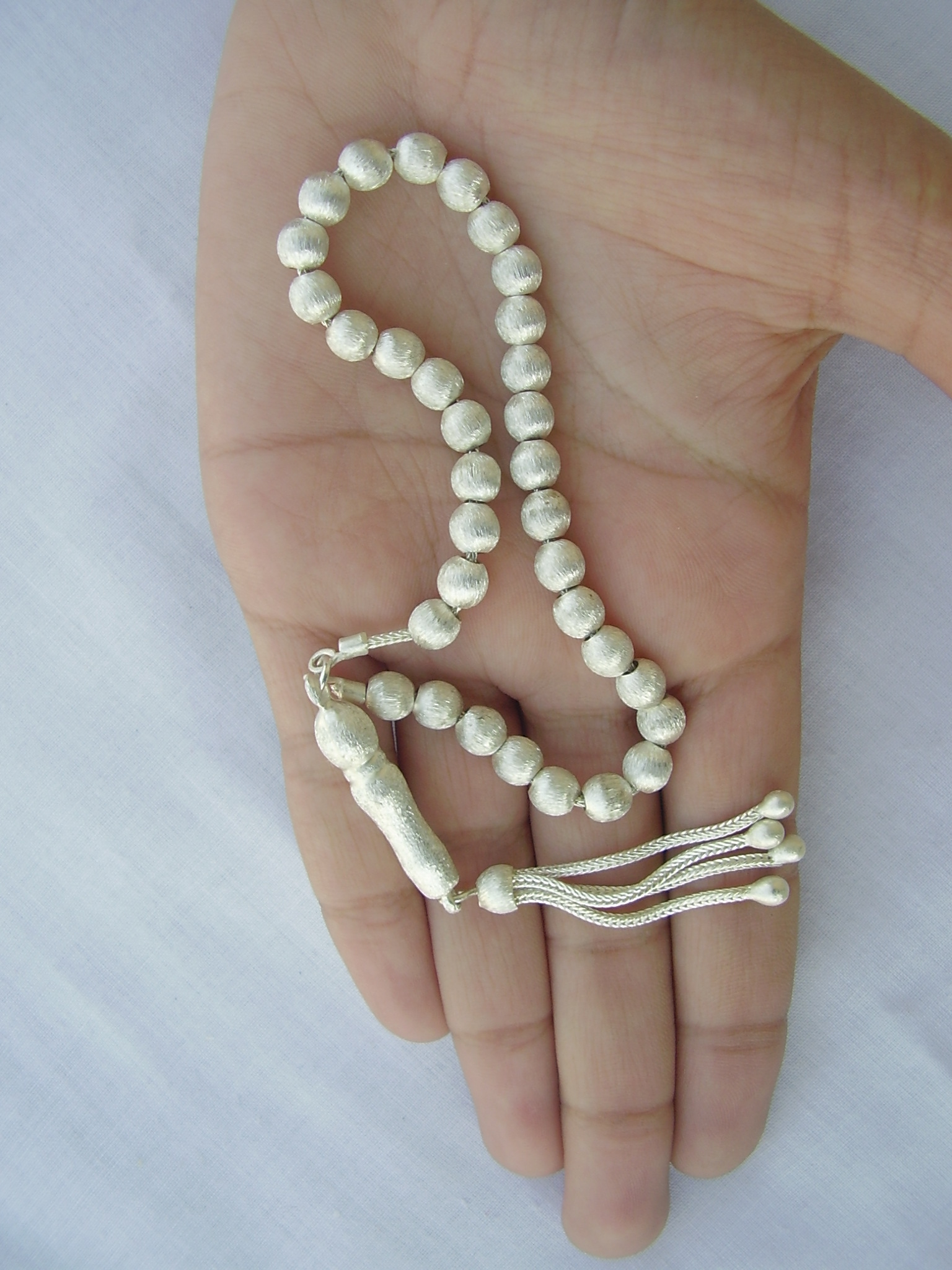
The Arabic word dhikr means remembrance, reminder or mention. In its narrower sense it is a form of worship in which set phrases or prayers are repeated in order to remember God, and it usually includes the names of God or supplications from the Quran or the hadith. It may be counted on the fingers or on prayer beads and performed alone or in a group, and a person who performs it is called a dhakir. The Quran uses the same word for the reminder God sends through His prophets and for the human response to it. Dhikr has a central place in Sufism, where each order usually has its own form of it. The guide's broader definition, which counts everyday conduct done in Allah's name as remembrance, sits alongside that narrower sense rather than replacing it.
To show how remembrance strengthens faith, the guide cited a saying of the Prophet given in answer to his Companions: "Renew your faith." When they asked, "How shall we renew our faith, O Messenger of Allah?", he said: "Say 'La ilaha illallah' often." The narration is in the Musnad of Ahmad ibn Hanbal (number 8710), in the section of reports from the Companion Abu Hurayrah. The Darussalam edition of the Musnad grades its chain of narrators as weak (da'if).
"La ilaha illallah" means "There is no god but Allah". Repeating it is called tahlil, one of the best-known forms of dhikr, and the phrase is the first part of the shahada, the testimony of faith a person makes on entering Islam.
The Musnad of Ahmad ibn Hanbal (died 241 AH, 855 CE), the scholar to whom the Hanbali school of law is attributed, is one of the largest hadith collections. Unlike collections arranged by subject, it is arranged by the Companions who narrated the reports. Sunnah.com counts it among the nine books of hadith and lists 28,199 hadith in it from 1,277 narrators.
Seven supplications for steadfast faith
The guide's last section advised readers to pray to Allah often and in private to stay firm in faith, asking for all-round good in this life and a death with faith and peace at the final moment, to weep before Allah, and to repeat seven supplications often. They are listed here in the guide's order, with the guide's meaning and the place each comes from:
- "Ihdinas siratal mustaqim, siratallazina an'amta alaihim, ghairil maghdubi alaihim wa laddallin." Meaning: "Guide us to the straight path, the path of those You have blessed, and keep us from the path of those who earned Your anger and of those who went astray." Source: Quran 1:6-7, the closing verses of Al-Fatiha.
- "Rabbana afrigh alaina sabran wa tawaffana muslimin." Meaning: "Our Lord, pour patience upon us and let us die as Muslims." Source: Quran 7:126 (Al-A'raf, a Meccan surah of 206 verses). In Ibn Kathir's commentary these are the words of Pharaoh's magicians, who believed in Moses after seeing his signs and answered Pharaoh's threats with this prayer.
- "Rabbana la tuzigh qulubana ba'da iz hadaitana wa hab lana min ladunka rahmatan innaka antal wahhab." Meaning: "Our Lord, do not let our hearts deviate after You have guided us, and grant us mercy from Yourself; You are the Giver of all." Source: Quran 3:8 (Al Imran, a Medinan surah of 200 verses). The verse before it describes "those firm in knowledge", who say of the whole Book, "We believe in it. All [of it] is from our Lord", and verse 8 gives their prayer.
- "Allahumma inni a'udhu bika an ushrika bika wa ana a'lamu, wa astaghfiruka lima la a'lamu." Meaning: "O Allah, I seek refuge in You from knowingly associating partners with You, and I ask Your forgiveness for what I do unknowingly." Source: Al-Adab al-Mufrad of al-Bukhari, number 716. In this narration the Companion Ma'qil ibn Yasar says he went to the Prophet with Abu Bakr, and the Prophet told Abu Bakr that associating partners with Allah (shirk) can enter people more quietly than the movement of ants, and taught him these words to say.
- "Allahumma musarrifal qulubi sarrif qulubana ala ta'atika." Meaning: "O Allah, Turner of hearts, turn our hearts to Your obedience." The guide cited Muslim and Mishkat. Mishkat al-Masabih (number 89) gives it from Abdullah ibn Amr, who reported the Prophet as saying that the hearts of all people are between two of the fingers of the Compassionate, like one heart, which He turns as He wills, before he made this prayer; Mishkat notes that Muslim transmitted it. Sunnah.com shows it graded sahih (sound).
- "Ya muqallibal qulubi thabbit qalbi ala dinika." Meaning: "O Turner of hearts, keep my heart firm on Your religion." The guide cited Tirmidhi and Mishkat. In Jami' at-Tirmidhi (number 2140) the Companion Anas says the Prophet would often say these words; when Anas asked whether he feared for them although they believed in him, the Prophet said yes, because the hearts are between two of Allah's fingers and He turns them as He wills. At-Tirmidhi called the hadith hasan, and Mishkat al-Masabih repeats it as number 102.
- "Allahumma inni a'udhu bika minal fitani ma zahara minha wa ma batan." Meaning: "O Allah, I seek refuge in You from all trials, those that are seen and those that are hidden." Source: Sahih Muslim 2867, narrated by Abu Sa'id al-Khudri from Zayd ibn Thabit. In it the Prophet told his Companions to seek refuge with Allah from trials (fitan), the visible and the hidden, and they answered, "We seek refuge with Allah from turmoil, its visible and invisible aspects."
Three of the seven prayers come from the Quran and four from the hadith collections. Two of them, the fifth and the sixth, address Allah as the one who turns hearts, which matches the theme of the whole guide: that a believer's heart can change, and that steadfastness is asked for as well as worked for. The guide ended with a prayer that Allah grant the Muslim community a life built on the Quran and the Sunnah, a death of peace and good fortune, firmness in faith, and the company of the truthful.

The collections behind the supplications
The references the guide gave in brackets, "Muslim, Mishkat" and "Tirmidhi, Mishkat", point to some of the best-known books of hadith. Sahih Muslim was compiled by Imam Muslim ibn al-Hajjaj al-Naysaburi (206-261 AH, 821-875 CE). Sunnah.com describes it as one of the most authentic collections of the Sunnah, forming with Sahih al-Bukhari the pair known as the "Two Sahihs", and says it contains roughly 7,500 hadith, counting repetitions, in 57 books. According to the same account, Imam Muslim examined some 300,000 hadith and kept about 4,000 whose authenticity he considered fully established.
Jami' at-Tirmidhi was compiled by Abu Isa Muhammad at-Tirmidhi (209-279 AH, 824-892 CE) and is one of the six canonical collections. Sunnah.com says it contains roughly 4,400 hadith, counting repetitions, in 46 books, and that at-Tirmidhi studied hadith under al-Bukhari, Muslim and Abu Dawud. In his note on the prayer "Ya muqallibal qulub" he calls that hadith hasan.
Mishkat al-Masabih, "The Niche of Lamps", by al-Khatib at-Tibrizi, is an expanded and revised version of al-Baghawi's Masabih as-Sunnah. It contains 5,945 hadith; at-Tibrizi added 1,511 hadith to the 4,434 in al-Baghawi's book and, unlike al-Baghawi, named the collection in which each report can be found. That is why the guide could cite it alongside the original sources. Many commentaries have been written on it, among them Mirqat al-Mafatih by the 17th-century scholar Mulla Ali al-Qari and an Urdu explanation, Mirat ul-Manajih, by Mufti Ahmad Yar Khan Naeemi.
Al-Adab al-Mufrad is a separate book by Muhammad al-Bukhari on manners and conduct, with 1,322 hadith. Al-Bukhari did not require the strict conditions of his Sahih for it, but later scholars who examined its chains ruled most of its narrations authentic or at least sound. Gradings of individual hadith can differ between scholars, which is why Sunnah.com shows more than one grading for many entries.
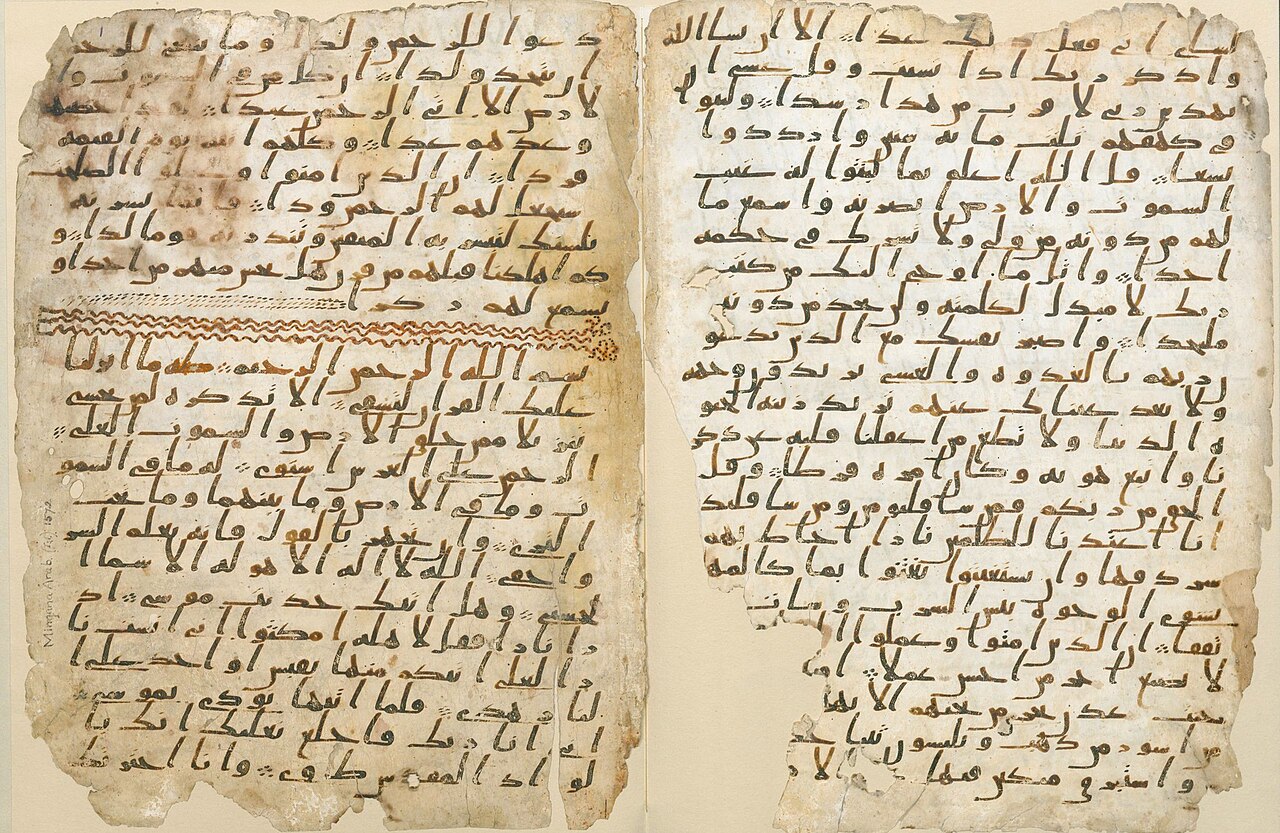
Photo: Unknown calligrapher, Library of Congress / Wikimedia Commons (public domain)
Sources: Jagonews24 (October 2021), Quran.com (Sahih International translation; Tafhim al-Quran introductions by Sayyid Abul Ala Maududi; Tafsir Ibn Kathir, abridged), Sunnah.com (Muwatta Malik 46:3; Mishkat al-Masabih 89, 102 and 186; Jami' at-Tirmidhi 2140; Sahih Muslim 2867; Al-Adab al-Mufrad 716; collection descriptions), Musnad Ahmad 8710 (Darussalam grading, via Tohed), Wikipedia (Iman, Dhikr, Sunnah, Al-Asr, Al-Fatiha, Tahlil, Al-Muwatta, Mishkat al-Masabih, Al-Adab al-Mufrad, Musnad Ahmad ibn Hanbal)
Comments
(0)