
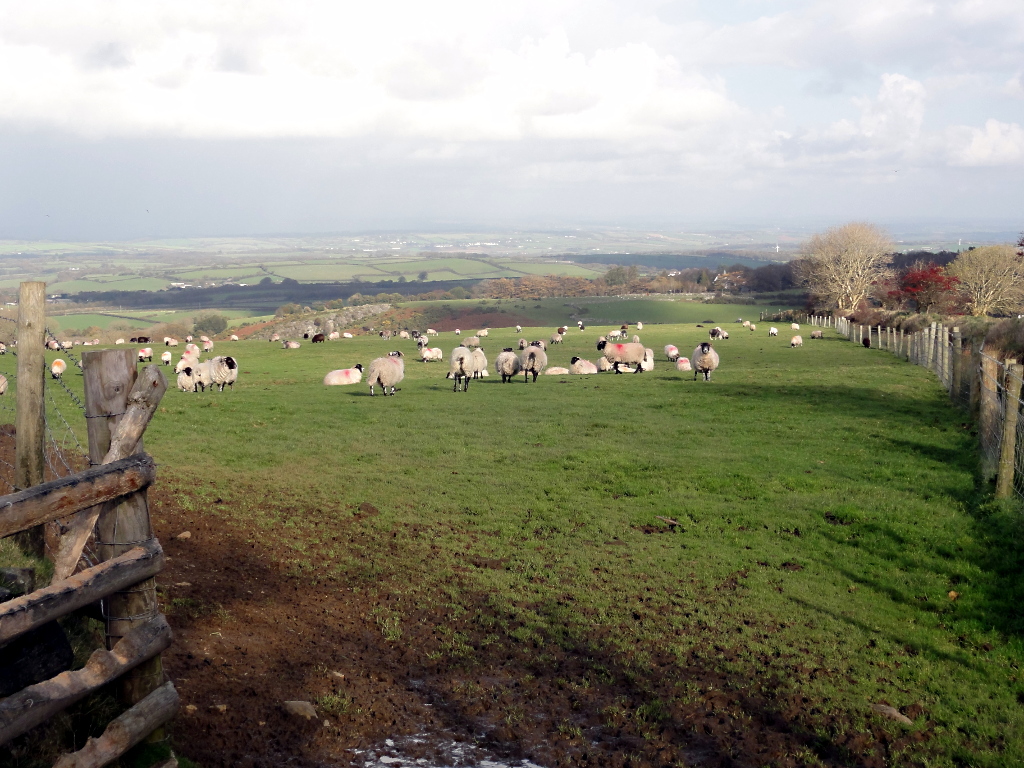
More than 40 Dartmoor farmers and graziers have urged MPs to reject claims that livestock are behind environmental decline on the moor, warning that further limits on grazing would damage farm businesses and rural communities. They put the case to Defra farming minister Stephen Morgan, local MP Sir Geoffrey Cox and NFU vice-president Robyn Munt, who visited Dartmoor on Monday 21 September for talks on its future.
The evidence, submitted to the Environment, Food and Rural Affairs select committee's inquiry on Land Use and Nature by Devon hill farmers Anton Coaker and John Shears with the backing of dozens of fellow graziers, rejects what it calls an increasingly influential rewilding or "overgrazing" narrative. "As a hill/livestock farming community, we're feeling the burden of constant attack by the noisy minority of 'rewilding' special interest groups and individuals," it says, naming campaigners including George Monbiot and claiming that "individuals within Natural England and other government departments are now acolytes of the ideology".
The farmers argue that grazing by sheep, cattle and ponies manages vegetation and holds back coarse species such as gorse and Molinia, or purple moor grass, and they raise concerns about peatland restoration, tree planting, methane policy and species reintroductions imposed without farmer support. Natural England has said many of Dartmoor's protected sites remain in unfavourable condition, with overgrazing, undergrazing, peat cutting, drainage and burning all contributing.
In July the then Defra secretary Emma Reynolds said there was broad agreement that grazing needed to be spread more widely rather than concentrated on protected sites, and asked the Dartmoor Land Use Management Group, chaired by Phil Stocker, to draw up a moor-wide grazing framework while telling Natural England to approach change sensitively. The same month the government removed Dartmoor ponies from stocking-rate calculations in new Environmental Land Management agreements, recognising them as conservation grazers; commoners still fear Natural England will seek further cuts to sheep numbers.
"We have had to reduce our stock massively, so animals are concentrated in the areas they prefer to be," Coaker, who farms at Sherberton Farm, Princetown, told Farmers Weekly. "The animals then overgraze those areas, while 90% of the moor receives little or no grazing. The rest becomes a jungle, with vegetation chest high in places."
Photo: Tony Atkin / Wikimedia Commons (CC BY-SA 2.0)
Source: Farmers Weekly

Comments
(0)