
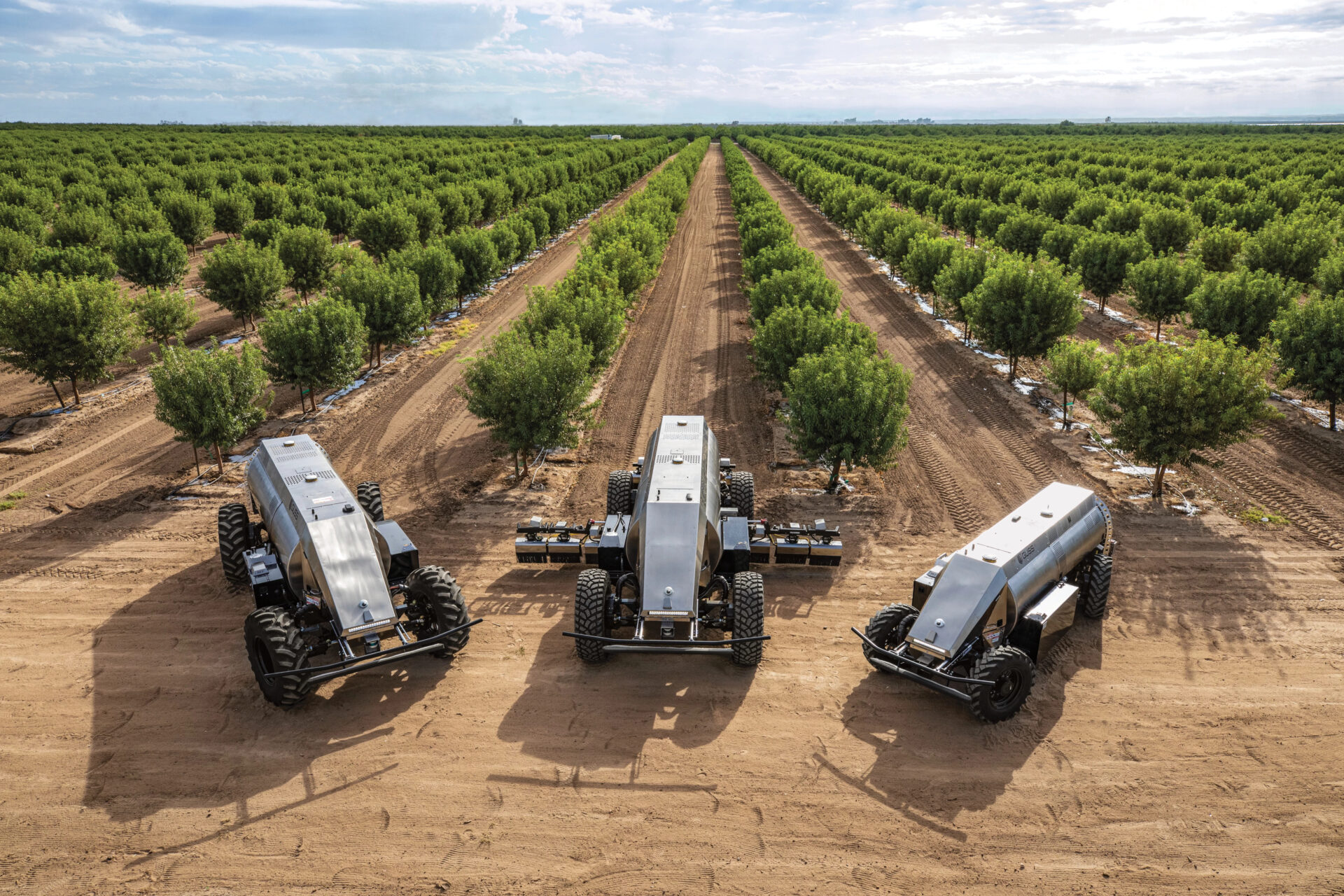
The agrifood innovation hub The Mixing Bowl says the robotic revolution in crop farming is still at an early stage, even as the number of companies building field robots keeps rising. Its 2026 Crop Robotics landscape report lists 400 companies across 15 segments, including weeding, harvesting, tractors, autonomy and scouting, a 25% increase on 2024.
The count hides a lot of movement. Chris Taylor, a partner at The Mixing Bowl, said about 20% of the companies on the previous landscape are no longer there, and more than a third of those on the latest one are new to it. He described the sector as active but extremely competitive and often difficult for startups. The landscape, first published in 2022, leaves out nursery and post-harvest robotics.
Europe accounts for half the companies on the map, while the United States leads among individual countries with 18% of the total; more than 40% of the American companies are in California. The companies listed have raised about $600 million between them, from early seed rounds to raises of more than $100 million. Investment is well below its 2021 peak but has held steady.
Spraying and weeding remain the busiest areas for venture money and for sales. Ben Palone of Western Growers said weeding robots are moving into the adoption phase, and that competition between companies has begun to shake up some of their business models.
Large equipment makers are buying their way in. Yamaha, Deere, Caterpillar and Kubota have acquired companies or technology, or struck partnerships with robotics startups: Kubota led an investment in the precision sprayer maker Kilter this year, and Deere bought GUSS, maker of semi-autonomous sprayers, in 2025 and has a $10 million exclusive partnership with the incubator Reservoir. Better-funded startups are also absorbing peers, as Bonsai Robotics did with Farm-ng and FarmX with AMOS Power. Taylor said these deals show an early market concentrating its capital and talent rather than a mature one.
Harvesting is still the hardest problem. A machine has to recognise the crop, find it in the canopy and pick it without bruising it, and the answer is often specific to one crop. Labour shortages, rising input costs and tighter rules on crop protection products are pushing growers towards robots all the same.
On artificial intelligence, Taylor noted that computer vision has been telling weeds from crops for about a decade. He expects the larger gains to come from faster development of the underlying technology, quicker deployment across different farms and machines that are more predictive and less reactive. The report was written about by Jennifer Marston for AgFunderNews.
Source: AgFunderNews
Comments
(0)