
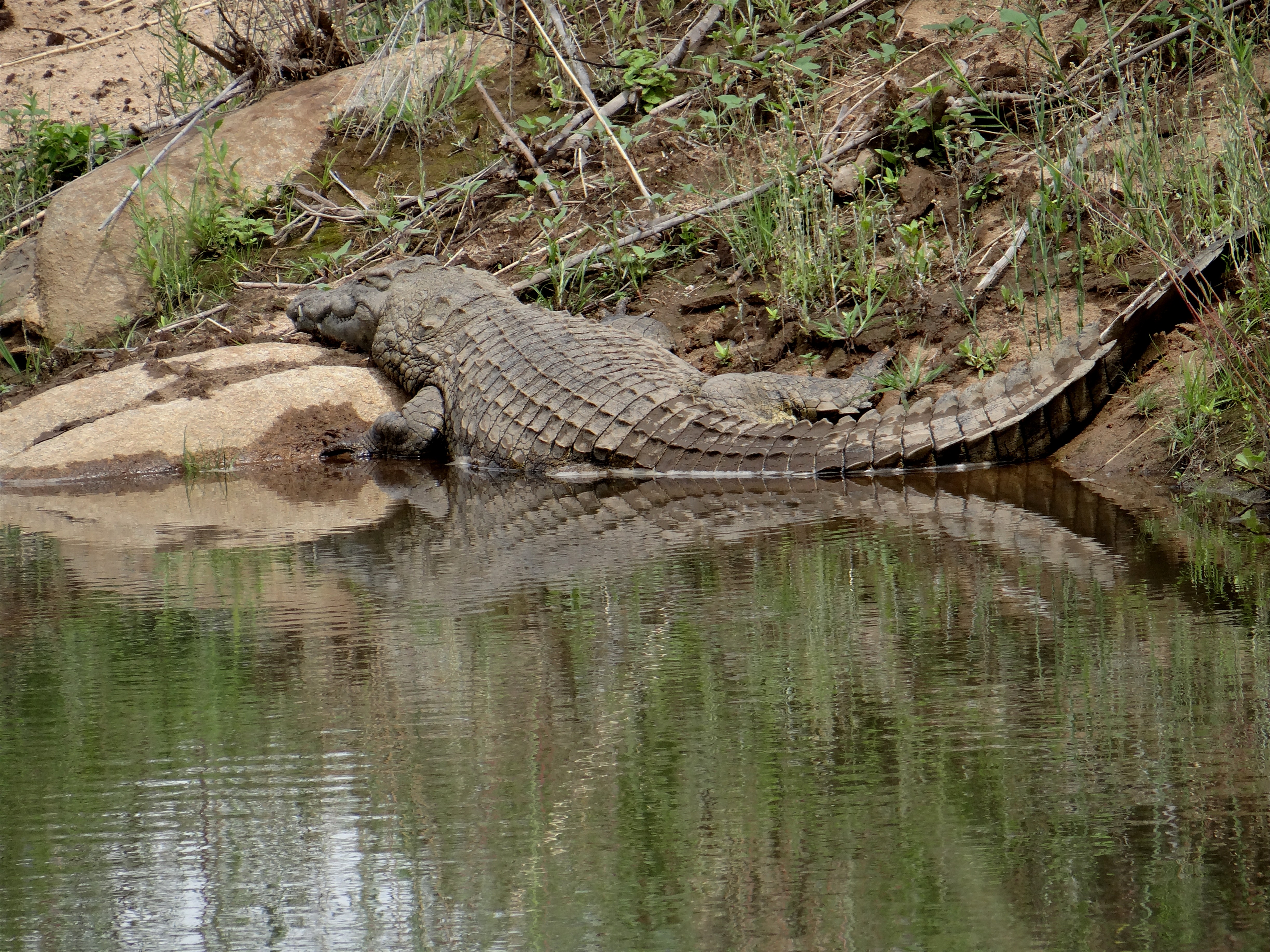
Human remains were found inside a large Nile crocodile that South African police lifted out of the flooded Komati River near the border town of Komatipoort in Mpumalanga province, during a search for a 59-year-old businessman who had been missing since his vehicle was trapped on a submerged low-lying bridge on the night of Monday 27 April 2026. Police announced the find on Saturday 2 May and said body parts recovered from the animal's intestines had been sent for DNA analysis to confirm the identity of the dead person. As of 5 May, police said the identity had not yet been confirmed.
The operation drew attention far beyond South Africa after police released video of a captain from the police diving unit being lowered from a helicopter on a rope to secure the dead crocodile, which was then lifted away by air. The BBC reported that the crocodile was 4.5 metres long and weighed 500 kilograms; the original report, by Jagonews24 citing the New York Post, described it as about 15 feet long. South African media named the missing man as Gabriel Batista, a Gauteng-based businessman.
A car trapped on a flooded bridge
According to SABC News, which reported on 29 April, the man's vehicle got stuck while he was crossing a submerged low-lying bridge over the Komati River at Komatipoort after rains on the Monday night. SABC reported that he lived in Vanderbijlpark in Gauteng. The Witness and IOL reported that the vehicle was a Ford Ranger and that he was reported missing on 27 April.
Police spokesperson Mavela Masondo told SABC News that when police arrived, "they found that there is no one inside the car, but the car was still there stuck." He added: "So, we believe or we suspect that he was alone when he got stuck in the river," and "We suspect that he jumped out, trying maybe to get out." Police divers continued the search, and SABC described the river as crocodile-infested. The same report noted that two members of the South African National Defence Force had been swept away in the same river in December 2025.
The search lasted about a week. The Witness reported that strong currents made it unsafe for teams to enter the water and that many crocodiles were moving in and out of the area where the vehicle was recovered. Captain Johan "Pottie" Potgieter of the Ehlanzeni Diving Unit was quoted as saying that "the search was becoming increasingly difficult due to many crocodiles moving in and out of the river." The operation involved several agencies: the police Search and Rescue Unit, NatJoints, South African National Parks (SANParks), Emergency Medical Services, the security firm Securecon and the Port Management Committee. SANParks supplied aerial support with a helicopter and a drone.
How the crocodile was identified
IOL reported that the crocodile police suspected was spotted from a helicopter over four consecutive days and was then confirmed by drone before it was euthanised. Smile 90.4FM reported that on the Saturday a crocodile suspected of having consumed human remains was spotted from the air just metres from where the man's bakkie had last been seen, and that authorities obtained permission to euthanise it. It was shot from a helicopter hovering above the river.
Speaking to the BBC, Captain Potgieter described where the animal lay: "The crocodile itself was lying on an island... there really was no other way to get to it except from the air." The BBC reported that drones and helicopters had found a small island where several crocodiles were basking, and that boats were judged too dangerous because of other crocodiles, hippos and rocks. After it was shot, Potgieter said, "It turned onto its back and they thought that it was dead." But, he added, "by the time we went back, it was back onto its right side and it had swum a bit upstream."
A police diver lowered on a rope
Captain Potgieter, who the BBC said had served in the police for 38 years, was then lowered from a SANParks helicopter into the river to secure the crocodile with a rope so that it could be lifted out. National police spokesperson Brigadier Athlenda Mathe called it a "highly dangerous and complex operation along the Komati River." Smile 90.4FM reported that he was strapped into a harness, worked in strong winds with the risk of equipment failure, was lowered close to the animal's head without knowing whether it was fully dead, and that two other crocodiles nearby swam off during the operation.
He told the BBC: "There were other crocodiles next to that one that were probably there because of the blood in the water. But luckily because of the noise of the helicopter and the downdraft blowing around, they moved away and didn't bother me." He also explained that once he was in the air there was no turning back: "When I was hanging there, there was no way for me to communicate with the pilot." Only after he had tied the rope, he said, "Then I knew it was 100% dead. Because if it wasn't, it would have definitely attacked me." On the radio station Smile 90.4FM he said: "There are so many things that can go wrong."
Potgieter told the BBC it was his first mission of this kind: "This was definitely a first and hopefully it will also be the last time...there's really no way to prepare." He said his family had not understood the danger until they saw the video online. Explaining why divers take such risks, he said: "We have a lot of empathy for the families of the victims. They are grieving a loved one," and that giving families closure "is one of our core motivators."
Acting National Police Commissioner Lieutenant General Puleng Dimpane praised the captain's "extraordinary bravery", as reported by the BBC, and said his willingness to risk his life "reflects the unwavering commitment of SAPS members to serve and protect." The acting Mpumalanga provincial commissioner, Major General Zeph Mkhwanazi, said: "I give honour to the dedicated team that has put their lives in danger to find the missing person."
What police found and what remained unconfirmed
Smile 90.4FM reported that the crocodile was taken to the nearby Kruger National Park, where a forensic examination found human remains in its intestines. In its statement the South African Police Service (SAPS) said body parts found in the crocodile's intestines had been taken for DNA analysis to confirm the identity of the deceased. Police spokesperson Colonel Mavela Masondo told The Witness that DNA testing was under way to confirm whether the remains were those of the missing man, and The Witness reported on 5 May that his identity had not been confirmed.
The crocodile also held items that had nothing to do with its last meal. Police said they found "about six sets of different Crocs and flip-flop shoes" inside the animal, IOL reported. Captain Potgieter said: "I can't say why those were there or why he ate them, but it shows that these crocodiles are very active in this area." He said the shoes, which do not digest, may have come from earlier victims, and IOL reported that investigators were considering whether the crocodile had consumed more than one person. Police did not say when the items had been swallowed.
Captain Potgieter told The Witness that the man was believed to have drowned before the crocodile consumed him; police said forensic analysis would establish whether the remains were his, and that the investigation into the circumstances was continuing. The man's family was at the scene throughout the search, Smile 90.4FM reported.
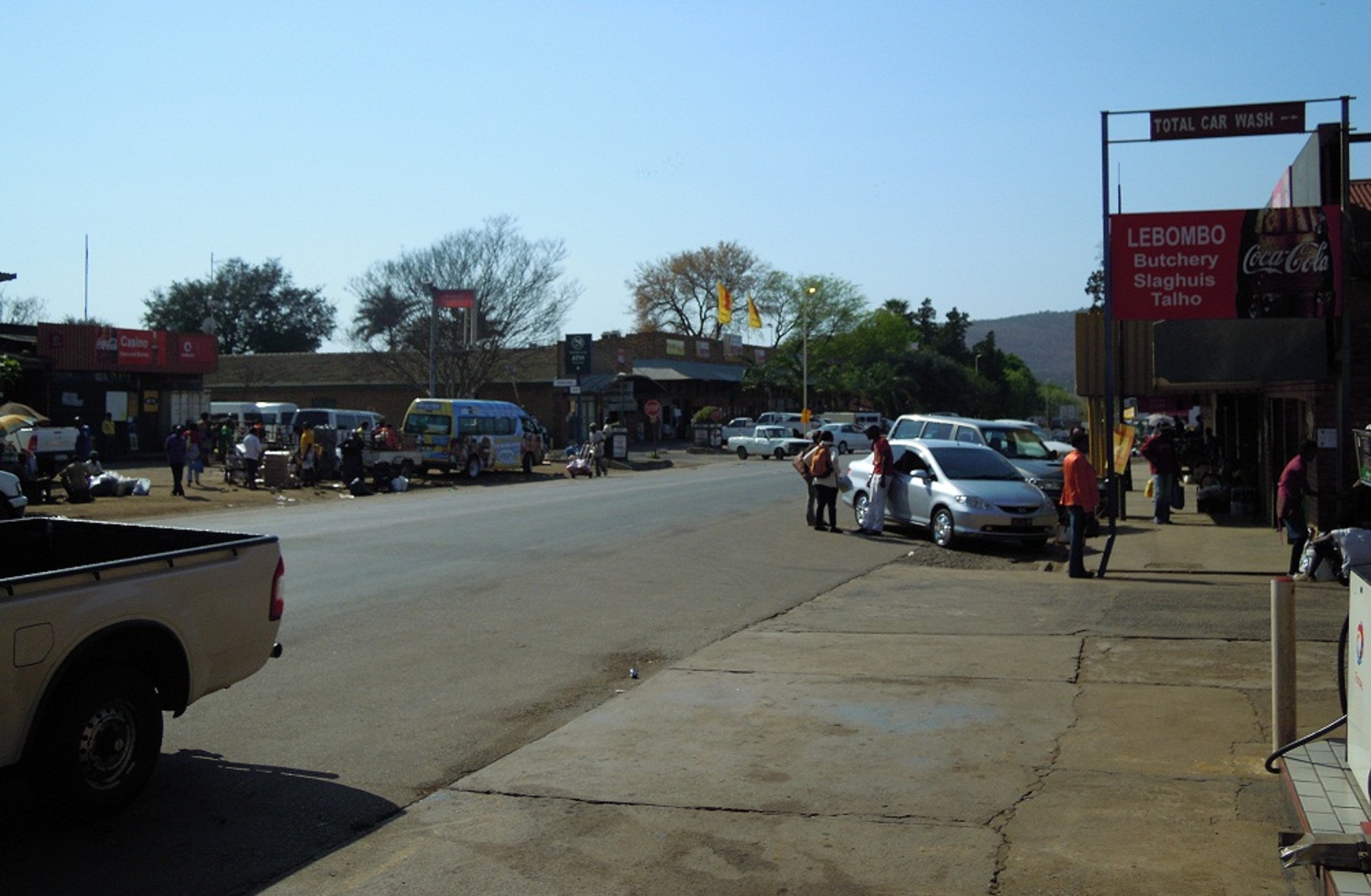
The Komati River and Komatipoort
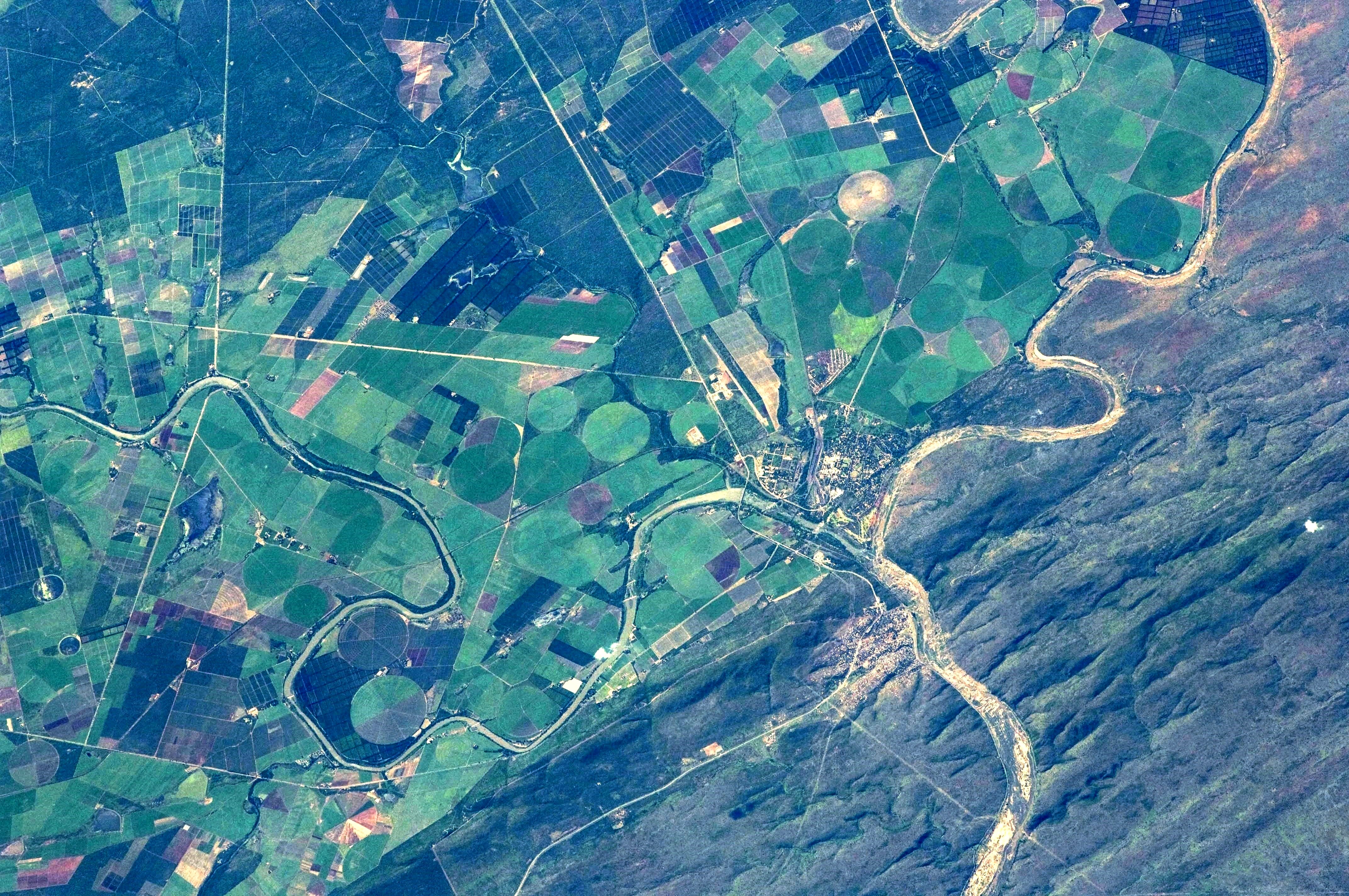
The Komati River, called the Inkomati or Incomati in Mozambique, flows through South Africa, Eswatini and Mozambique. It rises near Breyten in the Mpumalanga highveld at an elevation of about 1,800 metres, passes through north-western Eswatini, and is joined by the Crocodile River in the Lebombo Mountains near Komatipoort before entering south-western Mozambique and reaching the Indian Ocean at Maputo Bay, about 24 kilometres north-east of Maputo. Its drainage basin covers about 50,000 square kilometres. The name comes from the siSwati word inkomati, meaning cow: the river's perennial flow was compared to a cow that always has milk.
Komatipoort is a small town at the confluence of the Crocodile and Komati rivers. It lies about 8 kilometres from the Crocodile Bridge Gate of the Kruger National Park, about 3 kilometres from the Mozambique border and about 65 kilometres from the Eswatini border. It is one of the hottest towns in South Africa, with a recorded high of 47.7 degrees Celsius on 12 December 1944. Just below the junction of the two rivers, the united stream passes through a cleft in the Lebombo range, also called Komatipoort, on its way to the coastal plain. In flood time, the river's lower course connects northward through swamps with the basin of the Limpopo. The railway between Maputo and Pretoria, opened in 1895, follows the river through the gap.
Komatipoort falls in Ehlanzeni, one of the three districts of Mpumalanga province, whose seat is Mbombela.
Kruger National Park and SANParks
The crocodile was taken to the Kruger National Park, whose Crocodile Bridge Gate lies a few kilometres from Komatipoort. The park covers about 19,623 square kilometres in Limpopo and Mpumalanga provinces and extends about 360 kilometres from north to south and 65 kilometres from east to west. Its administrative headquarters are at Skukuza. Parts of it were first protected by the government of the South African Republic in 1898, and it became South Africa's first national park in 1926.
South African National Parks, or SANParks, is the body that manages the country's national parks. It was formed in 1926, and Kruger is its oldest and largest park. In the Komati operation SANParks provided the helicopter from which Captain Potgieter was lowered, as well as drone support used to find the crocodile.
The Nile crocodile
The crocodile in this case was a Nile crocodile (Crocodylus niloticus), the largest crocodilian in Africa and generally considered the second-largest living reptile after the saltwater crocodile. It lives in freshwater habitats in 26 African countries, mostly in eastern, southern and central Africa, in lakes, rivers, swamps, dams and marshes. In South Africa its range reaches rivers such as the Olifants. Adult males are generally 3.5 to 5 metres long and weigh 225 to 750 kilograms, while females are usually about 30 per cent smaller. Adult crocodiles in the Kruger National Park have been reported to average about 3.65 metres. Animals from the cooler southern tip of the range may be smaller.
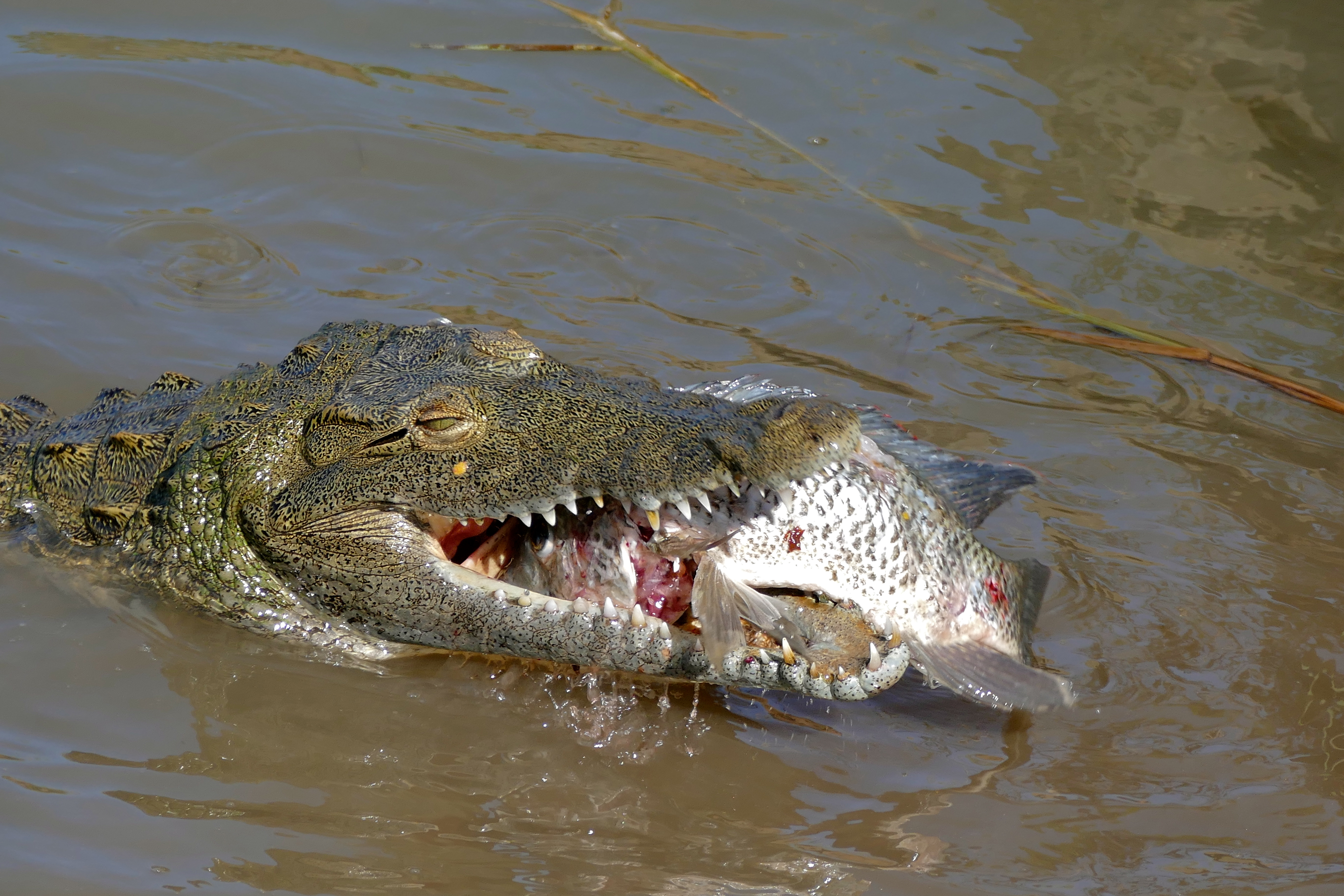
The species is an apex predator and an ambush hunter. It mostly hunts in or at the edge of water, taking fish, reptiles, birds and mammals, including land animals that come to the water to drink or cross. It can wait for hours, days or even weeks for a chance to strike, and like other crocodiles it has a powerful bite and conical teeth that grip prey, which it may hold under water to drown. Because it is cold-blooded it can survive long periods between meals, and its stomach is relatively small, so adults are not heavy eaters; studies have found many adult crocodiles with empty stomachs.
Nile crocodiles are also known to carry gastroliths, stones they swallow deliberately. Their purpose is not settled: one long-held view is that they act as ballast, while a radiological study found that they helped a small crocodile grind food. Hard objects that do not digest can therefore stay in a crocodile's stomach for some time, which is consistent with Captain Potgieter's remark that the shoes found in the Komati crocodile do not digest.
Crocodiles spend long periods basking. In South Africa they are most easily seen in winter, when they bask the most, and they stay in water more on overcast, rainy or misty days. In the southern parts of their range, young crocodiles may dig tunnels and become dormant during dry, cool months. The IUCN Red List classifies the Nile crocodile as Least Concern, although the species has declined locally in parts of its range and peer-reviewed studies say it still needs monitoring.
Crocodiles and people in southern Africa
Crocodile attacks are a recognised hazard in the wider region. A peer-reviewed study published in Scientific Reports in September 2025 examined 322 confirmed human deaths caused by six large wild species in Zimbabwe between 2016 and 2022. Crocodiles accounted for about 51 per cent of those deaths and elephants for 32 per cent, and the study found a statistically significant rising trend in deaths involving crocodiles. The same paper cited an estimate that about 300 people die each year from crocodile attacks in Mozambique, the country into which the Komati flows.
The study found that hotspots lay along the large river systems of northern and western Zimbabwe, such as the Zambezi and Lake Kariba, where communities rely on the water for fishing, bathing, washing and collecting water. It noted earlier research showing that most crocodile-related deaths in Kariba district happened in the dry season, when the animals' natural habitat and prey were reduced, and that attacks often peak when water is low and murky. In South Sudan's Sudd wetlands, a 2024 study in the journal Animals cited records of 23 fatal crocodile attacks on people and 355 attacks on livestock between 2018 and 2020.
Researchers also point to the cost for the animals. Retaliatory killings of crocodiles after attacks, the destruction of nests and the collection of eggs add to pressure from habitat loss, the Scientific Reports and Animals papers said. A 2025 study in Ecology and Evolution found that Nile crocodiles at Lake Nasser in Egypt were found close to fishermen's camps, which its authors said indicated potential for conflict.
Flood water and drowning risk
The Komati case began with a vehicle on a flooded crossing. The World Health Organization says there are around 300,000 drowning deaths worldwide each year, that 92 per cent of them occur in low- and middle-income countries, and that drowning accounts for 75 per cent of deaths in flood disasters. It says flood-related drowning risk is particularly high where early warning systems and flood-control infrastructure are underdeveloped.
The US National Weather Service, citing the Centers for Disease Control and Prevention, says more than half of all flood-related drownings occur when a vehicle is driven into hazardous flood water. It warns that 6 inches of fast-moving water can knock over an adult, that 12 inches of rushing water can carry away most cars and that 2 feet can carry away SUVs and trucks. Its guidance is that it is never safe to drive or walk into flood water, and that a road under water may have collapsed beneath the surface.
Photo: Wayne77 / Wikimedia Commons (CC BY-SA 3.0). The top picture shows a Nile crocodile on the bank of the Sabie River in the Kruger National Park, South Africa, as background; it is not the crocodile in this story.
Sources: Jagonews24 (6 May 2026, citing the New York Post), SABC News (29 April 2026), BBC News (5 May 2026), The Witness (5 May 2026), IOL (4 May 2026), Smile 90.4FM (4 May 2026), Sunday World (3 May 2026), eNCA (3 May 2026), Scientific Reports (September 2025), Animals (2024), Ecology and Evolution (September 2025), World Health Organization (drowning fact sheet), US National Weather Service (Turn Around Don't Drown), Wikipedia (Komati River, Komatipoort, Kruger National Park, South African National Parks, Nile crocodile).
Comments
(0)