
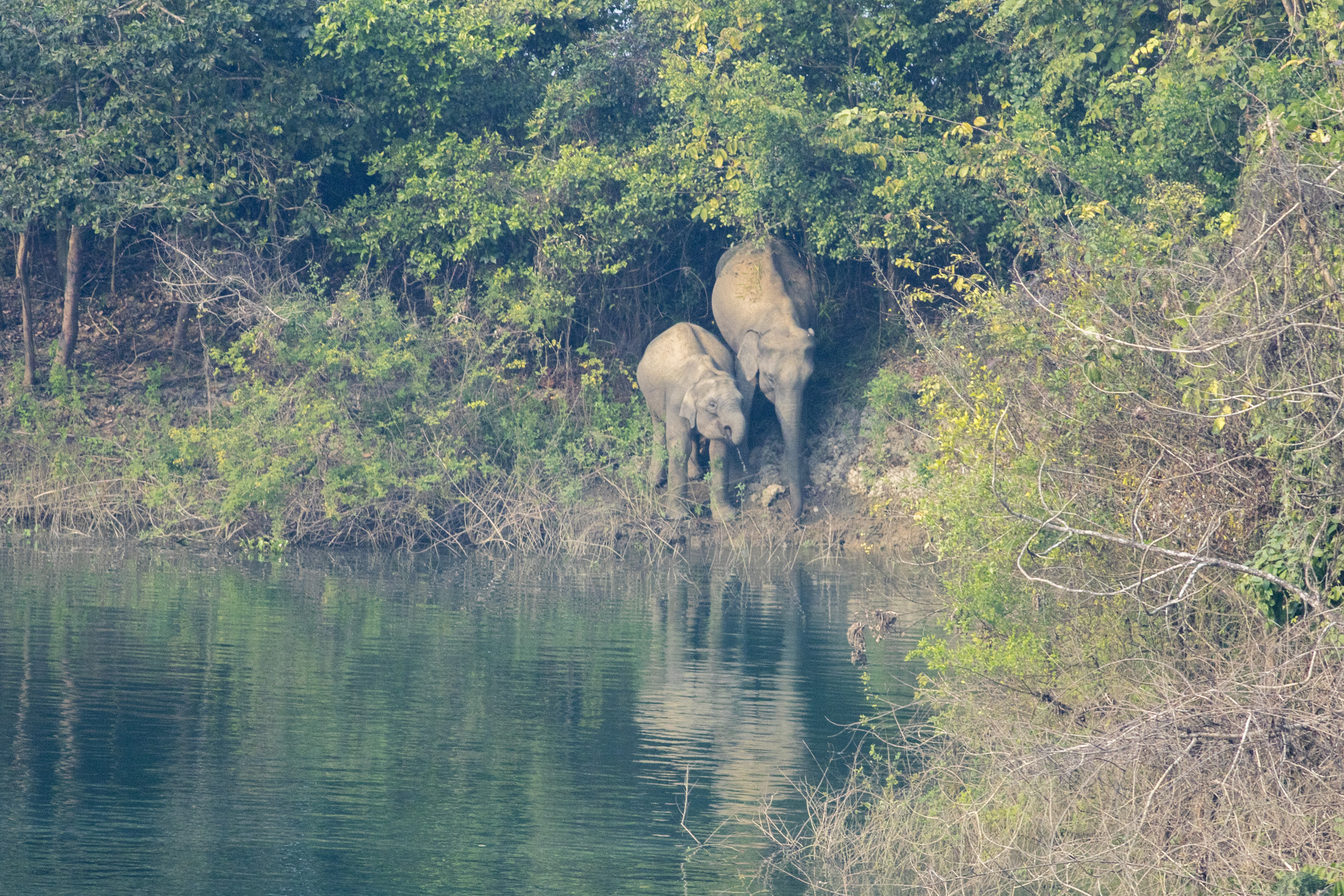
Forest officials recovered the carcass of a young male wild elephant from a hill stream in Eidgaon upazila of Cox's Bazar on Sunday, 21 November 2021. The calf, estimated to be one and a half to two years old, lay in a stream at Satghoria Para, next to Gajalia in Islamabad union, inside the Fulchhari range of the Cox's Bazar North Forest Division. Md Anwar Hossain Sarkar, divisional forest officer (DFO) of the Cox's Bazar North Forest Division, confirmed the recovery to Jagonews24. The death came in a month when The Daily Star counted seven dead elephants in 11 days across Sherpur, Chattogram and Cox's Bazar, and it was the third elephant death the original report recorded in the Cox's Bazar North Forest Division in a little over three months.
How the calf was found
Citing local people, the DFO said a group of woodcutters on their way to collect firewood found the elephant dead at around 7am. It was lying in a stream about two and a half feet deep at the foot of a hill. The Forest Department was informed and recovered the carcass at around noon. The national news agency UNB reported the same sequence: local people, woodcutters among them, saw the calf in the morning and alerted the department.
Md Alauddin, the officer of the Rajghat beat under the Fulchhari range, told Jagonews24 that the dead elephant was a male aged about one and a half to two years. It measured about 7 feet in length and 5 feet in width, and its trunk was about two and a half feet long. Speaking to UNB, he said the calf had probably died on the Saturday night, some hours before it was found.
Fulchhari range officer Faruk Ahmad Babul told Jagonews24 that the first assumption was that the elephant had slipped while coming down a slope and died in the fall. UNB carried the same view from the range officer: that the calf may have slipped into the hollow of the stream while descending.
The assistant conservator of forests (ACF) for Fulchhari, Dr Prantosh Chandra Roy, told Jagonews24 that officials of the livestock department had come from Cox's Bazar Sadar upazila and had reported wounds on the elephant's body. The actual cause of death, he said, would be known only after the post-mortem examination. The Daily Star reported that a livestock department team carried out the autopsy and that the carcass was buried afterwards. None of the reports published that day gave a confirmed cause of death.
A conservationist's concern
Not everyone accepted the idea of an accident without question. Dipak Sharma Dipu, president of the Cox's Bazar Forest and Environment Conservation Council, told UNB that at least 10 elephants had died in the district over the previous year. He said he could not rule out that the calf had been killed deliberately, and he linked elephant deaths in the country to the encroachment of forests, cultivation on forest land and the trade in elephant tusks. These were his views. Forest officials had said only that the calf may have slipped and that the post-mortem would establish the cause.
Earlier deaths in Cox's Bazar's northern forests
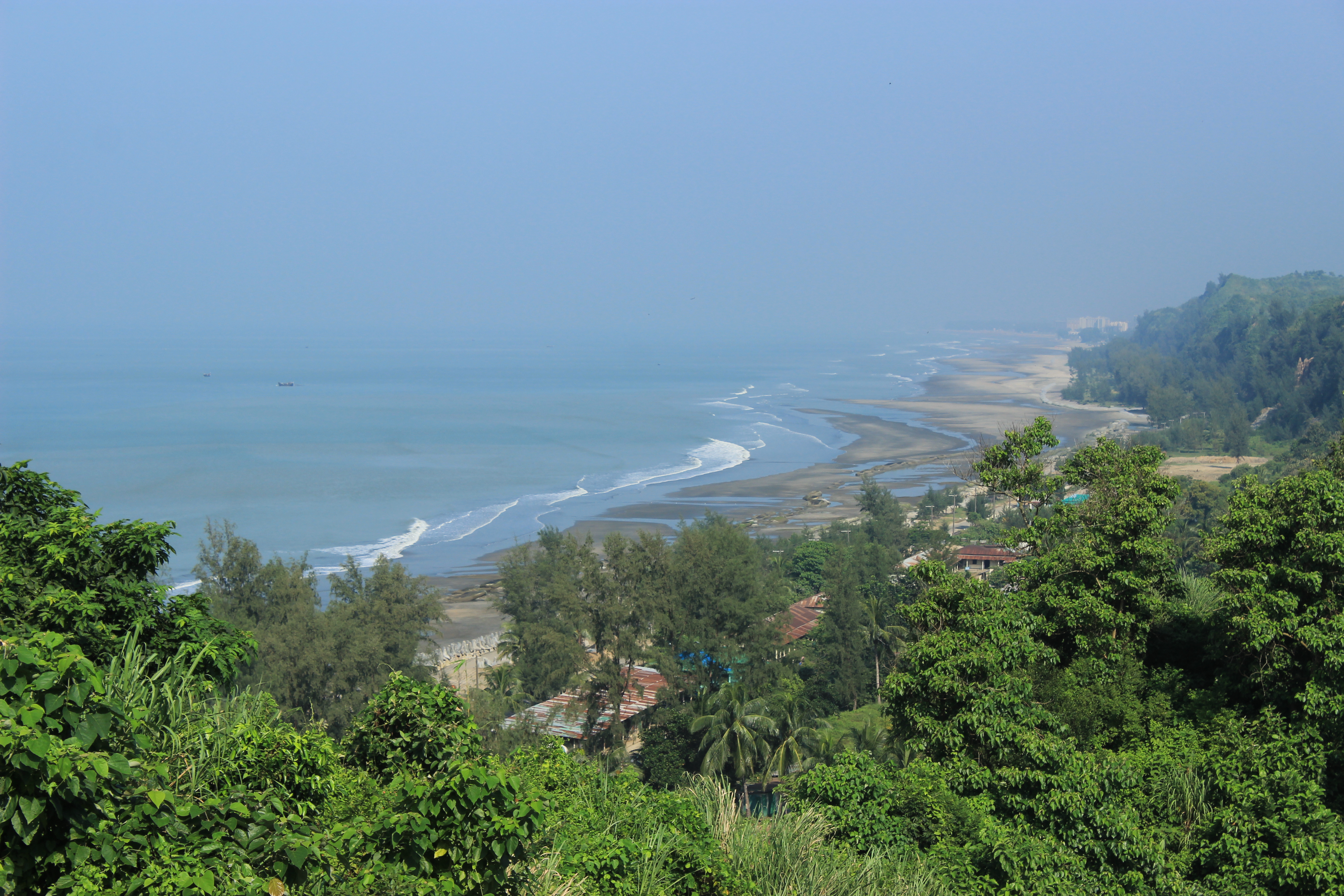
Jagonews24 noted that the Eidgaon calf was not an isolated case. On 12 November 2021, nine days earlier, the carcass of an elephant had been recovered at Chakaria, also in the Cox's Bazar North Forest Division. About three months before that, another elephant had died after falling from a hill into a stream in the Gajalia area of Fulchhari, close to where the calf was found.
The Chakaria elephant was a male found buried under mud, and its death was presumed to be from electrocution, The Daily Star reported. Rafiqul Islam Chowdhury, divisional forest officer of the Wildlife and Nature Conservation Division in Chattogram, told the paper that the elephant had been electrocuted two days earlier in the deep forest of Toitong in Chakaria upazila. He said officials had collected information about those responsible and that the department would sue them once the autopsy report came in. The Business Standard (TBS), which placed the find in the Harbang hill valley of Chakaria, reported that local people said the animal had been electrocuted two days before it was discovered.
Earlier in 2021, an elephant had died inside the Eidgaon range itself. On 20 April 2021, at around 1am, an elderly female fell from a hillside onto a road in the Panerchhara area of the Eidgaon range while a herd was crossing, and died of severe head injuries, according to Forest Department sources quoted by UNB in a report carried by The Financial Express. Tohidul Islam, the divisional forest officer of the North Forest Division, said samples had been collected and that the autopsy would confirm the cause.
A year earlier, in November 2020, TBS had reported three elephants shot dead in Cox's Bazar within about 10 days. According to that report, a three-year-old elephant was shot on 6 November 2020 in the Kalapara forest area of Khutakhali in Chakaria and buried, and an autopsy found a gunshot wound to the forehead and bleeding in the brain. A 30-year-old female was shot and injured in the Jumchhari forest area of Ramu on 14 November and died on 16 November, and on 16 November another elephant died of gunshot wounds and deliberate electrocution in the Kharliyachhari forest area of South Ramu.
Seven deaths in eleven days
The Eidgaon calf died during one of the worst runs of elephant deaths reported in the country. On 12 November 2021 The Daily Star reported that an elephant had been found dead near a crop field in the Purba Chambal area of Banshkhali upazila in Chattogram, making four deaths in five days: three in the Chattogram region and one in Sherpur. The Dhaka Tribune reported that the Banshkhali elephant was a male of about 50, found in a paddy field. Anisuzzaman Sheikh, an officer of the Jaldi Wildlife Sanctuary range, said no external injuries were found. Livestock officer Dr Samaranjan Barua said the elephant had died the previous night, that its lungs had deteriorated, and that a full autopsy would reveal the cause. The Dhaka Tribune report also carried a photograph of a dead elephant in a paddy field at Moittali Beel, in Sonakania union of Satkania upazila, taken on 6 November.
By 13 November, The Daily Star was reporting six elephants killed in shootings or electrocution across the country over eight days. TBS put the count for the previous week at no fewer than five, three in Chattogram, one in Cox's Bazar and one in Sherpur, and quoted Forest Department figures showing that 69 elephants had died in the country from 2015 to 2021. TBS added that most of them had been killed by people after the animals came down from the hills in search of food. On 21 November, the day the Eidgaon calf was found, The Daily Star raised its count to seven elephants dead in 11 days in Sherpur, Chattogram and Cox's Bazar.
The papers counted over different windows and on different days, so their totals do not match exactly. None of the November tallies was an official Forest Department count for the month.
Eidgaon, a new upazila on the forest edge
Eidgaon had become an upazila only four months earlier. On 26 July 2021 the National Implementation Committee for Administrative Reorganisation-Reform (NICAR), chaired by the Prime Minister, approved upazila status for Eidgaon in Cox's Bazar Sadar, together with Dasar in Madaripur and Madhyanagar in Sunamganj. The Financial Express reported that the three had been thanas that did not meet every criterion for an upazila, but were approved because they were remote and their residents were far from upazila centres.
The new upazila was made up of the five northern unions of Cox's Bazar Sadar upazila: Islampur, Pokkhali, Islamabad, Eidgaon and Jalalabad. Islamabad, the union where the calf was found, lies in the hilly part of the area. Eidgaon is bordered by Ramu upazila to the east, Chakaria upazila to the north, Maheshkhali upazila to the west and Cox's Bazar Sadar upazila to the south. Its hill forests are managed by the Cox's Bazar North Forest Division through ranges such as Fulchhari and Eidgaon, and beats such as Rajghat, the beat whose officer described the calf.
How many elephants Bangladesh has
The best estimate of Bangladesh's elephants available in November 2021 came from a survey carried out by Forest Department biologists from August 2013 to April 2016 with support from the World Bank, published with IUCN Bangladesh. When the government released the results on 21 March 2017, IUCN said the country had 268 resident wild elephants, all in the south-eastern forests, and between 79 and 107 migratory elephants, with a mean of 93, that moved between Bangladesh and India in four forest divisions. The Daily Star, reporting the same study, gave the number of captive elephants as 96.
- Resident wild elephants: 268, all in the south-eastern forests (IUCN, 2017).
- Migratory elephants: 79 to 107, mean 93; the Mymensingh Forest Division held 55 per cent of them.
- Calves: about 11 per cent of the population estimate.
- Earlier count: 178 resident elephants in the 2001-2003 survey; IUCN cautioned that the methods differed, so a large rise could not be claimed.
- Range: about 1,518 square kilometres, roughly 1 per cent of the country, at an average density of about 0.24 elephants per square kilometre.
- Movement: 12 small corridors between forests and 57 crossing points on the borders with India and Myanmar.
IUCN listed the Asian elephant as critically endangered in Bangladesh and endangered globally, and it urged the government to carry out the Bangladesh Elephant Conservation Action Plan 2016-2025, to restore degraded forest by replanting hills and linking forest patches, and to cooperate across borders on migratory herds. TBS reported in November 2020 that roughly two-thirds of the resident elephants lived in Cox's Bazar and the Chittagong Hill Tracts, which is why so many of the deaths are reported from these forests.
Corridors, crops and conflict
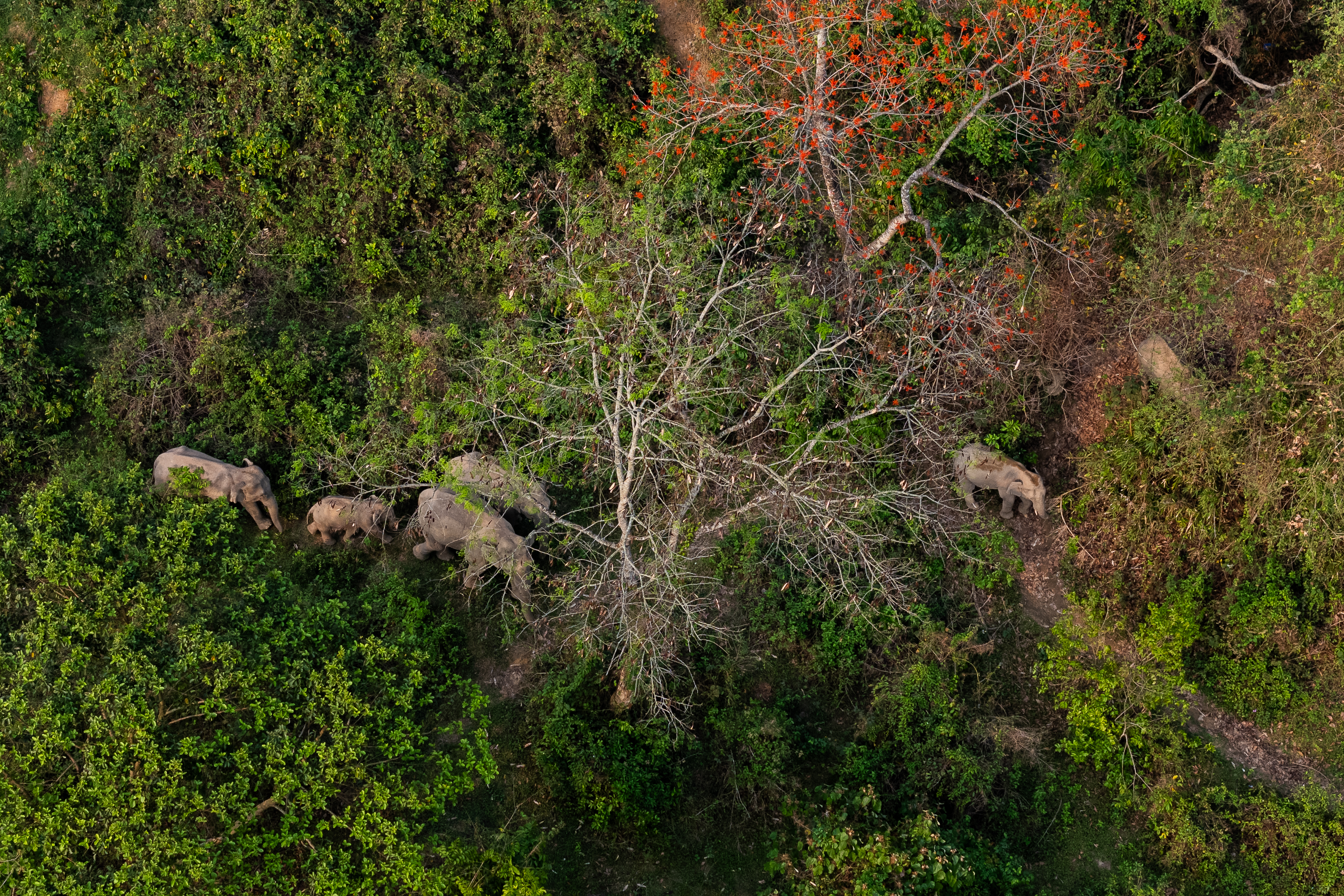
The same survey found the elephants' travel routes in poor shape. The Daily Star reported in August 2017 that five of the 12 corridors were almost closed by human activity and the rest were under severe threat. The study named restrictions on movement, shortage of food, development work inside habitats, and settlements, farmland, roads, brick kilns and village markets built on or near the routes as causes of conflict, along with the direct killing of elephants. Forest Department data cited in the same report showed that 227 people and 63 elephants had been killed in human-elephant conflict in the 13 years since 2003, including 16 people and four elephants in the most recent year.
TBS reported in November 2020, citing the Forest Department's Wildlife and Nature Conservation Division, that 16 wild elephants had been killed in the Chattogram and Rangamati regions between January and 17 November 2020, and 60 from 2015 to 17 November 2020, with 39 cases filed over those killings. Most had died of gunshot wounds or deliberate electrocution. The paper said elephants entered paddy fields cultivated illegally inside the forests, and that local people killed them to protect their crops. Three corridors had closed by then: one because of the Rohingya refugee settlement and two because of government development projects.
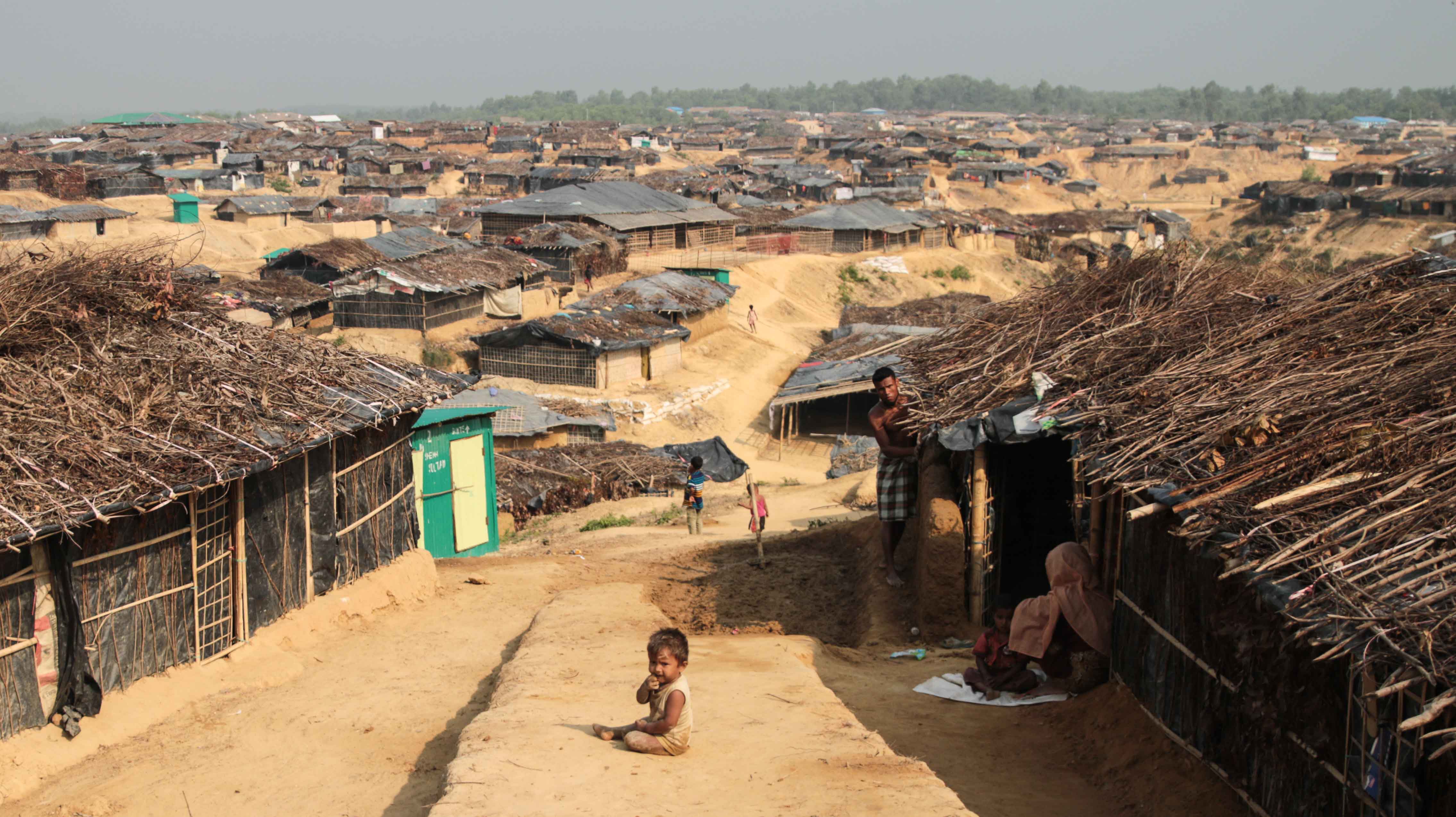
The refugee settlement is in Ukhiya, south of Eidgaon in the same district. In March 2018 IUCN and the UN refugee agency UNHCR reported that the Kutupalong-Balukhali settlement, then home to about 560,000 people who had fled Myanmar, stood on former forest land along one of the main elephant routes between Myanmar and Bangladesh. At least 10 people, among them children, had been killed in incidents with elephants since the influx began in August 2017. An IUCN survey of 70 square kilometres of hills around the site estimated that up to 45 elephants could be active nearby, mostly along its western edge. The two agencies set up Elephant Response Teams of 10 refugee volunteers each, built watch-towers at lookout points and began to study an elephant corridor so that the animals could pass without meeting people.
The Asian elephant and its young
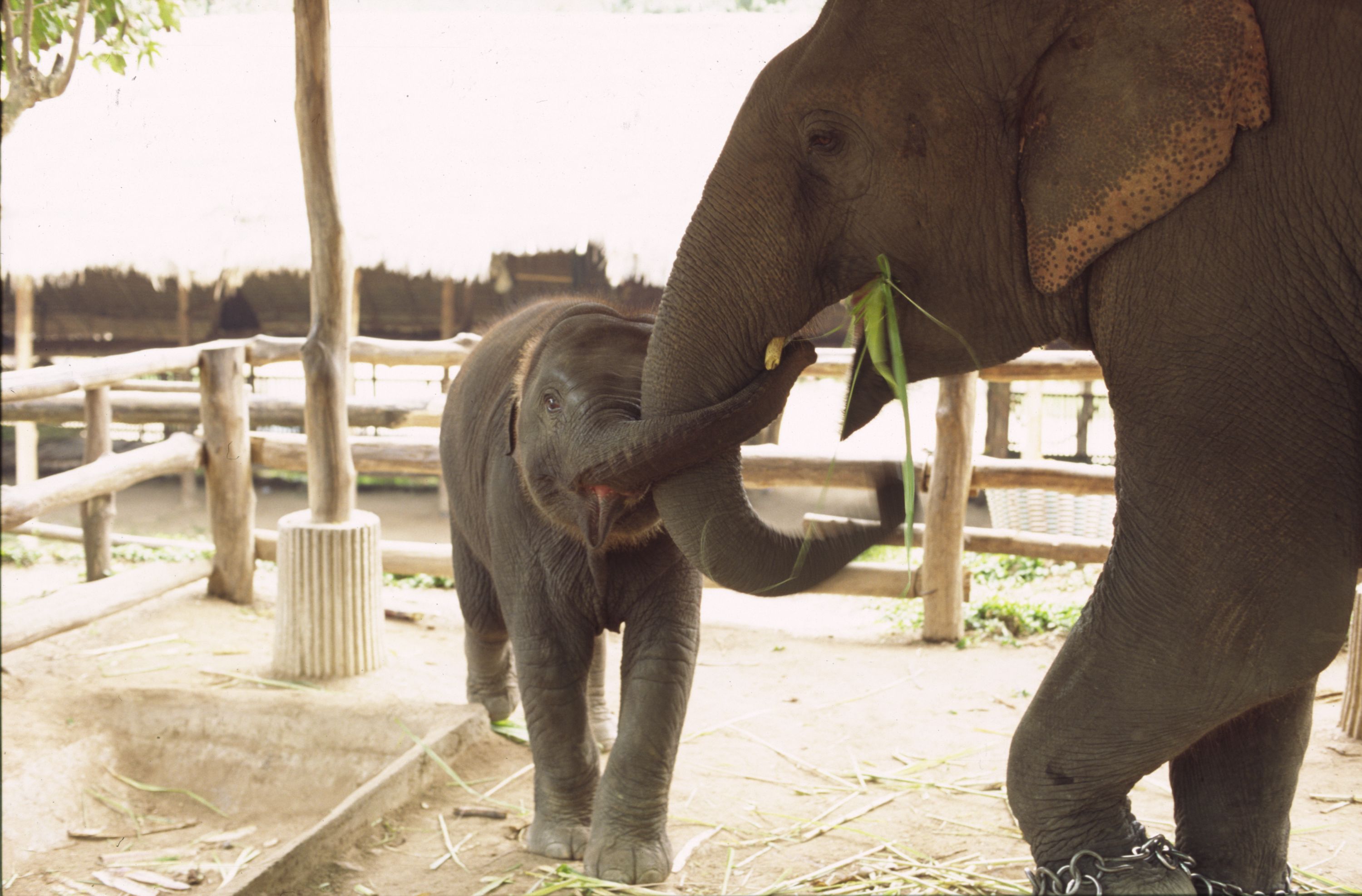
The animal at the centre of these reports is the Asian elephant, Elephas maximus. According to the Smithsonian's National Zoo, adults weigh between 2,750 and 5,420 kilograms and stand 1.8 to 3.8 metres at the shoulder, with males usually larger than females. They feed mainly on grasses, along with browse, fruit and crops, eating 74 to 150 kilograms of food and drinking about 189 litres of water a day in the wild. That appetite helps explain why herds come down from the hills to paddy fields when forest food runs short.
Asian elephants live in small herds of related females with their young and immature males. Gestation lasts between 21.5 and 22 months, and a calf weighs between 68 and 158 kilograms at birth. Calves begin to eat vegetation at about six months but go on nursing, and weaning is gradual: it may continue until the mother gives birth again. Males leave the herd at puberty, between the ages of 8 and 13. A male calf of one and a half to two years, like the one found in Eidgaon, would still have been living with its mother's herd.
What the law says
In November 2021 wild elephants were protected by the Wildlife (Conservation and Security) Act 2012 (Act No. 30 of 2012, dated 10 July 2012), which replaced the Bangladesh Wild Life (Preservation) Order of 1973. Section 6 of the Act bars anyone from hunting any wild animal without a licence or permit under the Act.
Section 36 deals specifically with tigers and elephants listed in Schedule 1. Killing one without a licence under section 24 is a non-bailable offence, punishable by imprisonment of at least two and up to seven years and a fine of at least 100,000 taka and up to 1 million taka. A repeat offence carries up to 12 years in prison and a fine of up to 1.5 million taka. The section does not apply when a person attacked by a tiger or an elephant kills it to save his or her own life, and in such a case the officer in charge of the police station may file a case only after consulting the warden.
The same section makes it an offence to collect, possess, buy, sell or transport the trophy, incomplete trophy, meat or body parts of a scheduled tiger or elephant without a permit under section 10. The penalty is up to three years in prison, a fine of up to 300,000 taka, or both, and up to five years, a fine of up to 500,000 taka, or both, for a repeat offence. Under section 45, the Code of Criminal Procedure governs the investigation and trial of offences under the Act, so far as it is consistent with the Act. Whether any of these provisions applied to the Eidgaon calf depended on the post-mortem, which on 21 November 2021 had not yet reported.
Photo: AKM Emdadul Islam Bitu / Wikimedia Commons (CC BY-SA 4.0)
Sources: Jagonews24, UNB, The Daily Star, The Business Standard, Dhaka Tribune, The Financial Express, IUCN, UNHCR, Bangladesh Forest Department, Wildlife (Conservation and Security) Act 2012 (Legislative and Parliamentary Affairs Division), Smithsonian's National Zoo, Wikipedia


Comments
(0)