
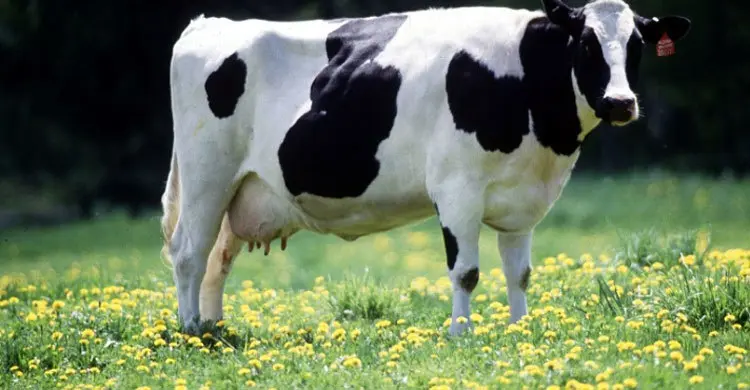
The quantity and quality of a cow's milk depend on its breed. Milk from local breeds is richer in butterfat, but these cows produce little milk. Foreign breeds give more milk than local ones.
Feed
Feed has an important effect on the amount and quality of a cow's milk. The more a cow is fed, the more milk she gives, but the feed must be balanced, because its components are secreted in the milk in a different form. Feed can raise or lower the butterfat content of milk.
Too much concentrate, pelleted feed, overly succulent feed or finely ground straw can lower the butterfat in a cow's milk. If the butterfat falls, the feed should be changed to the necessary balanced diet. The minerals and vitamins in milk can be raised through the cow's feed. Without a balanced diet, the milk contains only small amounts of protein and carbohydrate, and the yield falls.
Milking
Milking, especially the lactation period, the time of milking, the milking method and the effect of the different teats, affects the amount and quality of a cow's milk. A cow's yield rises gradually to its peak over 50 days. The amount and composition of the milk depend on the pressure of milk in the udder. From 90 days into lactation, the butterfat and protein in the milk rise somewhat.
Milking the same cow at short intervals gives milk with more butterfat, which is why evening milk has more butterfat than morning milk. A cow should therefore be milked two or three times in 24 hours, which can increase the yield.
Around calving
Good health at calving is very important for the expected milk yield. To get more milk from a cow, she needs proper care and a balanced diet during pregnancy. Milking must be stopped two months before calving.
Of the total milk produced, 40% comes from the front teats of the udder and 30% from the rear teats. The teats must be kept healthy.
Care and housing
Management and housing are largely responsible for rises and falls in the amount and quality of a cow's milk. The surroundings should be comfortable for the cow. If special care is not taken during milking, that is, if milking is faulty, the amount and quality of the milk can fall.
Season
Harsh weather is bad for milk production. Winter is comfortable for milking cows: in this season milk yield and butterfat increase, while in summer, the rainy season and humid weather the yield and quality fall. Keeping cows cool in the hot season prevents any loss in production. Milk yield also drops when a cow is being bred.
Calving interval
A cow that calves at longer intervals produces more milk, while calving at shorter intervals can reduce the yield somewhat. So a cow should be served within 60 to 90 days of calving, and never bred before 60 days.
A cow's body is 50% water and her milk about 87% water. So letting her drink as much water as she wants increases milk production and the butterfat in the milk.
Source: Jagonews24. First published in Bengali on The Agro News.

Comments
(0)