
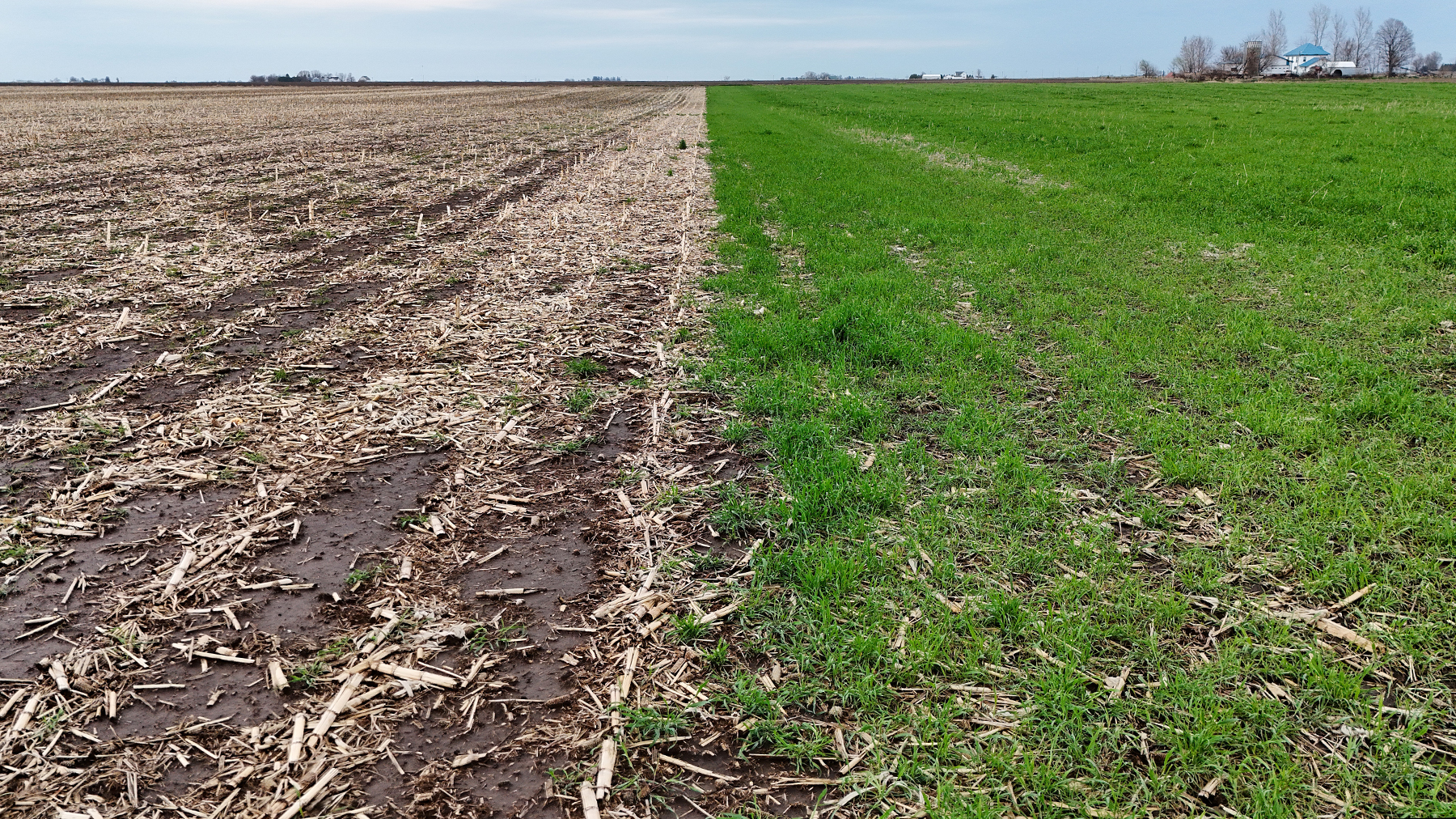
Farmers have told Practical Farmers of Iowa for years that cover crops let them into their fields earlier in spring and through harvest without leaving ruts, and in 2025 the group set out to test the claim, reports Elizabeth Wilhelm of PFI in Farm Progress. The stakes are rising: since 1964 Iowa has lost roughly one suitable spring field workday every six years.
Thirty-eight farmers across Iowa, Minnesota, Nebraska and Wisconsin recorded each week from spring to autumn whether field and weather conditions let them work for most of the day in fields with a history of cover crops. PFI compared the records with USDA's estimates using the same definition of a suitable workday.
On average the two matched. PFI farmers reported 51 suitable spring days, one more than USDA's average; 51 in summer, the same; and 27 in autumn, one fewer — 129 days in all, exactly the USDA figure.
The difference showed up on fields with long-term cover crop use. Margaret Hogan of Earlville, Iowa, who has used cover crops for more than ten years, recorded 157 workable days from April to November against 127 for her USDA crop-reporting district, and 67 spring days against a district average of 46. "The most valuable aspect of conducting this trial for me is being able to show others another reason to use cover crops," she said.
"We wanted to take a closer look and see if the data backs that up," said Stefan Gailans, PFI's research director. The study began with 15 farmers in 2024, grew to 38 in 2025 and will continue across the Midwest to see whether the pattern holds in different seasons and weather. Farmers who want to take part can contact PFI's cooperators programme.
Source: Farm Progress

Comments
(0)