
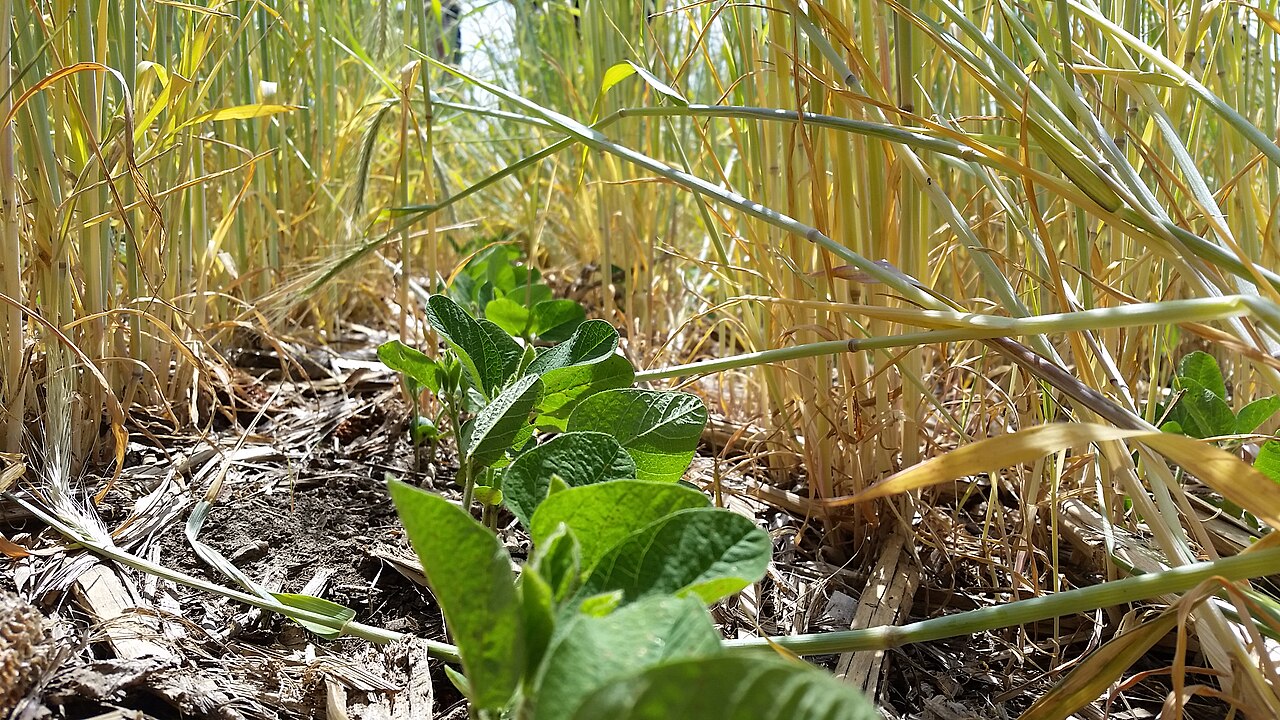
The 2026 National Cover Crop Survey asked about drones for the first time in its 14-year history, and found growers value them mainly for getting seed on in time, Precision Farming Dealer reports. The survey is run by the Conservation Technology Information Center, USDA's Sustainable Agriculture Research and Education programme and the American Seed Trade Association.
Among 459 cover crop users who responded, 13 (2.8 percent) used their own drones to seed cover crops and 62 (13.5 percent) hired a drone pilot. Half of those using drone seeding did so on 1 to 24 percent of their cover crop acres, while 12 seeded all their cover crops by drone.
Asked why, 54 percent said drones make it easier to plant within the desired window, just over 40 percent wanted to try a new method, 36.5 percent cited better access to small, irregular or tree-lined fields and 35 percent said overseeding is easier. Nearly 30 percent pointed to planting in conditions too wet for ground equipment, 14.9 percent to better seed placement and 10.8 percent to lower cost.
Timing was by far the most cited benefit, chosen by 75.4 percent, followed by reduced soil compaction (just over 30 percent) and better seed placement than other aerial methods (26 percent). About 23 percent noted better stands and lower labour needs.
The biggest challenge was stand establishment, named by 47.1 percent, followed by slow speed because of weight limits (35.3 percent), cost (22.1 percent), waiting for an operator and uneven seed spread (19.1 percent each) and uneven spreading of mixes (14.7 percent). Some growers wrote that drones cannot seed close to tree lines and power lines, and that they cannot fertilise while spreading seed. The report was written by Noah Newman.
Photo: Lander Legge, USDA NRCS (soybeans emerging through a rye cover crop) / Wikimedia Commons (Public domain)
Source: Precision Farming Dealer
Comments
(0)