
Corteva Agriscience has launched Majesty, an insecticide for soybean and maize growers in Brazil aimed at stink bugs, ahead of the 2026/27 season. It combines two active ingredients so that one spray reaches both young and adult insects: Isoclast Active, a sulfoximine, and bifenthrin, a pyrethroid.
Isoclast Active is systemic and moves through the leaf, which gives it strong activity against nymphs. Corteva says it spares the natural enemies of the pest, which matters in integrated pest management where beneficial insects help hold down secondary pests such as whitefly. Bifenthrin knocks adults down faster, and the company says it holds on the leaf and resists light and heat in tropical conditions.
Two modes of action in one product are meant to slow resistance. Brazilian stink bugs have been sprayed for years mainly with pyrethroids and organophosphates.
On soybean the label covers the brown stink bug (Euschistus heros) and whitefly (Bemisia tabaci), which can also spread plant viruses. On maize it targets the green-belly stink bug (Dichelops melacanthus), which attacks young plants. The product is also registered for cotton, citrus, melon, tomato, wheat and beans, though Corteva has not set out pest claims for those crops.
Thomas Scott, Corteva's insecticide and nematicide portfolio leader for Brazil and Paraguay, said stink bugs can cut soybean yields by as much as 30%, a figure he attributed to the research agency Embrapa, and that nymphs cause about 70% of the damage. Eggs hatch in about seven days. The insects move in as flowering begins and multiply once pods form; feeding on pods can make them abort, and bites that reach the seed reduce vigour and germination and let in fungi. "There is no room for error in management," Scott said, urging growers to scout often, since the bugs arrive from neighbouring fields, woods and other crops.
Majesty has federal clearance, and Paraná's state plant health agency, Adapar, added it to its register in October 2026. Corteva says it is on sale for the 2026/27 season.
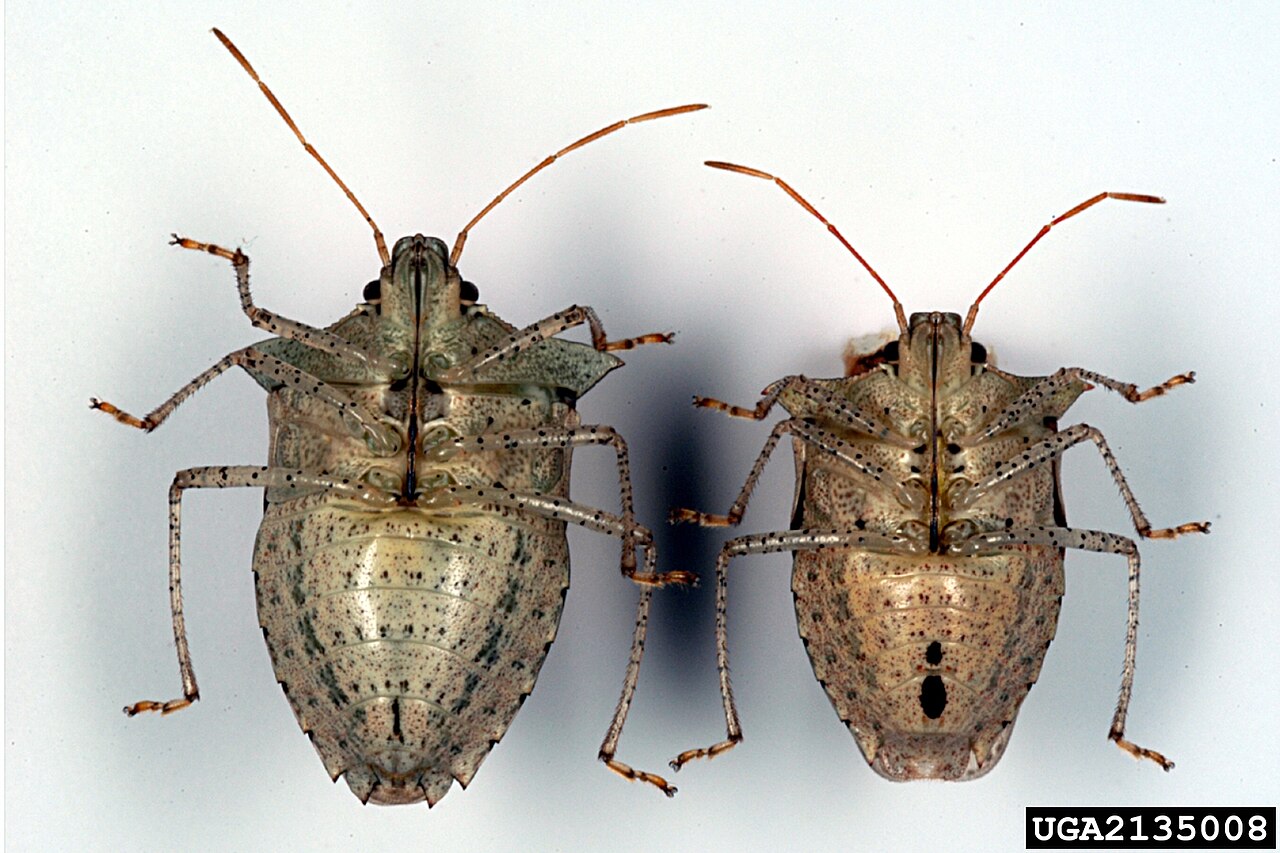
Photo: Herb Pilcher, USDA Agricultural Research Service, Bugwood.org / Wikimedia Commons (Public domain). The picture shows Euschistus tristigmus, a stink bug of the same genus as the brown stink bug.
Source: Global Agriculture




Comments
(0)