
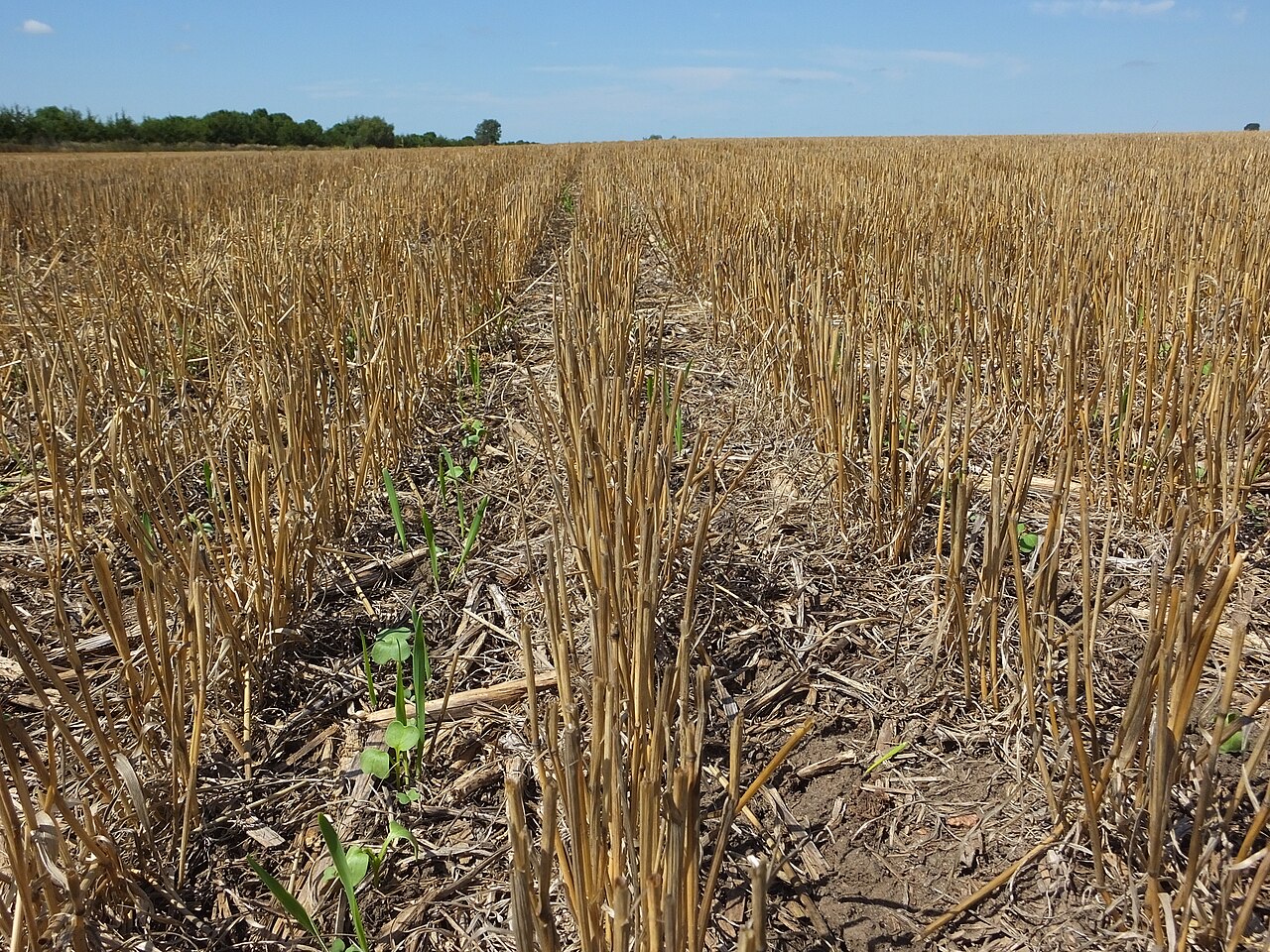
Cornell University's New York Soil Health Program has published results from the National Cover Crop Variety Testing Program, comparing dozens of commercial cover crop varieties at 13 sites across the United States, to give farmers and seed companies local performance data.
The trials tested six fall-planted species, cereal rye, crimson clover, hairy vetch, winter pea, winter canola and radish, sown after the cash crop and ended in spring. Spring biomass, a proxy for organic matter returned to the soil and weed suppression, was a key measure; at Cornell's Freeville, New York, site the cereal rye variety ND Gardner produced the most spring biomass in 2026.
The practical lesson, Global Agriculture notes, is that "plant cereal rye" is no longer precise enough advice: the wrong variety for local winters can establish poorly and undermine erosion control, weed suppression and nitrogen benefits. The results were released on 25 August by program director Joseph Amsili.
Photo: USDA NRCS South Dakota / Wikimedia Commons (CC BY-SA 2.0)
Source: Global Agriculture

Comments
(0)