
The UN climate conference COP31 opened in Antalya with food, agriculture and health on its first thematic day, and CGIAR used the moment to argue that much of the damage from the current El Niño has not happened yet, so countries still have time to limit it.
US forecasters expect a strong to very strong El Niño into early 2027, with a high chance that it will be the strongest since 1950. The World Food Programme estimates it could push at least 49 million more people into acute food insecurity by the end of 2027. Conflict in the Middle East has disrupted fertilizer and energy markets; the early jump in urea prices has eased, but IFPRI warns that higher prices could cut fertilizer use and yields if the disruption lasts, and the World Bank expects food prices to rise about 10% in 2026 and another 7% in 2027. IFPRI modelling for Malawi suggests El Niño together with fuel and fertilizer shocks could push nearly 500,000 more people into poverty and leave about 4.6 million more undernourished.
The case for early spending is stronger with aid falling, CGIAR argues: FAO has found that every dollar invested in anticipatory action can bring up to seven dollars in avoided losses and added benefits, while development aid fell 23% in 2025, the largest annual drop on record according to the OECD. And preparation is local, because El Niño can dry out southern Africa while swelling rivers in East Africa.
Its examples come from the field. Ahead of Ethiopia's 2026 Kiremt rains, CGIAR and national institutions produced the country's first El Niño agricultural risk assessments and advisories, covering 690 districts and reaching almost half a million farmers. AgWise, a CGIAR digital tool that uses local soil, weather and crop data to advise which fertilizer to apply, when and how much, raised yields and profits of rice farmers in Rwanda by 60%, and has carried El Niño sowing advice to more than 950,000 farmers in Malawi. In 2025, CGIAR climate science informed ten investment decisions worth about $2.4 billion.
Over the next two weeks negotiators will debate how adaptation is paid for, and the Sharm el-Sheikh joint work on agriculture and food security, set up at COP27, is due to end after mixed progress. CGIAR asks that whatever follows keep food systems at the centre and fund readiness before it is needed: forecasts, resilient crop varieties and the national institutions that use them. The article is by Ibukun Taiwo and Katherine Leitzell.
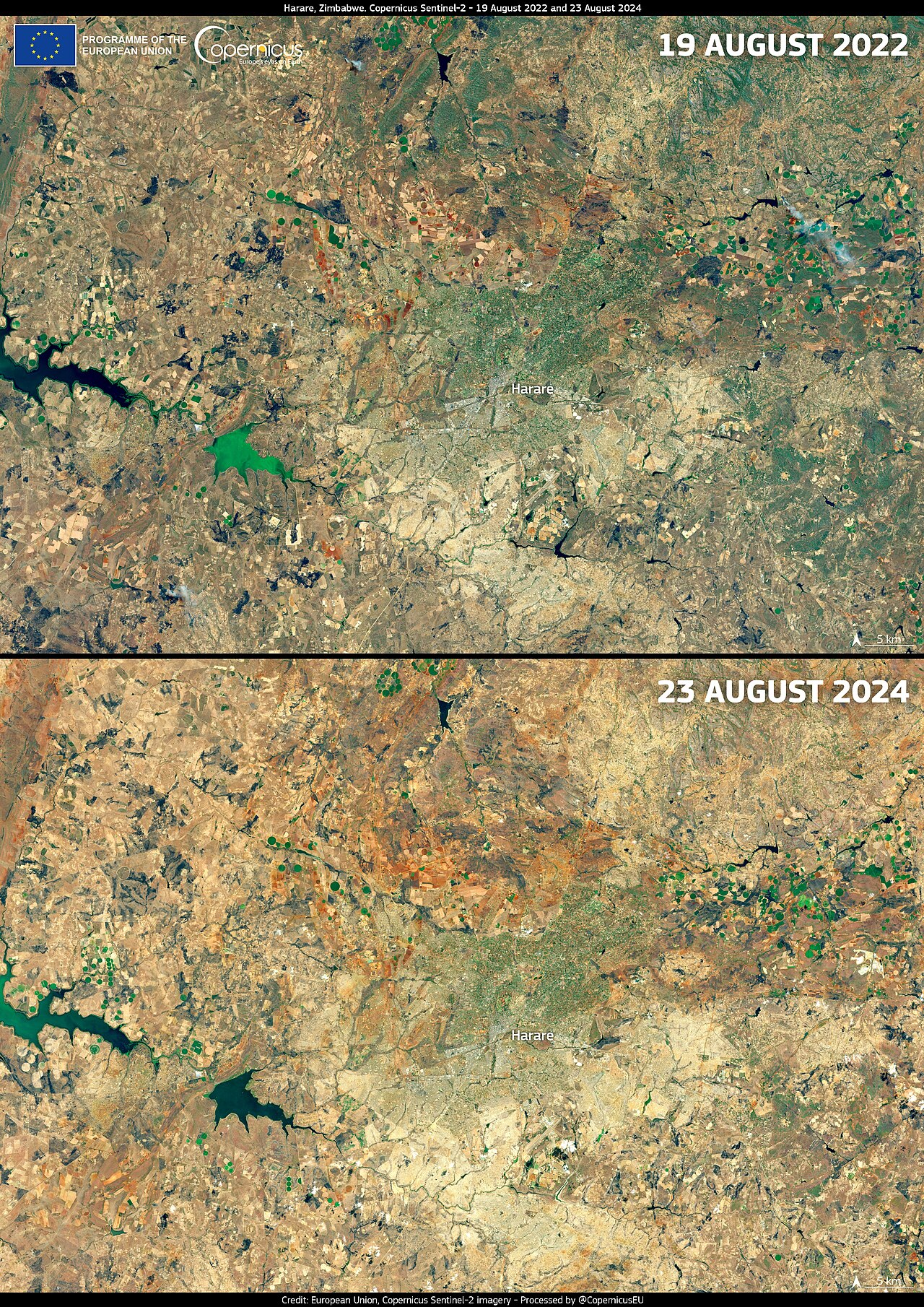
Photo: Copernicus Sentinel-2 imagery, EC DG DEFIS / Wikimedia Commons (CC BY 4.0)
Source: CGIAR

Comments
(0)