
The magnitude 7.4 earthquake that hit Colombia on 10 August damaged urban and rural communities across Chocó, Valle del Cauca, Risaralda, Caldas and Quindío. As the emergency response winds down, a second and slower phase begins: rebuilding the economies and the food systems that people live on.
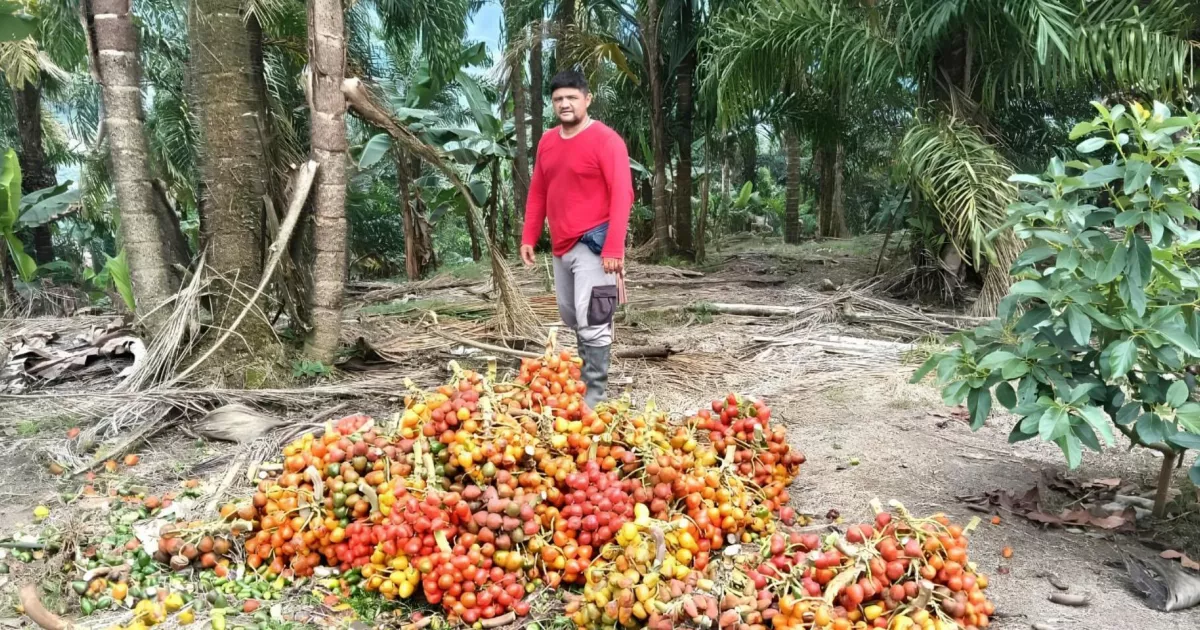
In San José del Palmar, in Chocó, at the epicentre, Yimmy Zuluaga grows chontaduro — peach palm fruit. "We're rebuilding so we can move forward," he says, meaning the walls of his house but also the business of growing and selling a crop.
His harvest survived. That is precisely the problem. The earthquake arrived just as the main harvest was beginning, and the fruit is still sitting there.
According to UMATA, the public agricultural extension service, more than 200 families in the municipality depend directly on the crop and now have nowhere to send it. Valle del Cauca and Colombia's Coffee Region are the main markets for chontaduro, and both were hit by the same earthquake. In cities dealing with damaged buildings, buying peach palm fruit with honey and salt has moved down the list.
Demand fell and prices followed. Only 40 to 50 per cent of the harvest is expected to sell, which has pushed down what buyers will pay for the rest. Before the earthquake an arroba — a local unit of about 11.5 kilograms — fetched COP 80,000, around USD 25. Growers are now getting COP 40,000, about USD 12.50.
The sequence is worth noting because it is not what emergency response usually measures. Nothing happened to the trees, the fruit or the farm. What broke was the market at the other end of the road, and for a perishable crop that is the same as losing the harvest.
For more than a decade chontaduro has been an alternative source of income for rural families in San José del Palmar — the crop that was supposed to reduce their exposure. The Alliance of Bioversity International and CIAT, which reported the case, frames the recovery question as building food systems that keep functioning through the next extreme event rather than simply restoring what stood before this one.
Source: CGIAR
Comments
(0)