
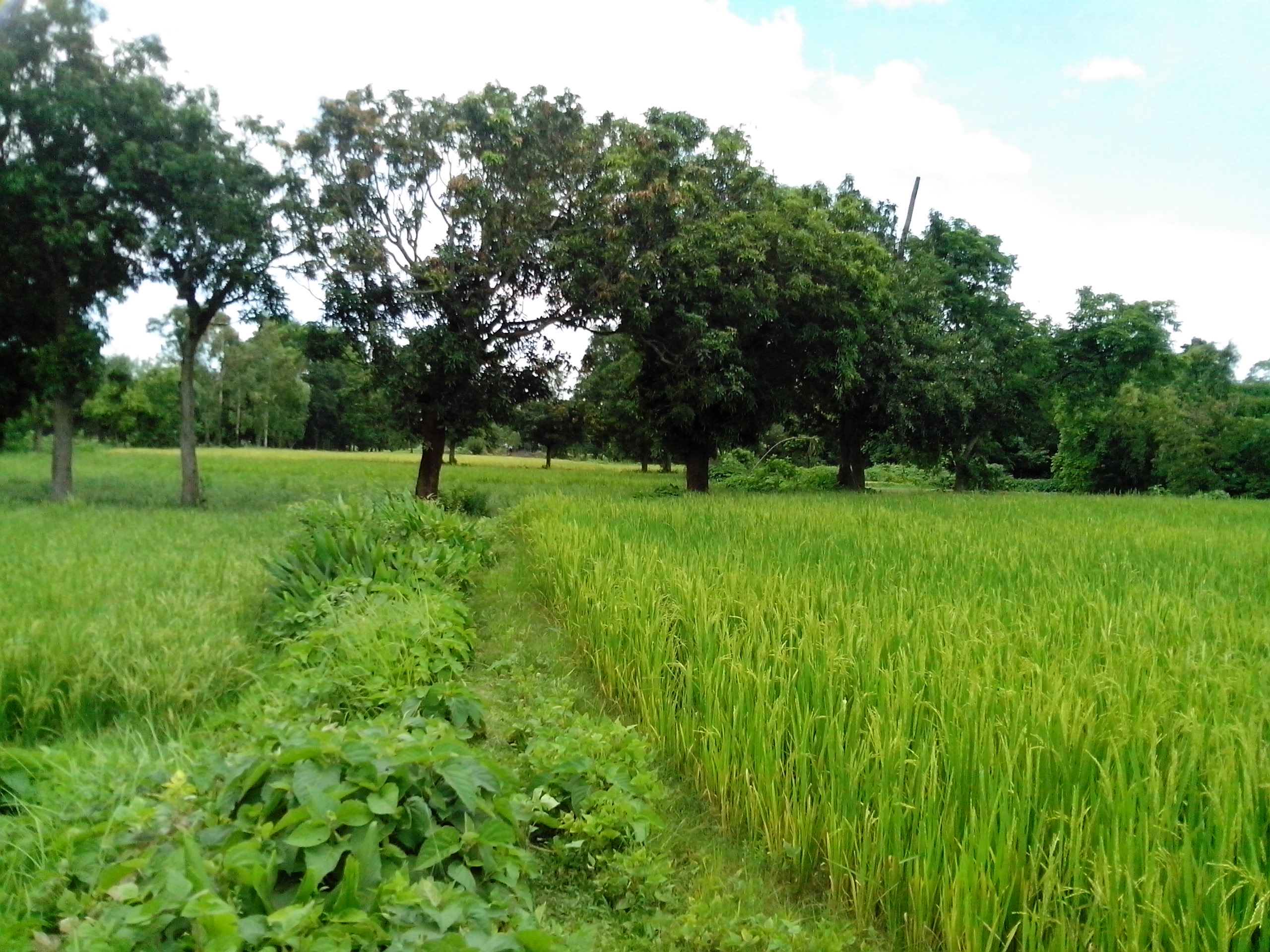
Chuadanga district formally opened its 2026 mango harvest on Wednesday, 13 May 2026, when deputy commissioner Lutfun Nahar picked mangoes from a tree at the Mohaldar Amrakanon orchard in Chuadanga town. Under the district's mango calendar, aanti, guti and Bombai mangoes could be harvested from that day, and the other varieties were to follow on fixed dates until the end of July. At the opening the deputy commissioner warned that anyone who broke the calendar would face fines and legal action, and that strict action would be taken if there was proof of any chemical or formalin being added to mangoes.
The opening at the Mohaldar orchard
Before the harvest began, the deputy commissioner toured the Mohaldar orchard to check the quality of the fruit and to see that chemical-free mangoes would reach the market, Jagonews24 reported that afternoon. The season was then opened by picking mangoes from a tree. The event was organised by the district association of mango traders and orchard owners.
Bangladesh Pratidin, in a report published at 1:37 pm the same day, said the opening took place at 12 noon in an orchard in the Mohila College area of the town. According to that report, the deputy commissioner was the chief guest, Masudur Rahman Sarkar, deputy director of the Department of Agricultural Extension (DAE) in Chuadanga, presided, and Nazmul Haque Swapan, president of the Chuadanga Press Club and himself an orchard owner, was the special guest.
Those present also included the DAE's deputy director (horticulture) Debashish Kumar Das, assistant commissioner Abdullah Al Shamim, the growers' and traders' association president Abdul Kuddus Mohaldar, its vice-president and union parishad chairman Abdul Karim, Rintu Mohaldar, and local growers and traders.
The 2026 calendar, variety by variety
A mango calendar staggers the harvest so that each variety is picked only from the date on which it is expected to be mature. As Jagonews24 reported it, Chuadanga's dates for 2026 were:
- From 13 May: aanti, guti and Bombai
- From 20 May: Himsagar
- From 25 May: Langra
- From 5 June: Amrapali
- From 15 June: Fazli
- From 20 June: Haribhanga
- From 22 June: Banana mango
- From 30 June: Ashwina and BARI-4
- From 5 July: Katimon
- From 31 July: Gourmati
Bangladesh Pratidin's report gave the same dates for the varieties from Himsagar to Ashwina and BARI-4. The calendar was described in the reports as the one set for the district; the deputy commissioner said both orchard owners and traders were bound by it.
Aanti and guti are the names growers use for seedling mangoes. The Banglapedia entry on the mango explains that the country's mangoes fall mainly into two groups: superior or elite varieties, propagated by grafting and other vegetative means, and local varieties raised from seed, popularly known as deshi or guti mangoes, which have no recognised varietal names and whose taste is not assured. Bombai is among the elite varieties Banglapedia lists, along with Fazlee, Langda, Gopalbhog, Himsagar, Khirsapat, Ashwina, Kohitoor, Lakshmanbhog, Mohanbhog and Misribhog.
What the officials said
Masudur Rahman Sarkar, the DAE deputy director, called the mango the king of fruits. He said the agriculture department would monitor orchards to make sure no owner harvested immature mangoes, and that it was working to ensure that mature, safe and chemical-free mangoes were sold in the market. He said the district's mangoes would again be able to help meet demand across the country that season.
After the opening, deputy commissioner Lutfun Nahar said orchard owners and traders must follow the set mango calendar, and that those who deviated from it would face fines and legal action. She said strict action would be taken if there was proof of any chemical or formalin being added to mangoes, and that mobile courts of the district administration would monitor the markets regularly for this purpose.
The warning set out what the administration said it would do during the season. Neither Jagonews24's report nor the earlier Bangladesh Pratidin report cited a specific case of chemical use in Chuadanga's mangoes.
The message repeated the previous year's. At the 2025 opening, on Thursday, 15 May 2025, the then deputy commissioner Mohammad Zahirul Islam picked mangoes in an orchard in the Kedarganj area of the town and said, as bdnews24.com reported, that safe mangoes had to reach consumers and that harmful chemicals must not be used in mangoes in any way. Masudur Rahman Sarkar presided over that event as well, and orchard owner Kuddus Mohaldar was among the speakers.
Chuadanga's orchards in numbers
According to the district DAE figures carried in the reports of 13 May 2026, mangoes were grown on 2,203 hectares in Chuadanga in the 2026 season, and the production target was set at about 30,842 tonnes.
The figures have moved from year to year. In 2025, Masudur Rahman Sarkar told bdnews24.com that the district had mango orchards on 2,300 hectares and a production target of 34,500 tonnes. In May 2023, the DAE in Chuadanga told Jagonews24 that orchards covered 2,465 hectares and that the district could produce 28,265 tonnes that year.
The calendar itself has shifted slightly. In 2023, harvesting and sale began on 14 May; Himsagar followed from 22 May, Langra from 25 May, Amrapali and BARI-3 from 5 June, Fazli from 21 June, and Ashwina and BARI-4 from 1 July. In 2025, the season opened on 15 May, with Himsagar from 20 May, Langra from 28 May, Amrapali from 5 June, Fazli from 15 June, and Ashwina and BARI-4 from 28 June.
The district's biggest mango market, Jagonews24 reported in May 2023, was the fruit section of Boro Bazar in Chuadanga town, on the bank of the Mathabhanga river, where buying and selling start at dawn every day. That report, of 24 May 2023, described a season of low prices. Wholesale, Bombai mangoes were selling for Tk 1,000 to 1,200 a maund, aanti and guti mangoes for Tk 350 to 500 and newly arrived Himsagar for Tk 1,200 to 1,400, against Tk 2,000 to 2,400 a maund for Himsagar at the start of the previous season. Traders blamed plentiful supply and the continuing demand for lychees. Kalam Mia, general secretary of the district fruit and mango traders' association, said then that the association was monitoring the calendar alongside the administration, and that growers would benefit if Chuadanga's mangoes could be exported.
Chuadanga district and its rivers
Chuadanga is a district of Khulna division covering 1,174.10 square kilometres in western Bangladesh, according to Banglapedia, the national encyclopedia. It is bounded by Kushtia and Meherpur districts on the north, Jhenaidah district on the south and east, and Meherpur district and the Indian state of West Bengal on the west. Its main rivers are the Mathabhanga, Bhairab, Chitra, Nabaganga and Kumar, and its noted beels include Vandardaha, Ujalpur, Maheshwari, Nehalpur and Jajari.
Before the Partition of India, Chuadanga was a sub-division of Nadia district. In 1947 the whole sub-division except Krishnaganj thana was included in Kushtia district, and Chuadanga became a district in 1984. It has four upazilas: Alamdanga, Chuadanga Sadar, Jibannagar and Damurhuda. The 2011 census counted 1,129,015 people. Among the population's main sources of income, Banglapedia gives agriculture at 65.14 per cent and commerce at 14.24 per cent.
Chuadanga Sadar upazila, where the opening took place, covers 298.27 square kilometres. It borders Alamdanga upazila on the north, Jibannagar on the south, Jhenaidah Sadar, Kotchandpur and Harinakunda upazilas on the east, and Damurhuda upazila and West Bengal on the west. Chuadanga municipality was formed in 1960 and began functioning in 1965.
How Rajshahi set its calendar the same week
Mango calendars are set district by district; Jagonews24 described Chuadanga's in 2023 as prepared by the district administration and the agriculture department. Rajshahi published its 2026 calendar on Sunday, 10 May, three days before Chuadanga's opening, at a meeting with stakeholders on the transport, marketing and harvesting of mangoes in the deputy commissioner's conference room, The Business Standard reported. Under it, guti mangoes could be picked from 15 May, Gopalbhog from 22 May, Ranipasand and Lakshmanbhog from 25 May, Himsagar and Khirsapat from 30 May, Banana mango and Langra from 10 June, and Amrapali and Fazli from 15 June. BARI Aam-4 could be picked from 5 July, Ashwina from 10 July and Gourmati from 15 July, while Katimon and BARI Aam-11 could be picked all year.
Rajshahi's deputy commissioner Kazi Shahidul Islam said the calendar had been prepared with growers, traders and the agriculture office so that no one could bring down and market immature mangoes, and that legal action would be taken against anyone who picked mangoes before the set time. Rajshahi had mangoes on 19,062 hectares that year, with a possible production of 243,993 tonnes.
Start dates move with the season. Ittefaq reported in May 2025 that Rajshahi's calendar had let guti mangoes be picked from 13 May in 2022, 4 May in 2023 and 15 May in 2024, and again set 15 May for 2025. The deputy commissioner at the time, Afia Akhter, said that if a disaster struck, farmers could pick mangoes early with the permission of the upazila nirbahi officer.
The same variety therefore reaches the market at different times from different districts. In 2026, Chuadanga's calendar opened Himsagar on 20 May and Langra on 25 May, while Rajshahi's opened Himsagar on 30 May and Langra on 10 June.
The mango and the varieties on the calendar
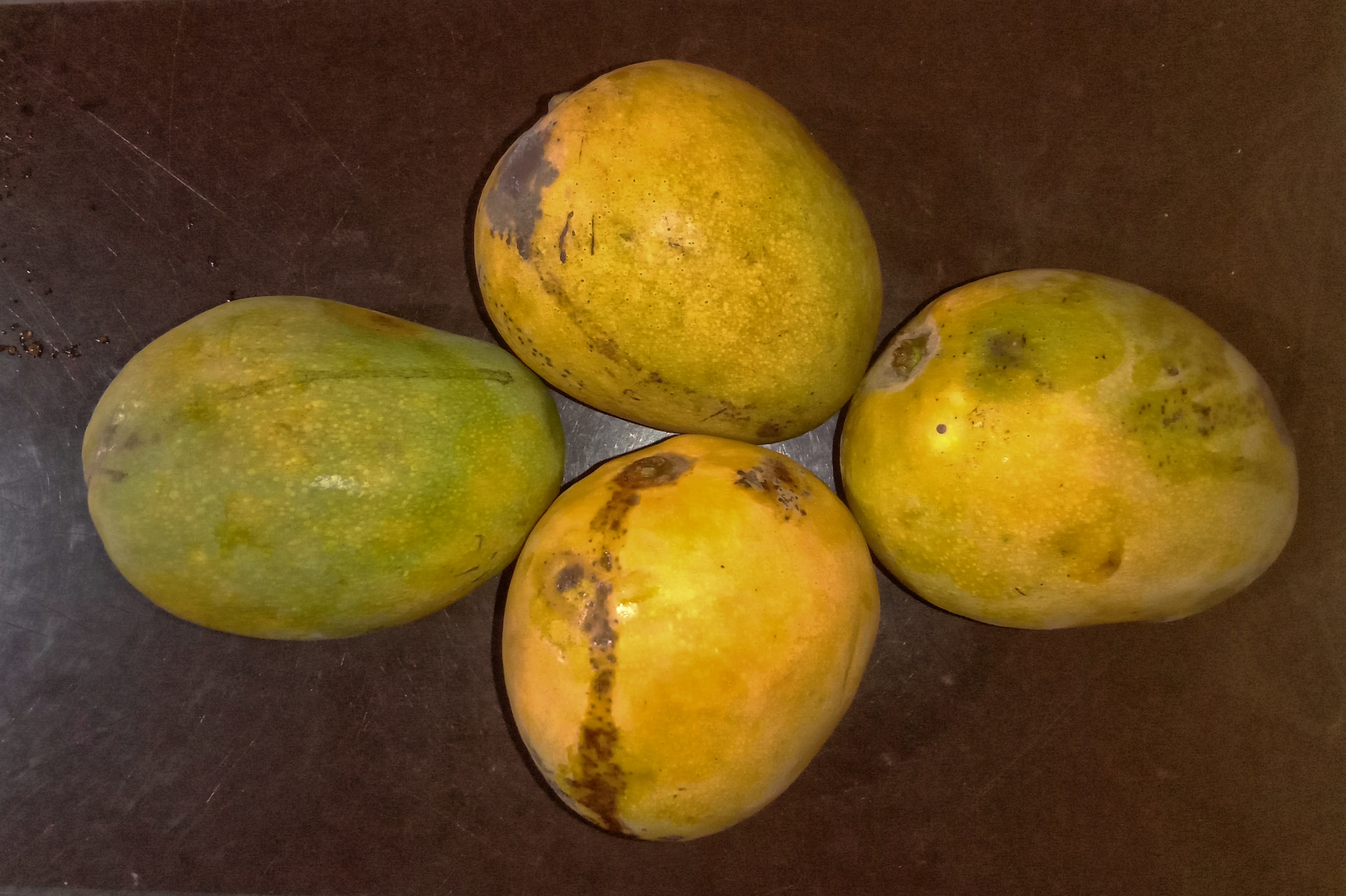
The mango, Mangifera indica of the family Anacardiaceae, is considered by some authorities to be indigenous to the eastern part of the Indian subcontinent, including Bangladesh, Assam and Myanmar, Banglapedia says. The mango tree is the national tree of Bangladesh. Banglapedia counts nearly 100 cultivars in the country, with most of the commercially important elite varieties grown in Rajshahi, Nawabganj and Dinajpur, and notes that the DAE produces and distributes grafts of elite cultivars from its orchards, horticulture centres and nurseries, while the Bangladesh Agricultural Research Institute (BARI) runs mango research stations.
Grafted trees begin to bear fruit in about the fourth year after planting and remain productive to about the 45th year; trees raised from seed take several years longer to bear but may fruit to the age of 60 or more. Fog, rain or cloudy weather in January to March, when the trees flower, harms fruit setting, and storms, particularly hailstorms, during fruit development often make immature fruit drop. About three dozen insect pests attack mango in Bangladesh, among them mango hoppers, fruit weevils, stem and shoot borers and the fruit fly, while fungal diseases such as anthracnose, sooty mould and powdery mildew also cause damage.
Several varieties on Chuadanga's calendar are shared with West Bengal across the border. Himsagar, also known as Khirsapati, is a fibreless mango with yellow to orange flesh; the fruit weighs 250 to 350 grams, of which about 77 per cent is pulp, and it is grown mainly in Chapai Nawabganj in Bangladesh and in the Malda, Murshidabad, Nadia and Hooghly districts of West Bengal. Langra, also called Benarasi Langra, was first grown in Banaras in present-day Uttar Pradesh 250 to 300 years ago and keeps a greenish tinge as it ripens. Amrapali is a hybrid of Dasheri and Neelum released in 1971 at the Indian Agricultural Research Institute in Delhi; its tree is dwarf and bears regularly, and its deep orange-red flesh holds roughly 2.5 to 3 times more beta carotene than other commercial varieties, though it has a shorter shelf life.
Banglapedia records that Bangladesh produced about 639,820 tonnes of mango in 2005-06 from about 641,525 acres. Worldwide, according to FAO data for 2023, the production of mangoes, mangosteens and guavas, which FAO reports together, was about 61 million tonnes, led by India with 43 per cent.
Formalin and ripening chemicals: what research says
Formalin is a solution of formaldehyde in water, about 37 to 40 per cent by weight, used as a biological preservative. A 2018 study by researchers of the Department of Chemical Engineering at Bangladesh University of Engineering and Technology (BUET), published in the peer-reviewed journal Agriculture & Food Security, noted reports that formalin was being used in tropical countries as an artificial preservative for fruit, vegetables and fish, and that the International Agency for Research on Cancer classifies formaldehyde, and formalin, as a Group 1 carcinogen.
The same study showed why proving such use is not simple. Formaldehyde occurs naturally in many foods as a by-product of normal metabolism. In samples bought in Dhaka markets, the researchers measured naturally occurring formaldehyde of up to 58.3 parts per million in fruit and up to 40.6 ppm in vegetables, and found that the level in banana and mandarin rose during three days of refrigerated storage. They warned that this natural formaldehyde may interfere with the on-the-spot tests regulators use to detect formaldehyde added to food, and that the natural levels must be known in order to estimate any added dose.
For mangoes the better-known concern is artificial ripening. In a 2010 review in the journal Current Science, Md. Wasim Siddiqui and R. S. Dhua of the Faculty of Horticulture at Bidhan Chandra Krishi Viswavidyalaya in West Bengal wrote that most fruit sellers used calcium carbide. When it reacts with water it gives off acetylene, which acts like the ripening hormone ethylene, and the carbide also carries traces of arsenic and phosphorus hydride. The authors wrote that carbide changes the colour of the skin while the flesh of immature fruit stays raw, that such fruit has less flavour and a shorter shelf life, and that the less mature the fruit, the more carbide is needed, making it more tasteless and possibly toxic. They named Bangladesh among the countries where carbide was banned but still used.
The review listed vomiting, diarrhoea, a burning sensation in the chest and abdomen, thirst, weakness and difficulty in swallowing among the early symptoms of arsenic or phosphorus poisoning. It also made a point that bears directly on a harvest calendar: mangoes of the Langra, Himsagar and Fazli varieties do not turn fully yellow when ripe, and fruit that arrives in the market before its due period has very probably been ripened artificially.
The laws behind the warning
The administration's warning rested on several laws in force on the day. The Safe Food Act, 2013 (Act No. 43 of 2013, dated 10 October 2013) forbids anyone, directly or indirectly, to use in any food a chemical harmful to human health or one that causes poisoning, naming calcium carbide, formalin and sodium cyclamate as examples, or to stock, market or sell food mixed with such substances (section 23). Offences under the Act are tried, as far as applicable, under the Mobile Court Act, 2009 (section 75).
The same Act provided for the Bangladesh Food Safety Authority (BFSA) as a statutory body (section 5). BFSA describes its main duty as regulating and monitoring the production, import, processing, storage, supply and sale of food through scientific practice to ensure the right to safe food, and coordinating all the agencies involved in food safety; its tasks include sampling and analysing food and sharing the findings with law enforcement agencies.
The Formalin Control Act, 2015 (Act No. 5 of 2015, dated 18 February 2015) defines formalin to include formaldehyde, paraformaldehyde and their solutions of any strength, and requires a licence to import, produce, transport, store, sell or use it. Its preamble says that unauthorised, excessive and unnecessary use of formalin to preserve food or stop it rotting was causing incurable diseases. Selling or using formalin without a licence is punishable with imprisonment of six months to two years, a fine of Tk 1 lakh to Tk 4 lakh, or both (section 22). Except for unlicensed import, production or storage and breach of licence conditions (sections 20 and 21), offences under the Act can be tried by mobile court (section 35).
The Mobile Court Act, 2009 (Act No. 59 of 2009) gives executive magistrates, and district magistrates within their jurisdictions, a limited power to take cognisance on the spot of a scheduled offence committed or revealed before them and, on the accused person's confession, to convict and impose a penalty. A mobile court cannot impose more than two years' imprisonment whatever the penalty in the relevant law, though it may impose any fine within that law's limits. If the accused denies the charge and the explanation is not satisfactory, the case is sent to a competent court. The magistrate may also search, seize and dispose of seized goods.
Photo: SyedAminul / Wikimedia Commons (CC BY-SA 4.0)
Sources: Jagonews24, Bangladesh Pratidin, bdnews24.com, The Business Standard, The Daily Ittefaq, Banglapedia, Wikipedia, FAO (FAOSTAT), Agriculture & Food Security (2018), Current Science (2010), Bangladesh Food Safety Authority, Laws of Bangladesh (Legislative and Parliamentary Affairs Division)
Comments
(0)