
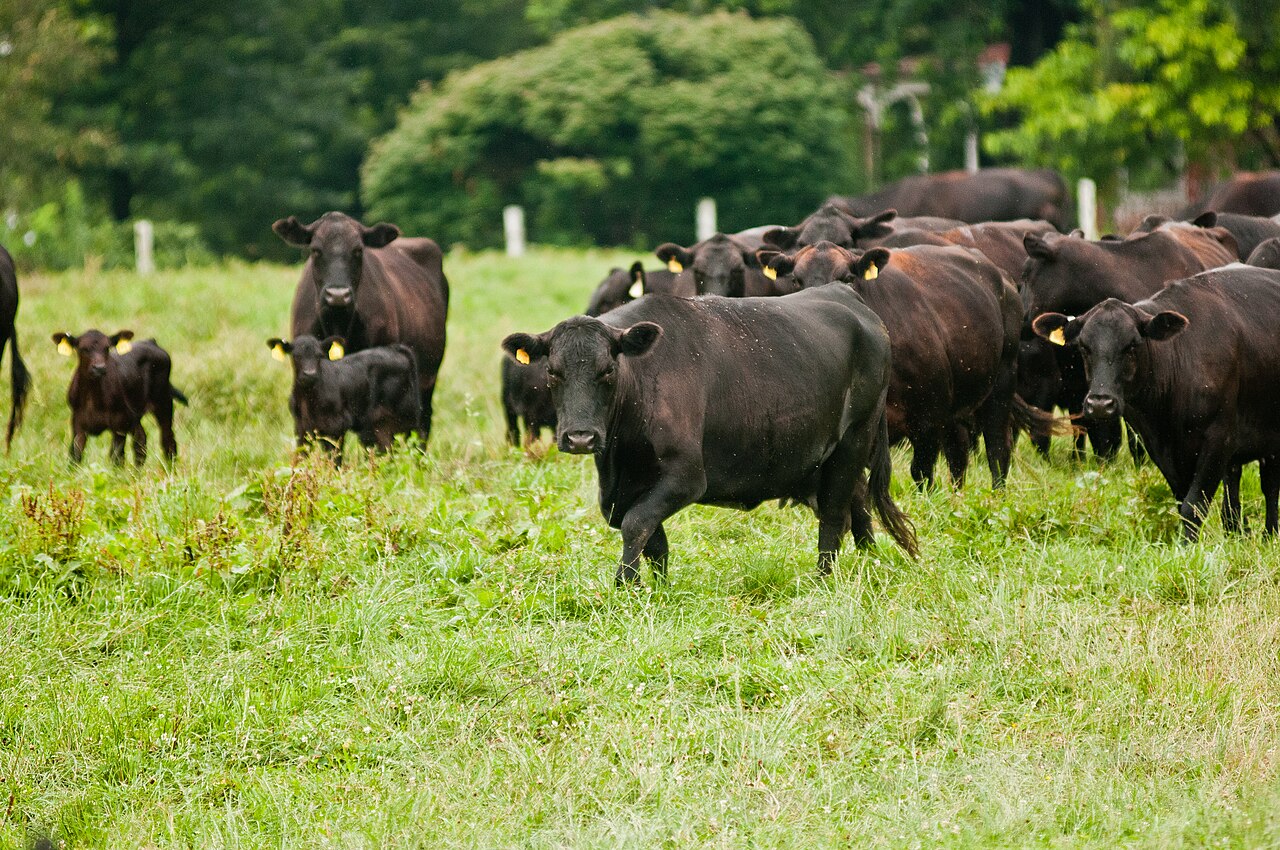
Choosing which calves to bid on at a livestock auction decides how many stay healthy and how much they return. Chad Baker, who runs a cattle stocker operation in Laconia, Indiana, with his wife Paige and sons Jude and Maddox, shared his rules with Farm Progress.
Buy the bawling calf. Among younger calves, Baker prefers freshly weaned animals to those weaned about two weeks earlier, which are more susceptible to viruses and fall sick after mixing at the sale. "A good, solid, weaned calf is worth something. But it needs to be for at least 35 days," he said.
Prefer vaccinated calves. At least one round of a modified-live vaccine helps, and two are better, but the Bakers treat every animal as unvaccinated and bring them all onto one programme, which he says cuts down on sickness.
Mix breeds. Most buyers chase Angus, and Baker usually does too, but for cattle he finishes and processes he likes Charolais crosses, which he says grade as well and outgrow the black cattle. He believes breeding for grade and fast growth has hurt herd health, with some producers losing 20 to 30 per cent of a herd to a resistant bug.
Big is not always better. For heifers to keep and breed, he advises small- to medium-framed calves, and in the cow-calf business he would rather run 1,100-pound cows because they cost less to feed, which matters in today's volatile cattle market. The report is by Allison Lynch.
Photo: USDA / Wikimedia Commons (CC0)
Source: Farm Progress

Comments
(0)