
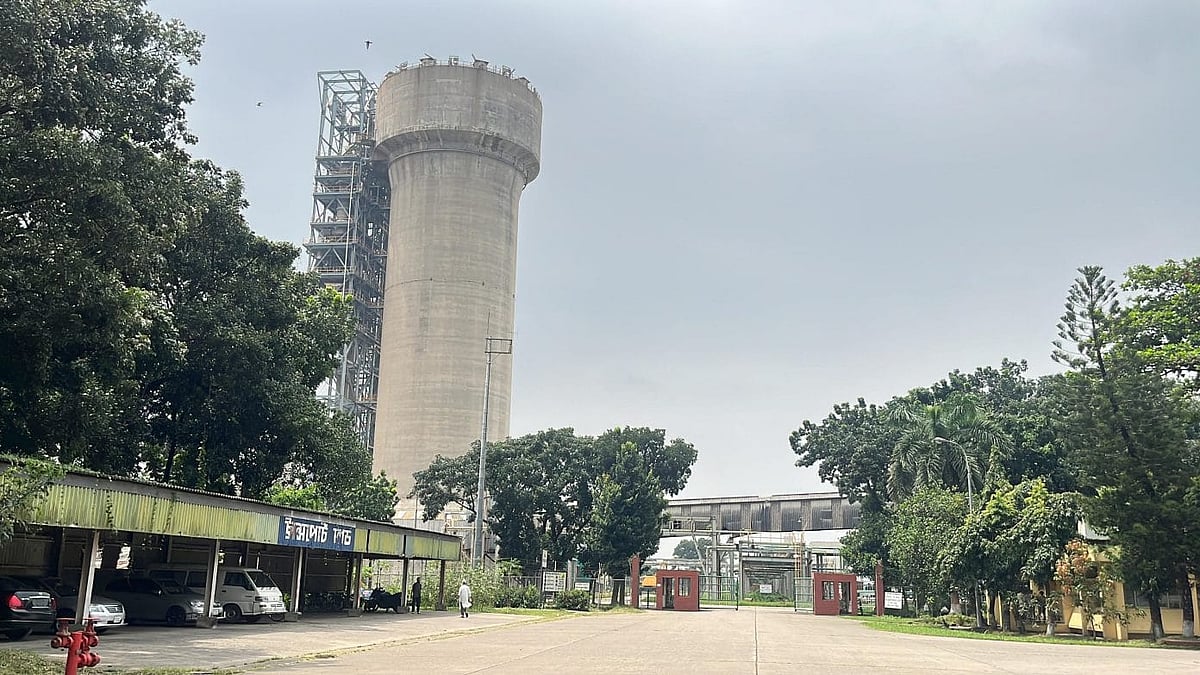
Chittagong Urea Fertilizer Limited (CUFL), the state-owned plant at Anwara in Chattogram, had just resumed production after six months idle for want of gas. Two days later, at about 4am on Thursday, a mechanical fault shut its urea line down again. Deputy chief engineer Md Abdur Rahim confirmed the stoppage.
CUFL sources said gas supply was restored on 25 August, maintenance followed, and urea production began at about 5am on Tuesday, 15 September. Two days on, a seal leak in the RC pump forced a halt. Officials said the pump can be repaired, but gas pressure from Karnaphuli Gas Distribution Company Limited (KGDCL) will stay low until Saturday, so production cannot restart before then.
When running, the plant can turn out about 1,100 tonnes of urea a day — worth some Tk 41.8 million at Tk 38,000 a tonne. Its long stoppages have cost enormous output: in fiscal 2025-26 it produced only 65,000 tonnes.
The past two years have been a cycle of stops and starts. The plant ran for just five days in 2023-24; it closed on 7 February 2024 and reopened on 13 October after about eight months. A mechanical fault stopped it on 3 January 2025, it restarted on 26 February, and a gas cut halted it on 11 April. After about six months it restarted on 2 November, only to stop the same day; it ran from 2 March until a gas shortage closed it on 4 March. The latest restart on 15 September, after another six months, lasted two days.
Full production needs 48 to 52 million cubic feet of gas a day, and because the plant runs entirely on gas any supply squeeze shuts it down. Bangladesh needs about 2.6 million tonnes of urea a year. Factories under the Bangladesh Chemical Industries Corporation (BCIC), CUFL among them, produce about 1 million tonnes; the remaining 1.6 million tonnes or so must be imported.
The government built the plant with Japanese technical assistance at Rangadia in Anwara, on the south bank of the Karnaphuli, and commissioned it on 29 October 1987. It was designed for 1,700 tonnes of urea a day and 561,000 tonnes a year; capacity is now about 1,100 tonnes a day. It can also produce 800 tonnes of ammonia a day, or 310,000 tonnes a year.
Source: Prothom Alo



Comments
(0)