
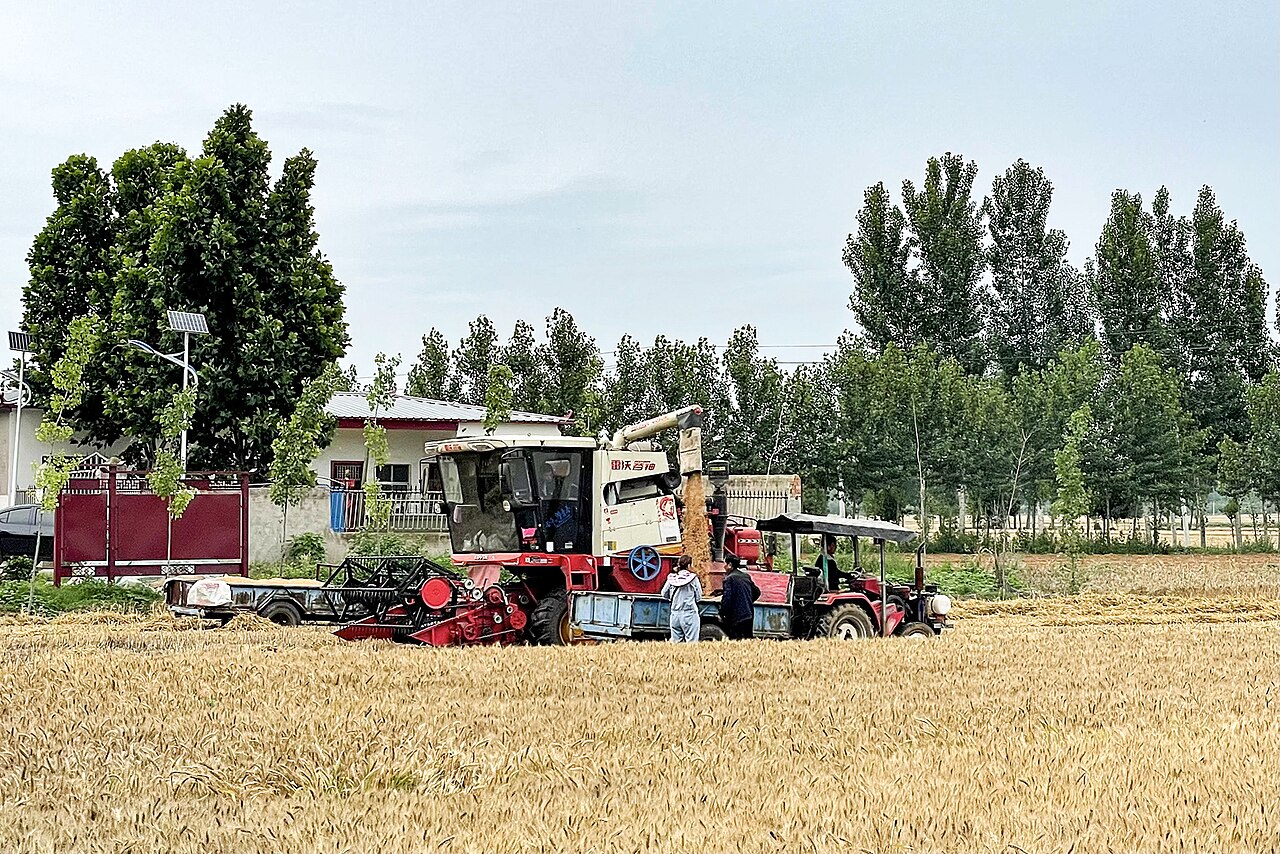
China will steadily raise its comprehensive grain production capacity by 2030 and hold the line of basic self-sufficiency in grains and absolute security in staple foods, under the national crop farming development plan for the 15th Five-Year Plan period (2026–2030) released by the Ministry of Agriculture and Rural Affairs. The plan is aligned with the modernisation plan for the same period, which sets a target of 1.45 trillion jin, about 725 million tonnes, of grain capacity by 2030.
By 2030 the country is to consolidate and raise the production capacity of soybeans, oilseeds, cotton and sugar crops to keep a reasonable level of self-sufficiency, and to ensure balanced, diverse and safe supplies of vegetables, fruit and tea, with targeted measures by crop and region. The plan stresses a green transition, calling for agricultural water conservation and more precise use of fertiliser and pesticides, and puts breakthrough varieties and intelligent machinery at the centre of what it calls new quality productive forces; technology already accounts for more than 64 percent of China's agricultural output growth.
"The 15th Five-Year Plan period is critical for basically achieving agricultural and rural modernization," Zhao Changbao, director of the ministry's Rural Economy Research Center, wrote recently. "Continuously raising the land output rate, resource utilization rate and labor productivity is an inevitable choice for responding to changes at home and abroad, consolidating the foundation of agricultural development and safeguarding national food security." He said the plan is meant to lift output and capacity, production and ecology, and output and income together.
China's grain output reached about 714.9 million tonnes in 2025, the second straight year above 700 million tonnes, and the country feeds nearly 20 percent of the world's population on less than 9 percent of its arable land. The plan arrives as the 2026 State of Food Security and Nutrition in the World report, from five UN agencies in July, put the number of people affected by hunger in 2025 at about 645 million, 7.8 percent of the global population. For South Asia's rice and wheat importers, China's insistence on holding its own grain at home is a standing feature of the world market.
Photo: Windmemories / Wikimedia Commons (CC BY-SA 4.0)
Source: Global Agriculture
Comments
(0)