
The Chinese government has specific rules for developing the poultry industry. With the commercial arrangements fully settled, there is little chance of any farmer making a loss, and profit is assured on broiler farms just as on layer farms.
Farms away from homes
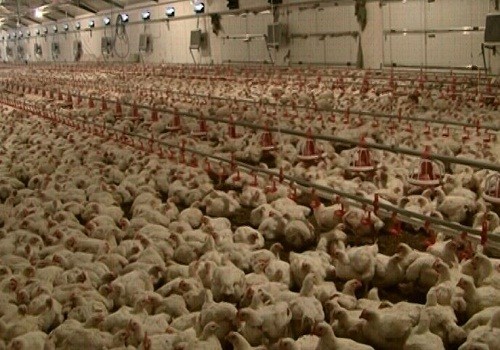
Poultry cannot be kept wherever people live, and it is impossible to set up small farms of two or four hundred birds. In the hilly Fengjia area of Shandong province, there are 46 broiler farms in a controlled, healthy environment with no free contact with the outside.
Farm supervisor Mr Sun said the livestock department has set strict rules: no farm may be built within one kilometre of a settlement, and any farm releasing pollutants into the air faces immediate action, under strict monitoring.
Twenty thousand birds per shed
Each shed holds 20,000 broilers. The fast-growing birds reach 2.5 to 3 kg in 40 days and are then sent to market. Every bird in every shed is tracked using information technology rather than by hand, with New Hope Group overseeing the work.
Assured markets
New Hope sales manager Tang Xingyan said the farms have contracts with New Hope Group and follow its rules; farm management is the same across China, with easy access to inputs and assured sale at a set profit. This favourable environment plays an important role in meeting the protein needs of the world's most populous country.
Source: Shykh Seraj, Hridoye Mati O Manush. First published in Bengali on The Agro News.

Comments
(0)