
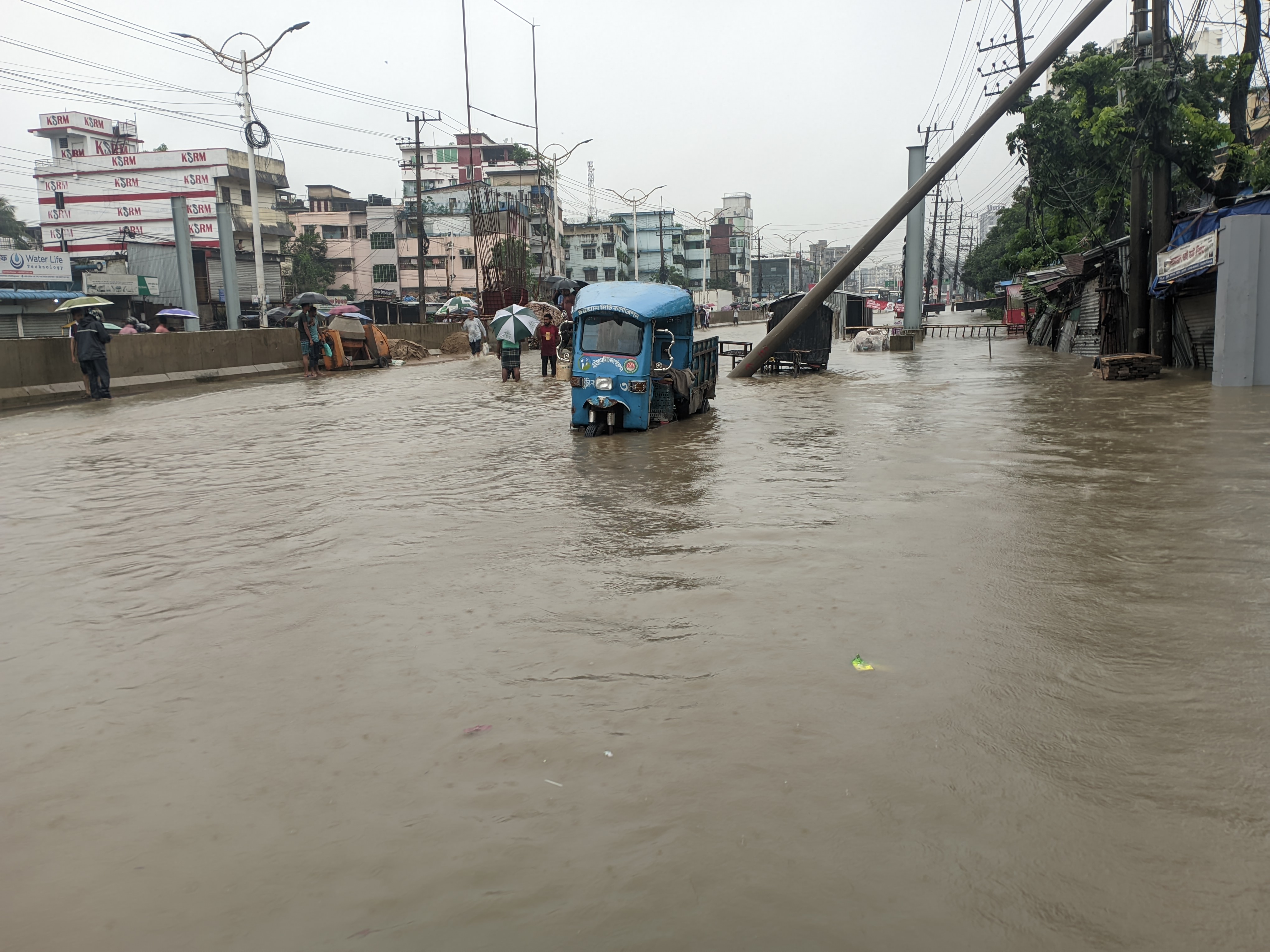
Days of heavy rain and torrents from the hills flooded large parts of Chattogram district in the second week of July 2026, and by the evening of 10 July the district's fisheries and agriculture offices had put the first numbers on what the water had taken from farmers. According to their preliminary counts, reported by Jagonews24 that evening, about 10,000 ponds, dighis (large ponds) and shrimp enclosures and more than 14,000 hectares of farmland had been damaged across the district. Losses of fish and crops were feared to run into the hundreds of crores of taka, and the departments concerned had begun work on final damage figures and on preparing rehabilitation for affected crop and fish farmers.
About 10,000 ponds and enclosures under water
According to the District Fisheries Office, the flood had damaged 9,933 ponds and dighis and 320 shrimp enclosures in 153 unions of the district's 15 upazilas. Fish farming on about 4,100 hectares of water had been put at risk.
District Fisheries Officer Salma Begum told Jagonews24: "Chattogram has had its biggest flood in living memory this time. The upazilas of south Chattogram have been hit hardest. Because of the heavy rain and hill torrents, people in most areas of Satkania and Banshkhali are still marooned."
"Ponds, dighis and shrimp enclosures have been damaged to some extent in almost every area of the district's 15 upazilas," she said. "By the preliminary count, more than 10,000 ponds, dighis and enclosures have been affected, with Banshkhali hit hardest. According to the information so far, fish worth more than Tk 90 crore have been lost to the floodwater."
She said the District Fisheries Office had taken steps to stand by fish farmers after the flood, and that, as a first step, a damage report had been sent to the Department of Fisheries, the government agency responsible for fisheries development and extension across the country.
Banshkhali and Satkania counted the heaviest fish losses
The fisheries office's upazila figures showed the south of the district bearing the brunt. In Banshkhali about 2,500 ponds and 310 shrimp enclosures went under water, and fish worth about Tk 41.50 crore were lost across the upazila. In Satkania fish worth about Tk 10.75 crore were washed away from 466 hectares of ponds and dighis.
The office's estimates for the other upazilas were:
- Lohagara: about Tk 8.50 crore in 1,620 ponds
- Karnaphuli: about Tk 6 crore in 557 ponds and dighis
- Chandanaish: about Tk 5.94 crore in 383 ponds and dighis
- Boalkhali: about Tk 4.50 crore in 756 ponds and dighis
- Patiya: about Tk 3.68 crore in 1,435 ponds and dighis
- Fatikchhari: about Tk 2.70 crore in 533 ponds
- Anwara: about Tk 1.50 crore in about 1,100 ponds and 10 shrimp enclosures
When pond banks are overtopped or break, the stocked fish escape into canals, fields and rivers, and the farmer loses fish that have been fed and tended for months. Banshkhali stands out in the shrimp figures because it is a coastal upazila: Banglapedia, the national encyclopaedia published by the Asiatic Society of Bangladesh, describes it as bounded by the Bay of Bengal and the Kutubdia channel on the west, and lists shrimp and sea fish among its main exports along with betel leaf, litchi, tea, ginger and salt. The encyclopaedia's fisheries entry notes that shrimp culture and salt production in rotation are practised in the Chittagong region.
Aus paddy, Aman seedbeds and summer vegetables
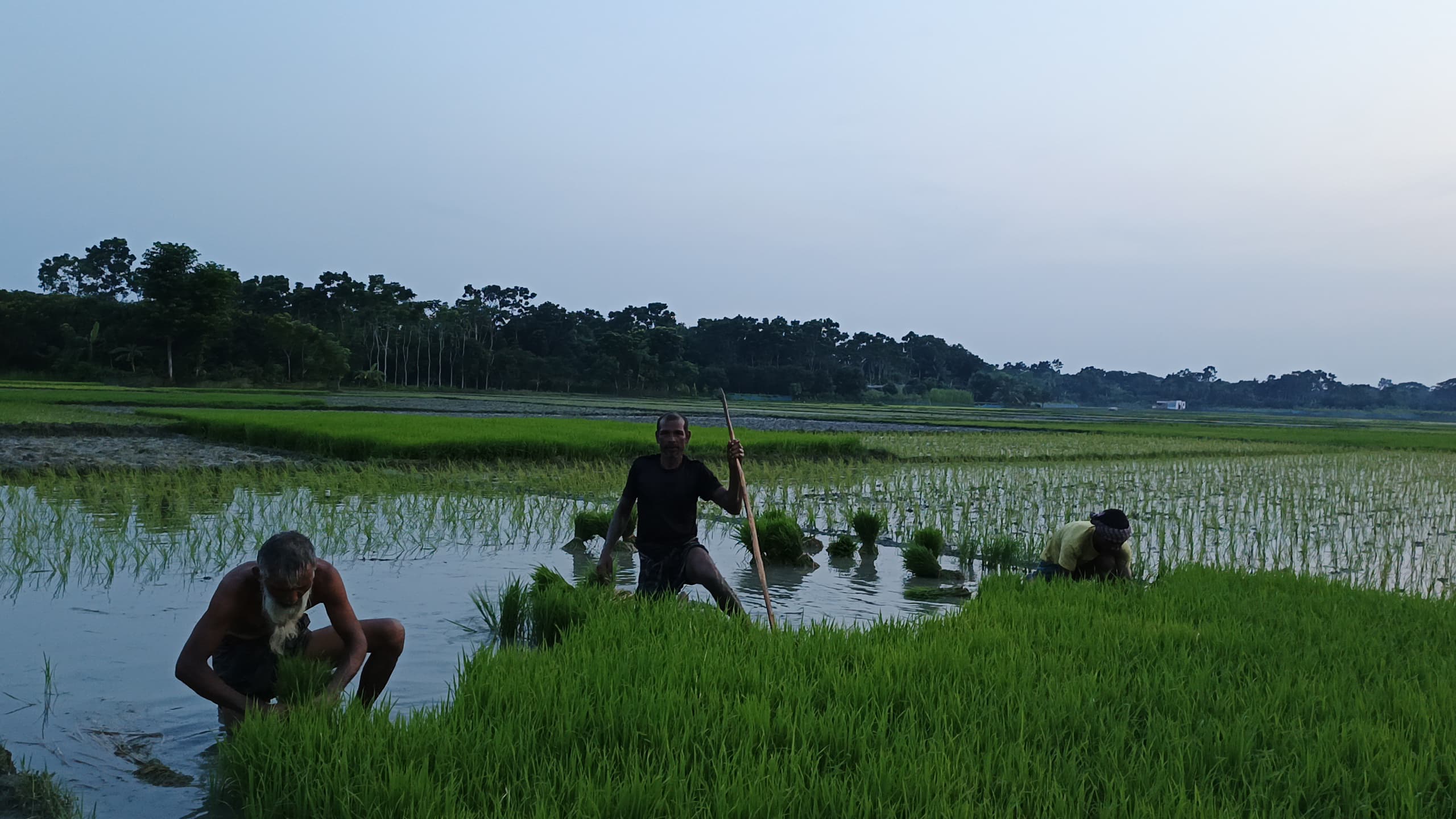
According to the District Agriculture Office, part of the Department of Agricultural Extension (DAE), farmland had been damaged to some degree in every upazila of Chattogram by flooding and waterlogging. The preliminary figures showed 8,768 hectares of Aus paddy, 652 hectares of Aman seedbeds and 4,907 hectares of summer vegetables damaged in the district.
The worst crop damage was in Banshkhali, Chandanaish, Sitakunda, Sandwip and Satkania upazilas. Aus paddy was damaged on 2,150 hectares in Banshkhali, 2,120 hectares in Chandanaish, 1,500 hectares in Sitakunda and 1,000 hectares in Sandwip.
Among summer vegetables Chandanaish suffered most, with 830 hectares damaged, followed by 700 hectares in Sitakunda, 600 in Sandwip, 475 in Fatikchhari, 460 in Satkania, 455 in Patiya, 400 in Banshkhali and 310 in Raozan.
District Agriculture Officer Apru Marma told Jagonews24: "Several upazilas of Chattogram have been hit hardest by the floods and hill torrents. Among them, Aus paddy has suffered extensive damage in Sitakunda, Banshkhali, Chandanaish and Sandwip. In Chandanaish in particular, most of the land under Aus paddy and summer vegetables has gone under water."
"Agriculture is always the sector hit hardest by floods," he said. "We have made a preliminary estimate of the damage. Once the water has fully receded, a final report will be sent to the ministry, stating the affected farmers and the amount of land."
Where Aus and Aman sit in the farming year
Bangladesh grows rice in three seasons, Aus, Aman and Boro. Banglapedia describes transplanted Aman as the most important of them by area and notes that Aus is grown in scattered pockets in most districts. Aus is the smallest of the three: the Bangladesh Bureau of Statistics (BBS), in figures reported by The Daily Star on 21 June 2026, put the last Aus harvest, gathered in July and August in fiscal year 2025-26, at 27 lakh tonnes, down from 27.9 lakh tonnes the year before. The area under Aus fell to 9.45 lakh hectares from 9.58 lakh hectares, and the yield stood at 2.865 tonnes per hectare. The bureau said farmers had been moving from Aus to other seasonal crops in search of higher profits, and that Aus accounts for less than one-tenth of the country's annual rice output.
That calendar is why the timing of this flood mattered. The Aus crop in the fields in July is the one harvested in July and August. Aman seedbeds are the nurseries from which seedlings are lifted and transplanted for the monsoon crop, the country's largest by area. In the August 2023 flood, the DAE's deputy director in Chattogram told The Business Standard that the water had damaged a large amount of Aus that was due to be harvested at the end of that month.
Vegetables, the third crop in the agriculture office's tally, are a mainstay of Chandanaish, the upazila with the largest damaged area in July 2026. Banglapedia lists vegetables among Chandanaish's main crops and its main exports, with guava, lemon and pineapple, and in 2023 an additional director of the DAE in Chattogram described the Dohazari area of the upazila as famous as the vegetable basket of Chattogram, with vegetables grown that year on 1,245 hectares in Chandanaish.
Record rain, hill torrents and rivers above danger level
The flood followed rainfall far above the usual. Prothom Alo reported on 7 July 2026 that 412.3 millimetres of rain had fallen in Chattogram in the 24 hours from 3 pm on Monday 6 July to 3 pm on Tuesday 7 July, the highest one-day total in the 43 years since 1983. Walls and hillsides collapsed in Chattogram city, Rangunia and elsewhere in the region, and a Cox's Bazar-bound train was held up in the city with about a thousand passengers because water had covered the track.
By 8 July, after four days of very heavy rain, the same newspaper reported low-lying areas of five districts of the Chattogram region flooded by hill torrents, with the low areas of Sitakunda, Banshkhali, Lohagara, Satkania, Raozan, Hathazari, Rangunia and Fatikchhari in Chattogram under water. In Satkania and Lohagara the Sangu was flowing just below its danger level while the Dolu and the Tankabati were above theirs, and water entering through breached embankments had flooded the low parts of Dharmapur, Bazalia and Charati unions of Satkania and parts of Amirabad, Barahatia, Putibila and Adhunagar unions of Lohagara, submerging farmers' crops. In Banshkhali, hill water and the tide flooded the municipal area, Shilkup and the Chhanua, Napora, Chambal, Shekherkhil, Khankhanabad and Pukuria unions, and fish were washed out of ponds, water bodies and enclosures. The paper reported that no specific damage figures were yet available anywhere.
On the afternoon of 10 July, a few hours before the farm loss figures were published, Jagonews24 reported district administration figures of at least four and a half lakh people marooned, five deaths in the floods and landslides and 629 shelters opened. Satkania was worst hit: about 70 to 80 percent of its 17 unions and one municipality was under water after the embankment of the Dolu canal broke, and more than two lakh people there were marooned. The upazila administration had opened 89 shelters. In Banshkhali most of the 212 villages of its 15 unions were flooded and hundreds of mud houses had collapsed, and the upazila's executive officer gave an official count of about 45,000 people marooned, adding that the water had begun to recede. In Chandanaish low areas of two municipalities and eight unions were flooded, at least 20,000 people were marooned and the Sangu had crossed its danger level. The same report said thousands of hectares of farmland were under water and Aman seedbeds, vegetable fields and fish enclosures had been damaged.
A district of hills, rivers and fast-rising water
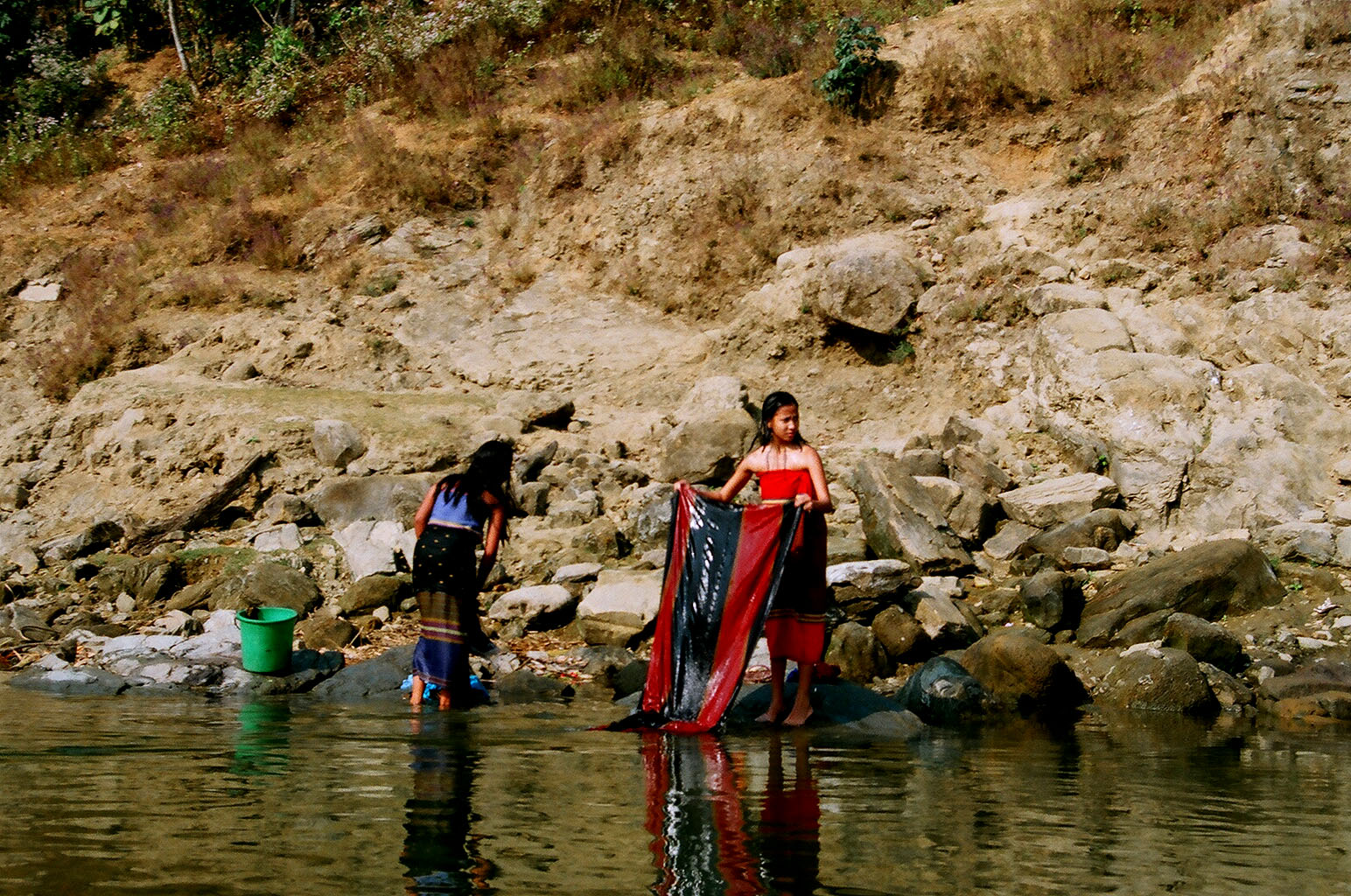
Chattogram district covers 5,282.92 square kilometres between the hills of the Chittagong Hill Tracts and the Bay of Bengal. Banglapedia describes it as bounded by Khagrachhari, Rangamati and India's Tripura state on the north, Cox's Bazar on the south, the hill districts of Bandarban, Rangamati and Khagrachhari on the east and Noakhali and the Bay of Bengal on the west. Its main rivers are the Karnaphuli, the Halda and the Sangu, and the encyclopaedia gives the district's total annual rainfall as 3,194 millimetres.
The Sangu explains much of what happened in the south. It rises in the North Arakan hills, flows north through the Hill Tracts to Bandarban, then turns west across Chattogram district to the Bay of Bengal, a course of 270 kilometres, 173 of them in Bangladesh. Its principal tributary, the Dolu, drains the Satkania plain, and the Sangu drains the waters of three upazilas, Patiya, Satkania and Banshkhali. Banglapedia describes it as a shallow river that becomes violent with rapid currents during the rains.
Water from those hills arrives quickly. Banglapedia classes Bangladesh's floods as monsoon floods, flash floods and tidal floods, and describes flash floods as water that rises and falls suddenly, generally in the valleys of hilly areas; the hill catchments draining into the south-east, it says, are characterised by flash floods that are mostly short but unpredictable in frequency and intensity. In Banshkhali the hill water met the tide, which the 8 July report said had flooded coastal unions and put embankments at risk.
The worst-hit upazilas are farming places. Banglapedia, citing census data, records agriculture as the main source of income for 58.73 percent of households in Banshkhali, 36.41 percent in Chandanaish and 35.64 percent in Satkania. It lists paddy, potato, mustard, groundnut, kalai, turmeric, cotton and vegetables among Satkania's main crops, and paddy, jute, tea, potato, ginger, betel leaf and vegetables among Banshkhali's.
Fish ponds and what they mean to the economy
Ponds are the backbone of fish farming in Bangladesh. According to Bangladesh Fisheries Research Institute (BFRI) records reported by Prothom Alo in June 2024, the country produced a total of 48 lakh tonnes of fish in 2023, of which 32 lakh tonnes came from farms and about 13 lakh tonnes from freshwater capture, with the rest from the sea. The Food and Agriculture Organization's report The State of World Fisheries and Aquaculture 2024, based on 2022 data, placed Bangladesh second in the world in inland freshwater capture, behind India.
Banglapedia describes the usual pond method as mixed farming, or polyculture: several fast-growing species with different feeding habits are stocked together so that every layer of the water is used. The typical combination is the Indian major carps, catla, rui and mrigal, often with silver carp, grass carp, common carp, tilapia and other species. The encyclopaedia's fisheries entry says fish alone supply about 60 percent of the animal protein Bangladeshis eat, so a lost pond is a loss of food as well as income.
The season adds to the damage. In August 2023 a survey officer of the Department of Fisheries in Chattogram told The Business Standard that July and August are the peak time for farmers to harvest fish, and that farmers were due to release new fry the following month, so that both fish farmers and fry producers suffered heavy losses when the water came.
The August 2023 flood, the last comparable test
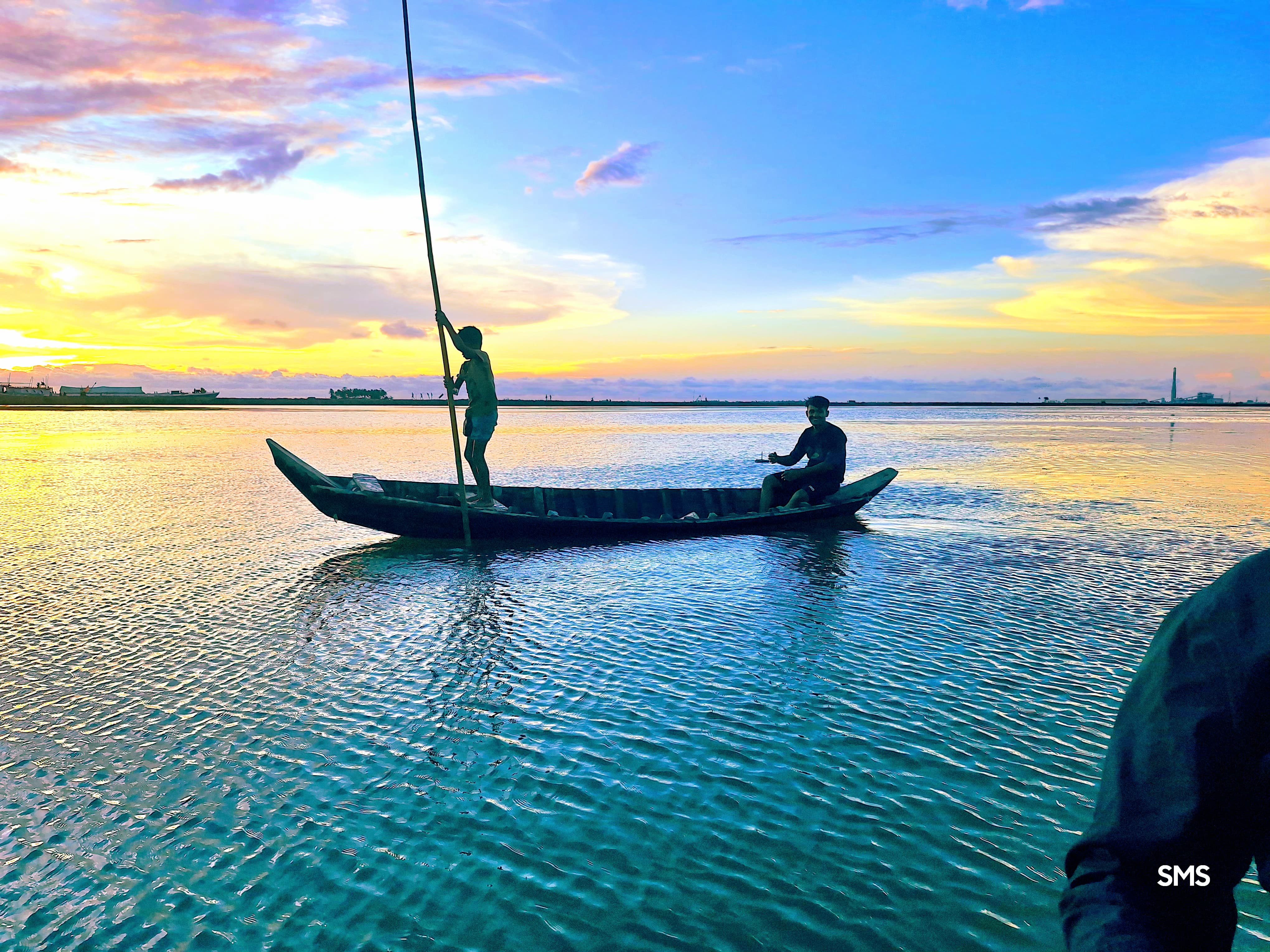
The south of Chattogram had faced a similar disaster three years earlier. The Daily Star reported in August 2023 that at least 16 people had died in floods in five upazilas of the district, with Satkania, Banshkhali and Chandanaish the worst affected and damage also in low-lying parts of Patiya and Anwara and in northern upazilas. The Financial Express reported on 18 August 2023 that the district had flooded from 1 to 4 August that year.
The losses then were counted in the same two sectors. According to the Department of Fisheries in Chattogram, as reported by The Business Standard on 11 August 2023, the water flooded 13,379 ponds and fish enclosures and washed away 4,154 tonnes of rui, catla, mrigal, tilapia and pangas and about 185.35 lakh fry; the survey officer put the sector's total losses, including infrastructure, at over Tk 75 crore. The DAE said crops on about 27,000 hectares had been submerged, including Aman on 14,000 hectares, Aus on 4,500 hectares, Aman seedbeds on 3,700 hectares and vegetables on 5,100 hectares. The Department of Livestock Services counted losses of about Tk 28 crore to cattle and poultry. The Financial Express, a week later, reported a district fisheries loss of Tk 69.38 crore, with Satkania, Lohagara, Patiya and Chandanaish the four worst-hit upazilas.
Those figures were final tallies made after the water had gone. The July 2026 numbers were first counts, made while much of Satkania and Banshkhali was still under water, and both district offices said they would be revised in the field.
Relief, reports and the next steps officials described
The district administration said on 10 July that the Ministry of Disaster Management and Relief had allocated 200 tonnes of rice and Tk 10 lakh for the flood, to be distributed among the upazilas in phases, and that 10 speedboats had been sent to Satkania to strengthen rescue work. All leave for district administration staff had been cancelled and 24-hour control rooms were running at the deputy commissioner's office and in every upazila.
For farmers, the officials described a two-stage process. The fisheries office had sent its preliminary damage report to the Department of Fisheries, and the agriculture office said a final report naming the affected farmers and the amount of land would go to the ministry once the water had fully receded. Residents of the flooded areas told Jagonews24 that the same floods and waterlogging return almost every monsoon, and called for river dredging, canal recovery, durable embankments and better drainage alongside relief.
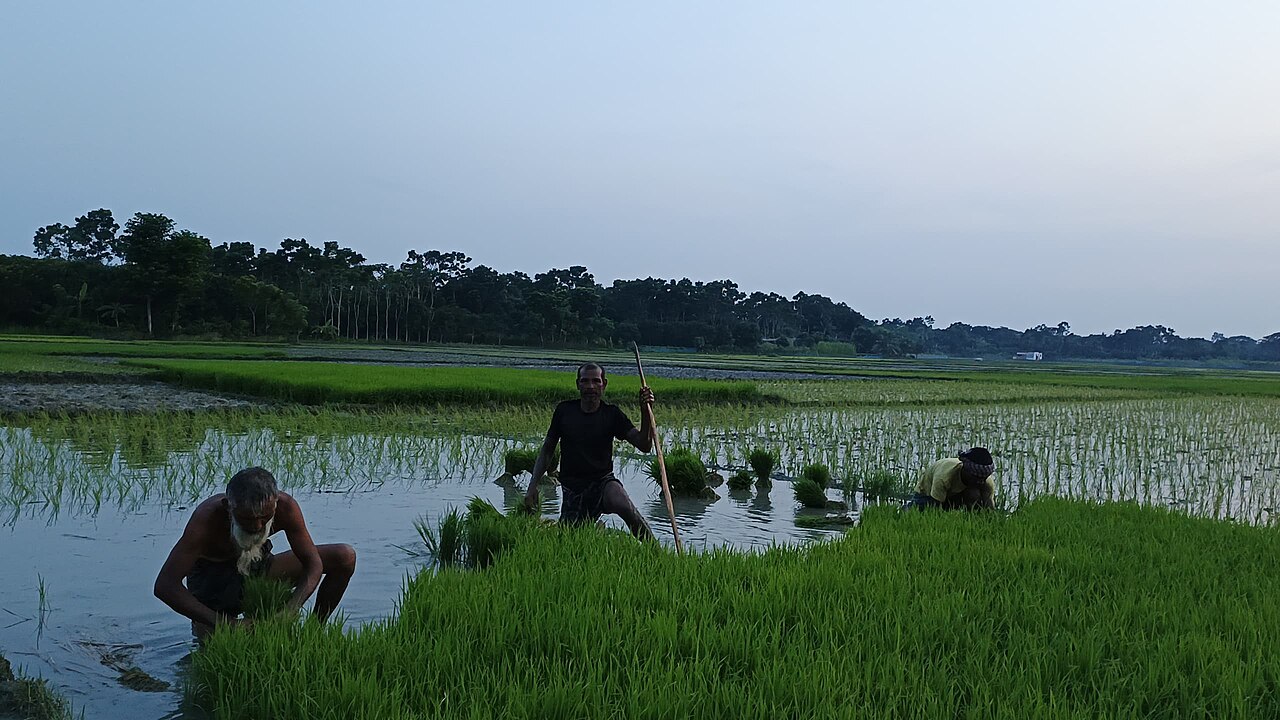
Photo: Owais Al Qarni / Wikimedia Commons (CC BY-SA 4.0)
Sources: Jagonews24, Prothom Alo, Banglapedia (Asiatic Society of Bangladesh), Bangladesh Bureau of Statistics via The Daily Star, Bangladesh Fisheries Research Institute and FAO via Prothom Alo, The Business Standard, The Financial Express, The Daily Star
Comments
(0)