
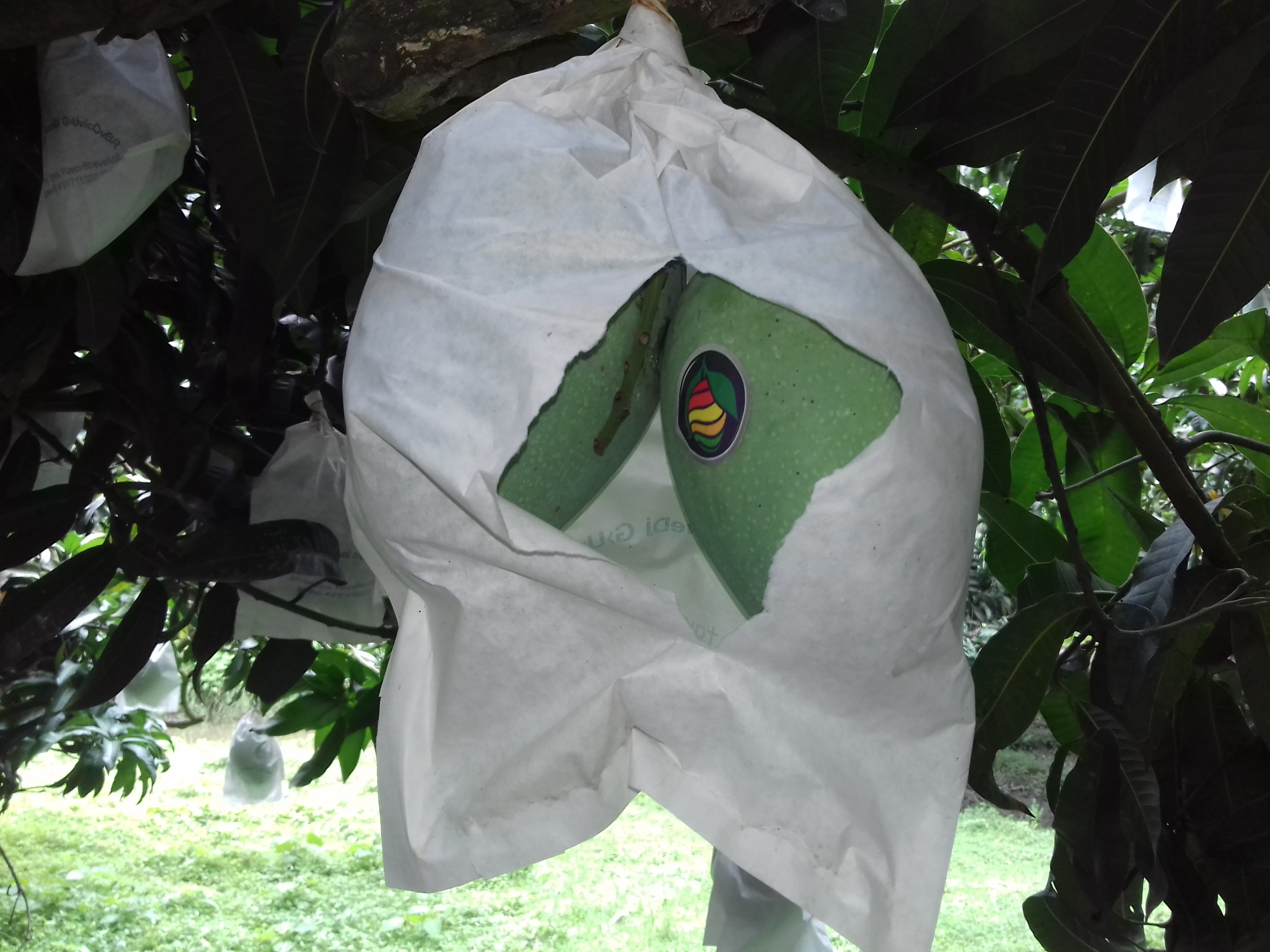
Mango growers in Chapainawabganj, the district widely known as Bangladesh's mango capital, were short of fruit bags in mid-May 2026, at the very point in the season when the young fruit has to be bagged. Thousands of growers and orchard owners in the district were worried because they could not get the bags, one of the main inputs for producing safe, low-pesticide and exportable mangoes, Jagonews24's Chapainawabganj correspondent reported on 16 May 2026. Growers said they had gone from place to place without finding the bags they needed, and that where bags were on sale they cost almost double the usual price, pushing up the cost of producing the crop.
Growers told the reporter that over the previous few years the use of fruit bags had risen sharply as they cut back on pesticides to produce safe mangoes. Bagging had become popular especially for the Ashwina and Katimon varieties and for the exportable Khirsapat and Fazli. That season, they said, supply fell short of demand, the market had run dry, and growers were being forced to buy at higher prices. They demanded that supply be brought back to normal quickly and that effective steps be taken to control prices; otherwise, they warned, the production of safe mangoes could be disrupted that season.
Growers describe the shortage
Rafiqul Islam, a farmer from Islampur union in Sadar upazila, said he needed about 50,000 fruit bags that year but had obtained only 10,000, and at double the price. Bags that used to cost Tk 2 to Tk 3.5 each were selling in many places for as much as Tk 5 to Tk 6, he said, and even then not in the numbers needed. Unable to bag his mangoes on time, he feared a greater risk of insect attack and of spots on the fruit.
Tarek Rahman, a grower from Shyampur union, which an iTV report of 7 April 2026 places in Shibganj upazila, explained that bags have to be put on within a set period while the young fruit grows, and that once that period has passed bagging loses its effectiveness, which can spoil the quality of the fruit and harm its export prospects. "The time for bagging is almost over, yet I cannot buy a single bag," he said. He alleged that a syndicate was keeping the bags off the market in order to raise prices, and said growers now had to buy at double the price.
Another grower, Ansarul Islam, said the supply of fruit bags in the local market had dropped suddenly. Growers also alleged that many traders had stockpiled bags in advance and were selling them at higher prices, and he said small and medium growers were the worst hit. The report named no trader, and it carried no response from bag sellers to the hoarding and syndicate allegations.
The growers' fear rested on timing. As they explained it, if bags are not put on while the young fruit is at the right stage, the risk of insect attack, black spots and various diseases rises, the quality of the mangoes falls, and the chance of selling them for export can be lost.
The agriculture office's response
Dr Md Yasin Ali, deputy director of the Department of Agricultural Extension (DAE) in Chapainawabganj, told Jagonews24 that fruit bags were very effective for producing safe mangoes. Bags reduce attacks by harmful insects, cut the use of pesticides and keep the colour and quality of the fruit good, he said, and as growers had become more aware, the amount of bagging in the district had been rising every year. He said the office would look into why there was a shortage that season.
According to the district agriculture department, about 25 crore fruit bags are used in Chapainawabganj every year. The sudden shortage that season, the report said, had left the district's mango growers worried.
Earlier in the 2026 season the same office had been hopeful. In February, Dr Yasin Ali told New Age that about 70 percent of the district's mango trees had already budded and that he expected the remaining trees to follow within a few days, helped by the favourable climate. The DAE had issued directions and technical support to farmers to carry the budding phase through to a good harvest, the paper reported.
What fruit bagging is and how it works
Fruit bagging means enclosing a young fruit in a bag while it is still on the tree and closing the bag with a ribbon or a clamp on the fruit stalk, according to a review of the technique, "Influence of Bagging on the Development and Quality of Fruits", published in the journal Plants in February 2021. The review says bagging was first used in Japan in the 20th century for pears and grapes and is now widely applied in Japan, China, Korea, Australia and the United States. By isolating the fruit from its surroundings, the bag protects it during development from mechanical damage and from attack by fungi, bacteria, insects and even birds. The aim is fruit without external blemishes and with the shape and colour that consumers want.
A bag around a fruit controls sunlight, temperature, humidity, evaporation and mechanical damage, the review explains, and it can control pest attacks, especially by fruit flies, while minimising pesticide residues, which matters most in the rainy season. Many materials are in use: transparent paraffin bags, nylon bags, blue plastic bags, two-layered bags with yellow paper outside and plastic inside, cellophane, organza, plain paper bags, and two-layered paper bags that are brown outside and grey inside. In Korea, newspaper was first used to wrap fruit against pests and diseases, and manufactured bags were introduced around 1985.
The method has costs and limits. The review notes that the bags are expensive to produce and the work is labour intensive, and that in conventional farming the bags may be impregnated with insecticide or the fruit sprayed with insecticide or fungicide before it is bagged. Some studies have also reported drawbacks, among them a reduced concentration of essential elements in bagged mangoes.
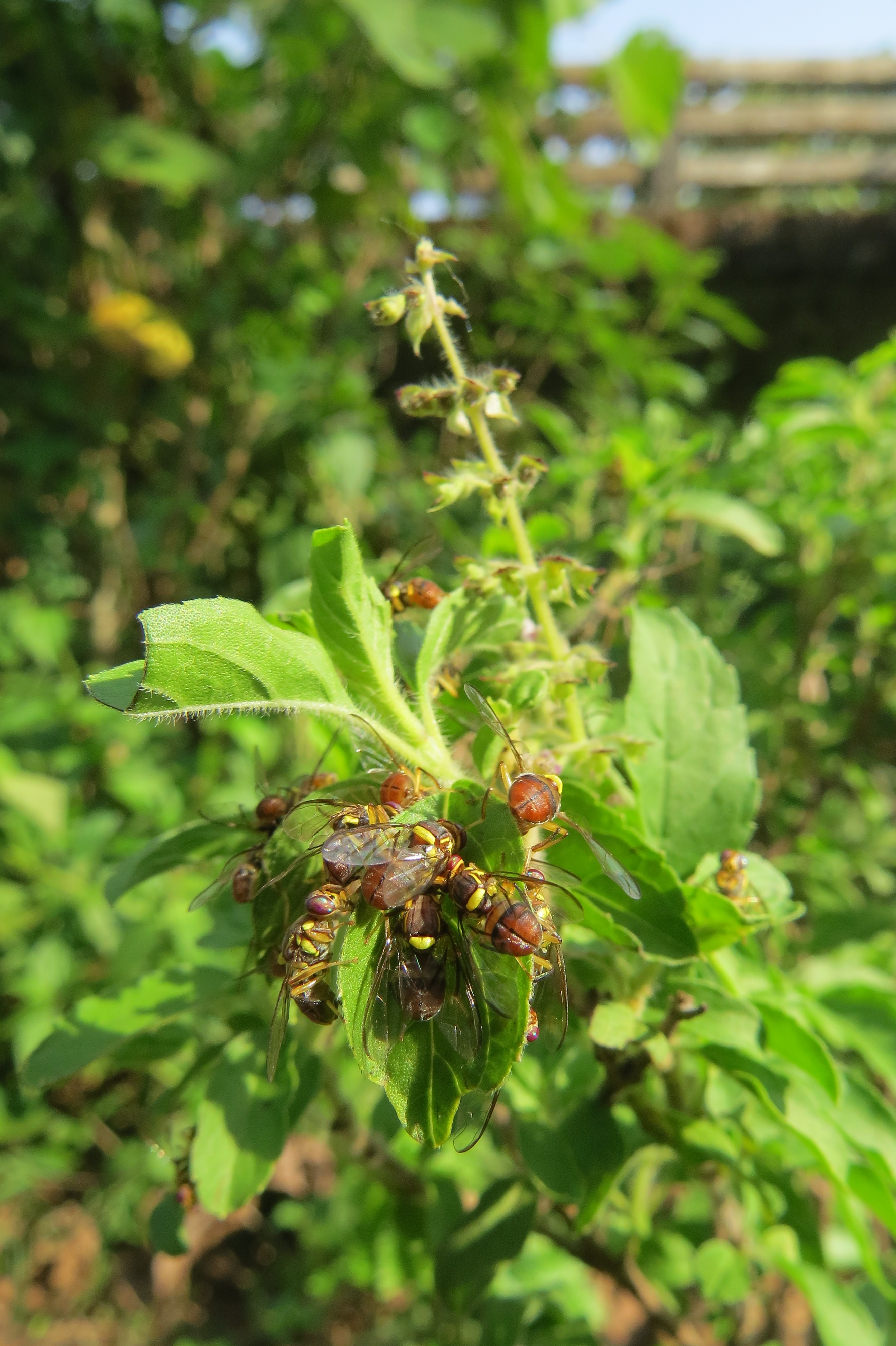
In Bangladesh, the pests that bagging guards against are well documented. Banglapedia, the national encyclopaedia, records about three dozen insect pests that attack mango plants in the country from the nursery stage to maturity; the major ones include mango hoppers, mango fruit weevils, the mango stem borer, the mango shoot borer and the mango fruit fly. Fungal diseases such as anthracnose, sooty mould, leaf blight, die-back and powdery mildew, and a bacterial leaf spot, also cause considerable damage. Infested fruit drops early or becomes unfit to eat.
Writing in Krishi Kotha, the magazine of the government's Agricultural Information Service (AIS), in 2019, the Bangladesh Agricultural Research Institute (BARI) scientist Dr Md Sharaf Uddin named the mango fruit borer and the fruit fly as the main pests of the mango tree and wrote that both can be controlled with approved pesticides at the permitted rates and with the fruit bagging method. Anthracnose and stem-end rot, the main diseases, can be controlled with approved fungicides and by treating mangoes in hot water after harvest. Which product to use, and at what rate, is a question for the upazila agriculture officer; this report gives no doses.
What research on Bangladeshi mangoes found
Bangladeshi scientists have tested bagging on the country's own varieties. In a study published in the Bangladesh Journal of Agricultural Research in March 2009, D. Sarker, M. M. Rahman and J. C. Barman compared different bagging materials for the control of the mango fruit fly. According to the 2021 review, which summarises their work, Langra and Khirsapat mangoes bagged 30 days before harvest in black polybags, transparent polybags or brown paper bags had higher total soluble sugars and better physical quality.
A later study by Md. Atiqur Rahman, Md. Sorof Uddin and colleagues, published in 2019 in the International Journal of Postharvest Technology and Innovation, examined pre-harvest bagging together with improved post-harvest practices in the mango value chain. The review records that brown paper bags put on Khirsapat mangoes 42 days before harvest significantly reduced post-harvest losses.
Studies on other varieties point the same way. The review lists work on the Nam Dok Mai #4 mango in which two-layered paper bags, brown outside and black inside, applied 48 days after full bloom improved fruit weight and skin appearance; work on the Harumanis mango in which brown and black paper bags applied 56 days before harvest improved skin colour; and work on the Apple mango in which standard kraft paper bags applied 40 to 50 days before harvest reduced lenticel discolouration, the dark spotting of the small pores in the skin.
How bagging spread in the mango belt
By 2023, bagging had spread well beyond a few trial orchards. The Business Standard reported in June 2023 that, according to the DAE, 30 to 40 percent of the mangoes in Rajshahi, Chapainawabganj and Naogaon districts were being grown in bags. Agriculture officials told the paper that the method resists pests, especially fruit flies, prevents latex burns and fungal spots, helps farmers lower cultivation costs and keeps the colour of the mangoes intact. Bagging had first been used on late varieties such as Fazli, Ashwina and BARI mangoes to keep insects off, they said, but was by then also used on early varieties such as Khirsapat, Langra and Amrapali to fetch higher prices.
Palash Sarkar, then head of the DAE's Chapainawabganj office, told the paper that although the bags cost extra money, farmers could cut their pesticide costs greatly with the method and could save more by using good-quality bags more than once. He advised farmers to apply pesticide at least once before bagging. Rubel Ali, a farmer from Shibganj, said mangoes usually needed 17 to 18 rounds of pesticide before harvest, but that six or seven were more than enough when bags were used, which had cut his pesticide costs to almost a third.
Bag prices were already climbing then. Shafiqul Islam Sana, a farmer and entrepreneur from Bagha in Rajshahi who bagged about 50,000 mangoes in 2022 and some 2 lakh in 2023, told The Business Standard that he was bringing bags from China at Tk 4.5 each, against Tk 2.5 earlier, and farmers said bag prices had doubled in two years. He said demand for bagged mangoes was high at home and abroad and that they sold for at least one-third more than conventionally grown fruit. Golam Rabbani, manager of a firm supplying mangoes to supermarkets in Dhaka, told the paper that bagged mangoes have no spots, are clean and keep a good colour, and are in high demand among wealthier buyers and foreigners living in Bangladesh.
Chapainawabganj and its orchards
Chapainawabganj lies at the western edge of Bangladesh, in Rajshahi division. Banglapedia gives its area as 1,702.55 square kilometres and notes that it is bounded by India's West Bengal on the north, south and west and by Rajshahi and Naogaon districts on the east. The district is made up of Barind tract, diara and char lands, and its main rivers are the Padma, the Mahananda and the Pagla. Nawabganj was a thana of Maldah district until 1947, became a subdivision of Rajshahi district at the partition of Bengal and was made a district in 1984. Of its five upazilas, Shibganj is the largest, at 525.43 square kilometres, and Bholahat the smallest; the others are Nawabganj Sadar, Gomastapur and Nachole. The 2011 census counted 1,647,521 people, and agriculture made up 57.13 percent of the main sources of income.
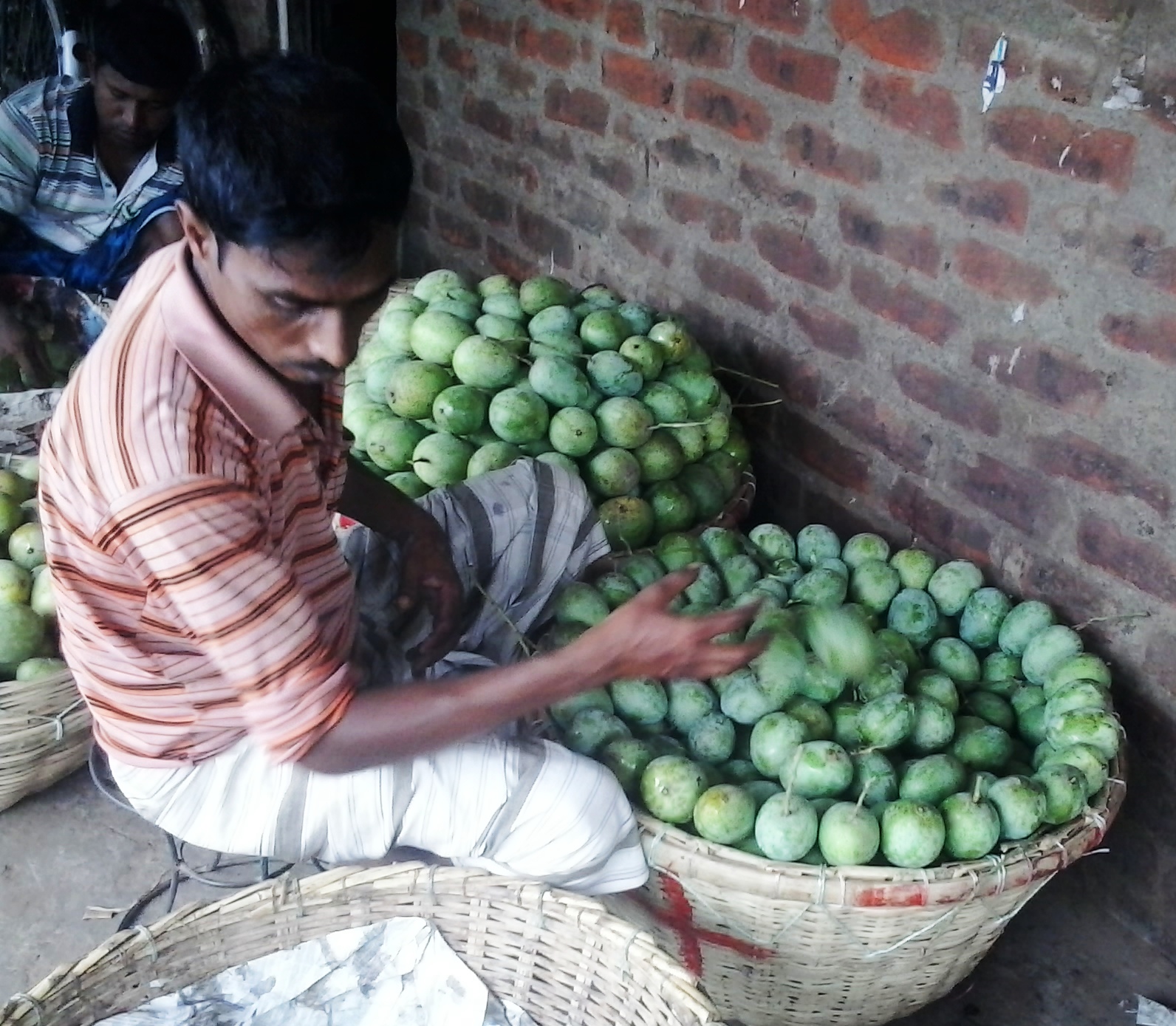
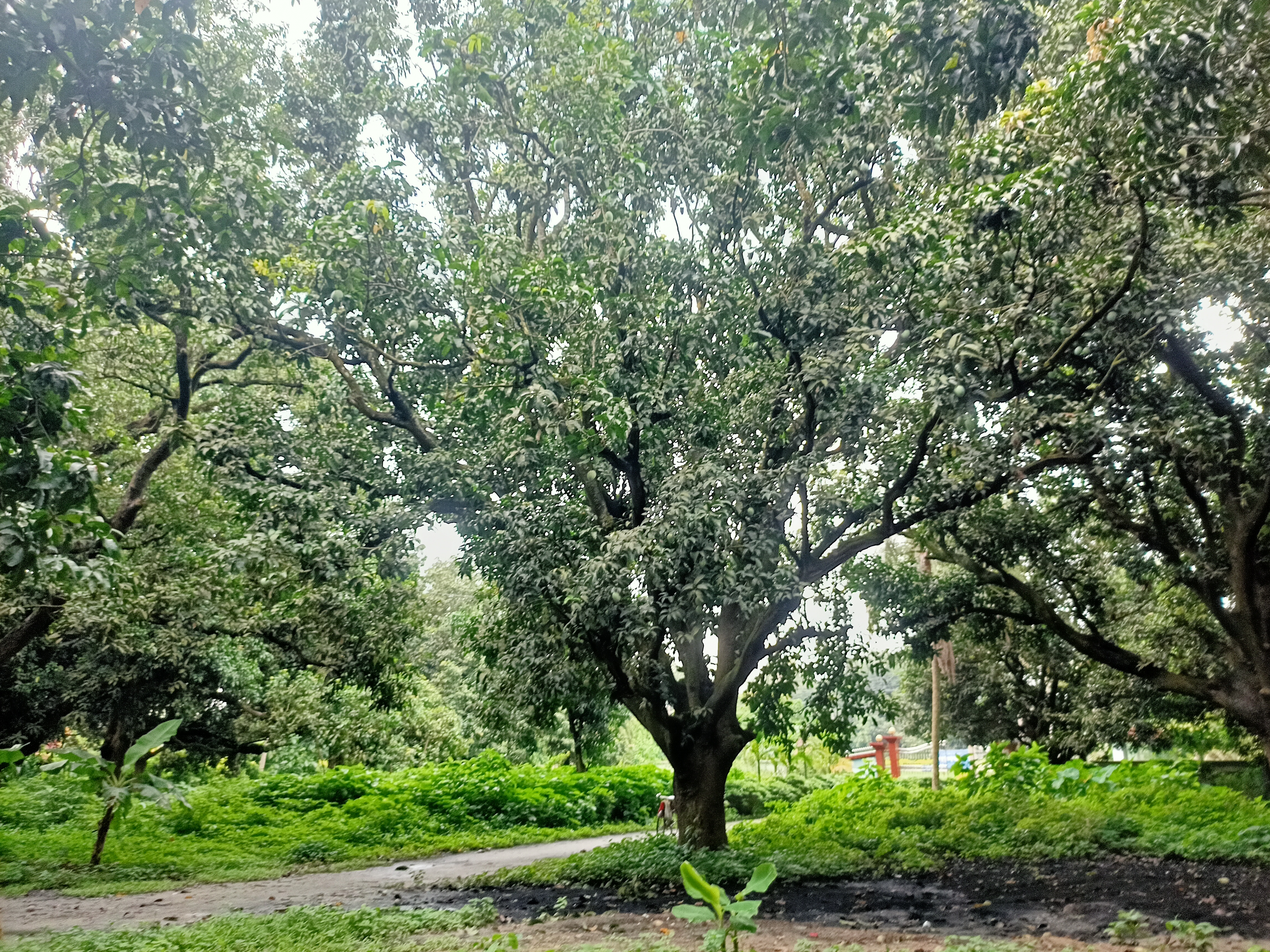
Mango is the backbone of that farm economy, and Shibganj, Bholahat and Gomastapur are among its main mango-growing upazilas. In January 2025 the DAE told the Dhaka Tribune that the district had 37,504 hectares of mango orchards, the largest share in Shibganj upazila (20,100 hectares), followed by Sadar upazila (5,180 hectares), and that the district had produced 348,278 tonnes of mangoes in 2024 despite that being an "off-year". Growers, officials and fruit researchers explained to the paper that mango follows a natural cycle in which a high-yield "on-year" is followed by a lower-yield "off-year". Two years earlier, The Business Standard reported that mango was grown on 37,588 hectares in the district in 2023, with a production target of 435,843 tonnes.
For the 2026 season, DAE figures reported by New Age on 21 February 2026 put the district's mango land at 37,487 hectares carrying 9,244,765 mango trees, with an official production target of 458,912 tonnes. Orchards in all five upazilas were in bloom, and the varieties in bud included Guti, Lakhonbhog, Amrapali, Gopalbhog, Langra, Fazli, Khirsapat and Ashwina. A grower from Ranihati union in Sadar upazila told the paper that the buds had come earlier than in previous years, and that he expected a large crop if heavy fog did not destroy it.
A season already under strain
The bag shortage came on top of other pressures. New Age reported on 3 March 2026 that Chapainawabganj's orchard area had fallen slightly, to 37,487 hectares in FY2025-26 from 37,504 hectares in FY2024-25, according to DAE data, while neighbouring Rajshahi district had lost 541 hectares of orchards in the same period. Agricultural officers and growers put the decline largely down to farmers turning orchard land into fish ponds in search of faster and more predictable returns than mangoes, which remain exposed to erratic weather, pest attacks and price swings. Farmers cited rising input costs, labour shortages, inadequate cold storage and unpredictable yields, and a grower from Bagha in Rajshahi said pest and disease attacks had increased, forcing farmers to double their pesticide sprays.
The weather took its own toll. On 7 April 2026, iTV reported that a hailstorm lasting from about 3:30 pm to 4:30 pm had struck five unions of Chapainawabganj Sadar upazila and eight unions of Shibganj upazila, with the worst damage in the Shyampur, Shahbazpur and Chakkirti unions of Shibganj. The Sadar upazila agriculture officer said damage to mangoes had been reported from several areas, while the Shibganj officer said the rain had benefited boro rice and jute fields.
Across the wider mango belt, harvest dates were being set as the bag shortage was reported. New Age reported on 11 May 2026 that the Rajshahi district administration's mango calendar allowed local Guti mangoes to be harvested from 15 May, Gopalbhog from 22 May, Himsagar, also known as Khirsapat, from 30 May, Langra from 10 June, and Amrapali and Fazli from 15 June, with BARI Mango-4, Ashwina and Gourmati from 5, 10 and 15 July, and Katimon and BARI Mango-11 allowed throughout the year. Naogaon fixed 22 May as its starting date. The same report gave the DAE's orchard areas as about 19,062 hectares in Rajshahi, 37,487 hectares in Chapainawabganj and 30,310 hectares in Naogaon.
The varieties named in the report
Khirsapat is the district's signature mango. In a 2019 Krishi Kotha article, Dr Sharaf Uddin wrote that in 2016 BARI's Regional Horticulture Research Station in Chapainawabganj was given the task of registering the variety as a geographical indication (GI) product; it was published in GI Journal No. 3 in January 2018, and the Department of Patents, Designs and Trademarks then decided to issue Chapainawabganj's Khirsapat its registration certificate; the article's headline records that the certificate was received. He described it as a very popular mid-season commercial variety with medium, roughly oval fruit averaging 8.6 cm long, 7.5 cm wide and 6.0 cm high and weighing 263.9 grams on average. The flesh is fibreless, juicy and sweet, with an average sweetness of 23 percent and an edible portion of 67.2 percent. It begins to ripen in the third week of the Bengali month of Jyoishtho and takes about four months from flowering to maturity. Khirsapat made up 20 to 25 percent of total mango production, he wrote, and its orchards were growing every year.
The same article explains why the district suits it. Chapainawabganj falls in Agro-Ecological Zone 11, the High Ganges River Floodplain, where the soil has the pH of 6.5 to 7.5 that good Khirsapat needs. Dry, cool weather at flowering and dry, hot weather of 28 to 35 degrees Celsius while the fruit grows and matures give good yield and quality, while rain at flowering invites disease and pests, and heavy rain during fruit growth spoils quality.
Fazli is a large, late-maturing mango, each fruit weighing up to about a kilogram, and is commonly used in jams and pickles; Rajshahi division is its major producer in Bangladesh. Ashwina is among the elite varieties that Banglapedia lists as grown mostly in Rajshahi, Nawabganj and Dinajpur, and in the 2026 Rajshahi calendar it was one of the last to be harvested, from 10 July. Katimon was described to The Business Standard in 2023 by Ahsan Habib, member secretary of the Chapainawabganj Mango Foundation, as a foreign late variety.
BARI's research in the district goes back decades. Banglapedia notes that BARI's horticulture division set up research centres at Rajshahi, Nawabganj and Joydebpur to work on mango propagation, production and post-harvest technology. Bangladesh Pratidin reported in January 2022 that 14 of the 18 mango varieties released by BARI up to then had come from the Chapainawabganj Regional Horticulture Research Station, including BARI Mango-18, a hybrid of Gopalbhog and BARI Mango-1 bred by the station's chief scientific officer Dr Zamir Uddin, with fruit of about 240 grams, a 75 percent edible portion and sweetness of 24.67 percent.
Why safe mangoes matter for exports
Bagged, low-pesticide mangoes are the kind the export trade wants. In April 2025 the state news agency BSS, in a report carried by New Age, gave the DAE's national figures: 23,50,499 tonnes of mangoes from 2,02,968 hectares in FY2020-21, 27,07,459 tonnes in FY2022-23 and 25,08,973 tonnes from 2,05,034 hectares in FY2023-24, with a target of 27 lakh tonnes and about 5,000 tonnes of exports for 2025. Exports were 309 tonnes in FY2016-17, 1,757 tonnes in FY2021-22 and 1,321 tonnes in FY2023-24, and Bangladesh was exporting mangoes to some 38 countries, including the United Kingdom, Italy, France and Canada, with China being prepared as a new market under a memorandum of understanding.
In the Rajshahi region alone, Shamsul Wadud, additional director of the DAE's Rajshahi divisional office, told The Business Standard in June 2023 that 9.69 lakh tonnes of mangoes had been grown on 90,894 hectares in Rajshahi, Chapainawabganj, Naogaon and Natore in 2022, with a target of 11.07 lakh tonnes from 92,317 hectares in 2023, and that about 223 tonnes had been exported in 2022 against a hope of 1,000 tonnes in 2023.
Officials have long said that quality is the limit. Mohammad Arifur Rahman, director of the DAE's Exportable Mango Production project, told The Business Standard in July 2024 that exports were held back by the short shelf life of Bangladeshi mangoes and by high air freight charges, and that the country lacked mango orchards certified under Good Agricultural Practices (GAP). The paper reported that 25 to 30 percent of the total produce was wasted at various stages of the supply chain and that the country had only one quarantine centre. The Exportable Mango Production project, with a budget of Tk 47 crore and running until June 2027, aimed to raise the skills of farmers and officials in producing and preserving quality mangoes. For growers in Chapainawabganj, the fruit bag had become one of the practical tools for meeting those standards, which is why its sudden scarcity at bagging time in May 2026 worried them.
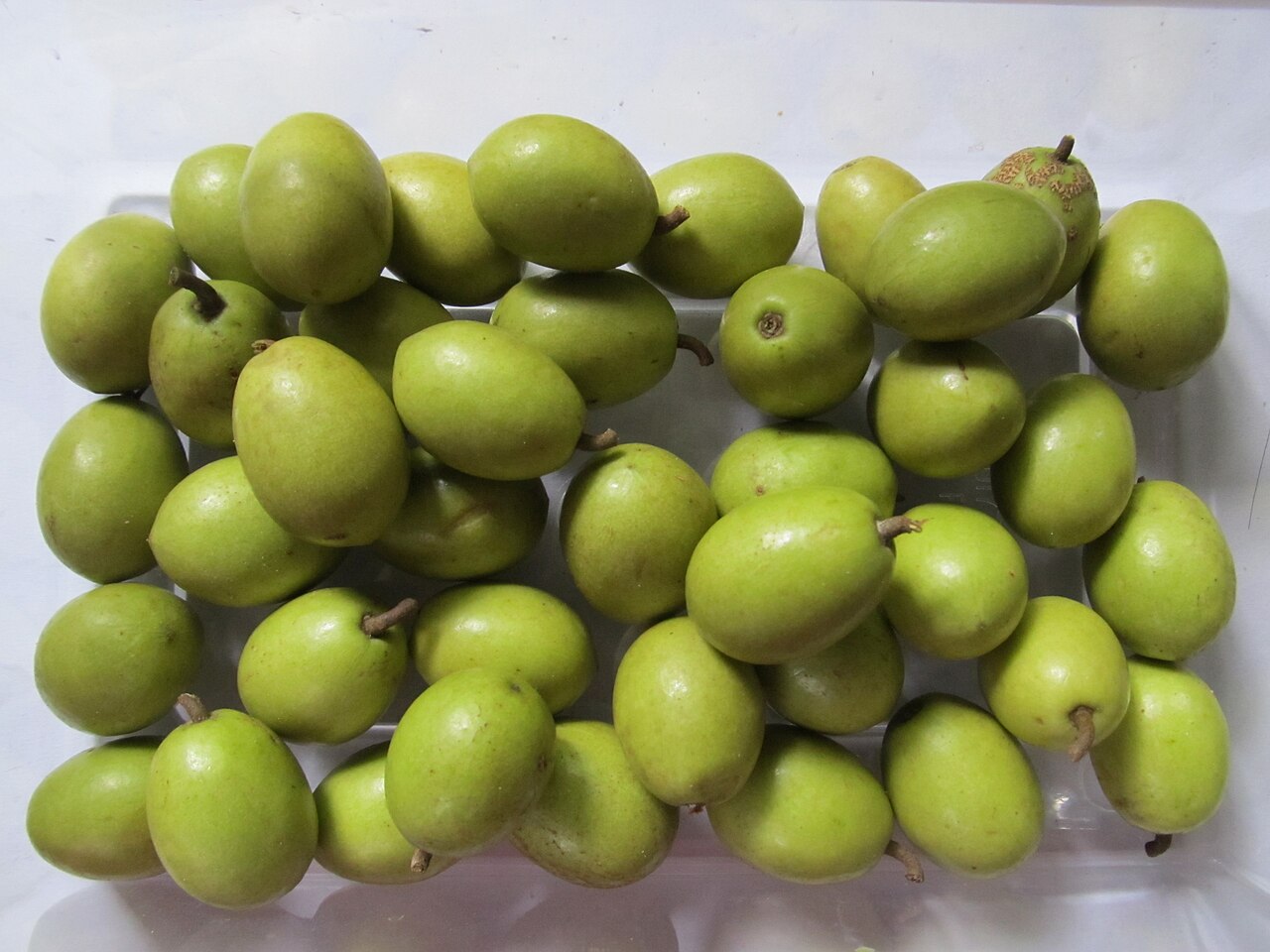
Photo: Fozli.com / Wikimedia Commons (CC BY-SA 4.0)
Sources: Jagonews24, iTV, New Age (including BSS), Dhaka Tribune, The Business Standard, Agricultural Information Service (Krishi Kotha), Banglapedia, Plants (MDPI), Bangladesh Journal of Agricultural Research, International Journal of Postharvest Technology and Innovation, Bangladesh Pratidin, Wikipedia
Comments
(0)