

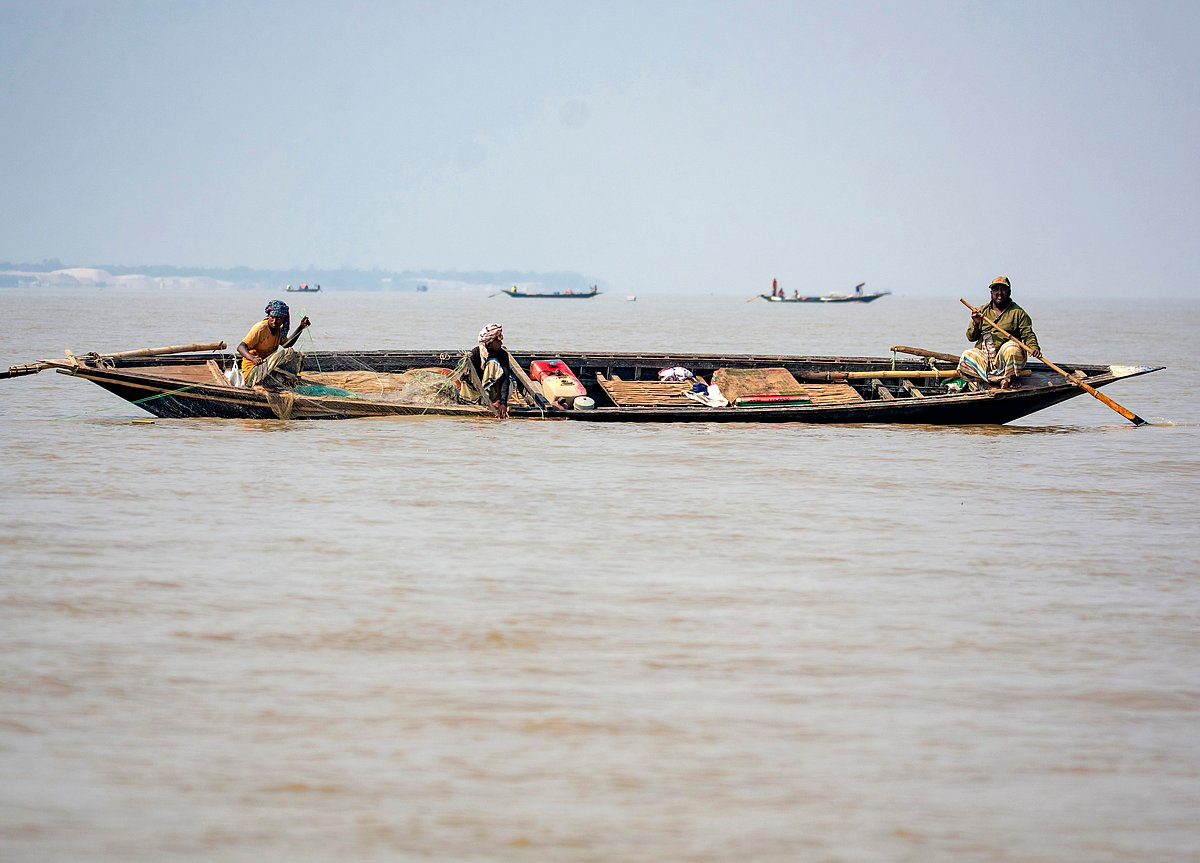
At the height of the season, the Boro Station fish landing centre in Chandpur town is receiving hilsa from local fishermen and also from the south and from Chattogram. Local and incoming fish together, about 100 to 150 maunds a day are being bought and sold. Arrivals are little changed from last year and large fish are more plentiful, but prices are as steep as ever.
That is the picture from fishermen, traders and fishing-community leaders at the landing centre and at Anand Bazar, Bahariya and the Harina ferry ghat in Sadar upazila. Jamal Gazi, a fisherman from Anand Bazar, said small hilsa are scarce this year and big ones dominate, but overall there is less hilsa in the Padma and Meghna than five to seven years ago. Jamal Miaji, a veteran fisherman of Bahariya, blamed seasonal fishermen who catch jatka during the breeding period and the traps that are banned but never fully stopped.
Mohammad Ibrahim, a wholesale seller at the Harina ghat, said a one-kilogram hilsa without ice sells for Tk 3,000 to 3,200, fish of 800 to 900 grams for Tk 2,500 to 2,600 a kilo, and small hilsa for Tk 700 to 800. Trader Jahangir Hossain said there is hilsa in the river but prices have not fallen from last year; fresh Padma-Meghna fish is in such demand that it sells the moment boats reach the ghat.
Mohsin Hossain, who came from Kachua, bought Tk 10,000 worth of small and medium hilsa; he comes to this ghat because fish is sold by auction and buyers can pick the better ones. Masum Talukdar from Hajiganj said arrivals are fine but prices have not come down. Haji Shabe Barat Sarkar, general secretary of the Chandpur fish traders' cooperative, said arrivals are stable — neither up nor down on last year — but short of demand, and Chandpur hilsa's national branding draws more buyers.
Chandpur District Fisheries Officer Md Fakhrul Islam said regular operations continue to protect jatka and ensure mother hilsa spawn. Chandpur produced 35,472 metric tonnes of hilsa in 2024-25; average arrivals so far this year are on track, and the real difference from last year will be known when the final report is prepared.
Retired hilsa researcher Dr Anisur Rahman said work is under way to establish why production in the Padma and Meghna is falling. Early findings show fishermen using banned traps such as current nets to catch small hilsa, and silt building large chars and sandbanks in the Meghna estuary and on the riverbed, narrowing and obstructing the fish's normal movement and migration route — as a deep-water fish, hilsa is forced to avoid shallow, char-prone channels. Pollution on the riverbed has also created a food shortage for the fish.
Unless navigability is restored, the estuary dredged and current nets stopped, fewer hilsa will reach Chandpur's ghats — a loss for fishermen, wholesalers and the Chandpur brand alike.
Source: banglanews24
Comments
(0)