
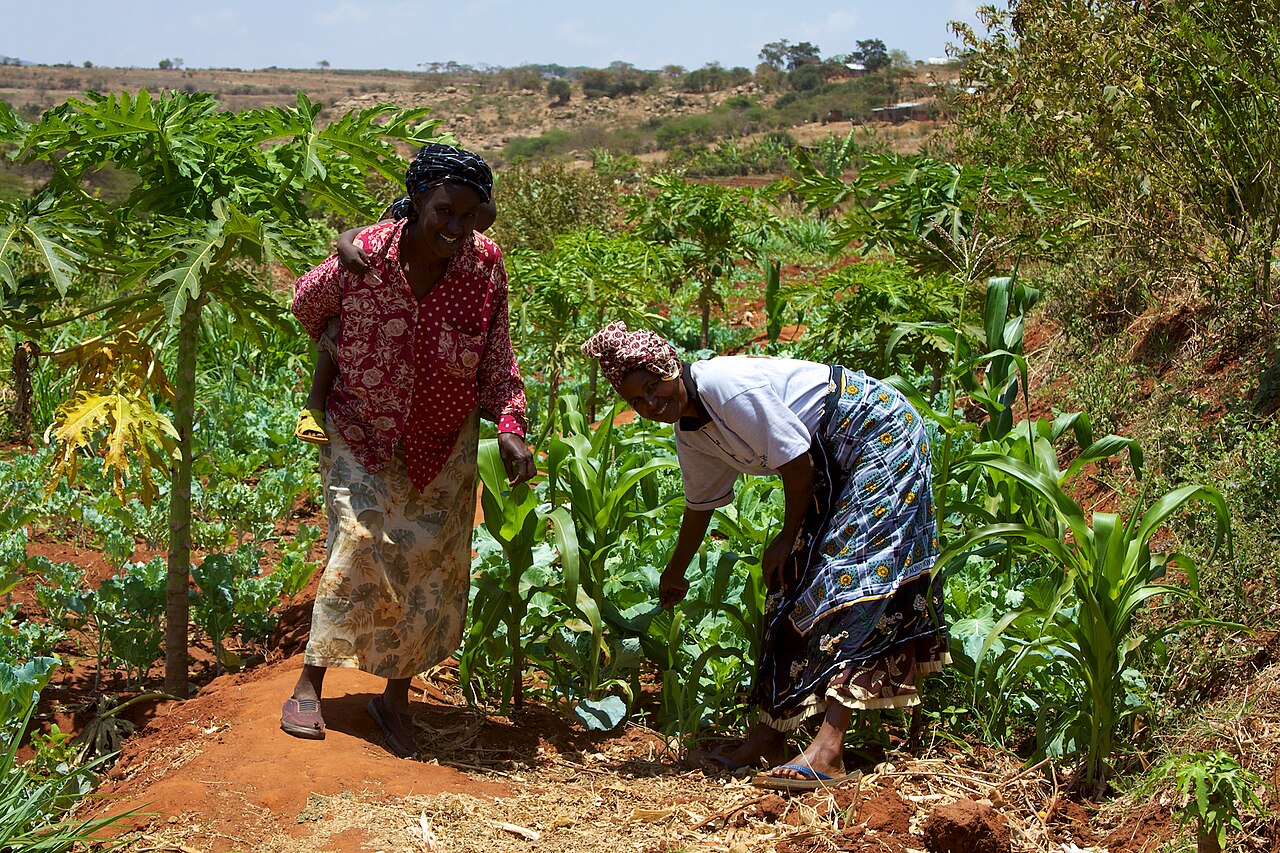
Women in low-income countries are at greater risk than men of being left further behind as a run of crises hits global food systems, unless governments, donors and development partners do more to include them, according to a report from the CGIAR GENDER Accelerator.
The report, "Advancing equality, transforming futures: a path to resilient and productive food, land and water systems in 2050", says the fuel and fertilizer crisis, climate extremes and trade disruption have hit women hardest over the past year, even though women are central to building more resilient food systems. It was released on the International Day of Rural Women, in the International Year of the Woman Farmer.
Among its findings, climate change is expected to reduce water availability further, which evidence suggests could increase the time women spend collecting water by 30%. Rural women are also increasingly expected to move into off-farm jobs in retail, processing and logistics by 2050, which could bring better livelihoods, but the report warns that the shift is likely to be uneven.
It proposes safer workplaces and pairing technical training for women with efforts to change the social norms that load unpaid care onto them and limit their decisions. On technology, it notes that women in Kenya are up to 25% less likely than men to use digital climate advisory services because of structural barriers, and urges developers to involve women in building tools such as AI before they are scaled up.
"The choices we make over the coming years will determine whether food, land, and water systems become more equitable or more unequal, more resilient or more fragile," said Ismahane Elouafi, Executive Managing Director of CGIAR. Nicoline de Haan, Director of the GENDER Accelerator, said the report moves beyond piecemeal measures to the structural changes needed to close the gap by 2050.
Photo: McKay Savage from London, UK / Wikimedia Commons (CC BY 2.0)
Source: CGIAR

Comments
(0)