
Saudi Arabia has said that claims spreading on social media that a medicine made from the active components of camel urine can cure cancer are completely false and baseless. The Saudi Food and Drug Authority (SFDA) confirmed that the product in question is not an approved cancer drug but only a dietary supplement.
According to Gulf News, the SFDA issued its statement after reports of a camel-urine cancer drug went viral online and caused confusion around the world.
In a statement on X, the authority said the product is not approved for treating cancer or any other disease. It contains mainly a mix of vitamins and minerals to meet the body's daily nutritional needs, and as a registered product it may be sold and used only as an ordinary dietary supplement.
The SFDA stressed that there is no scientific or regulatory basis for claims that it cures cancer, and it rejected outright the reports that it had been approved as a cancer treatment.
The authority urged the public to ignore such misleading rumours and to rely on scientifically proven treatment for illnesses such as cancer.
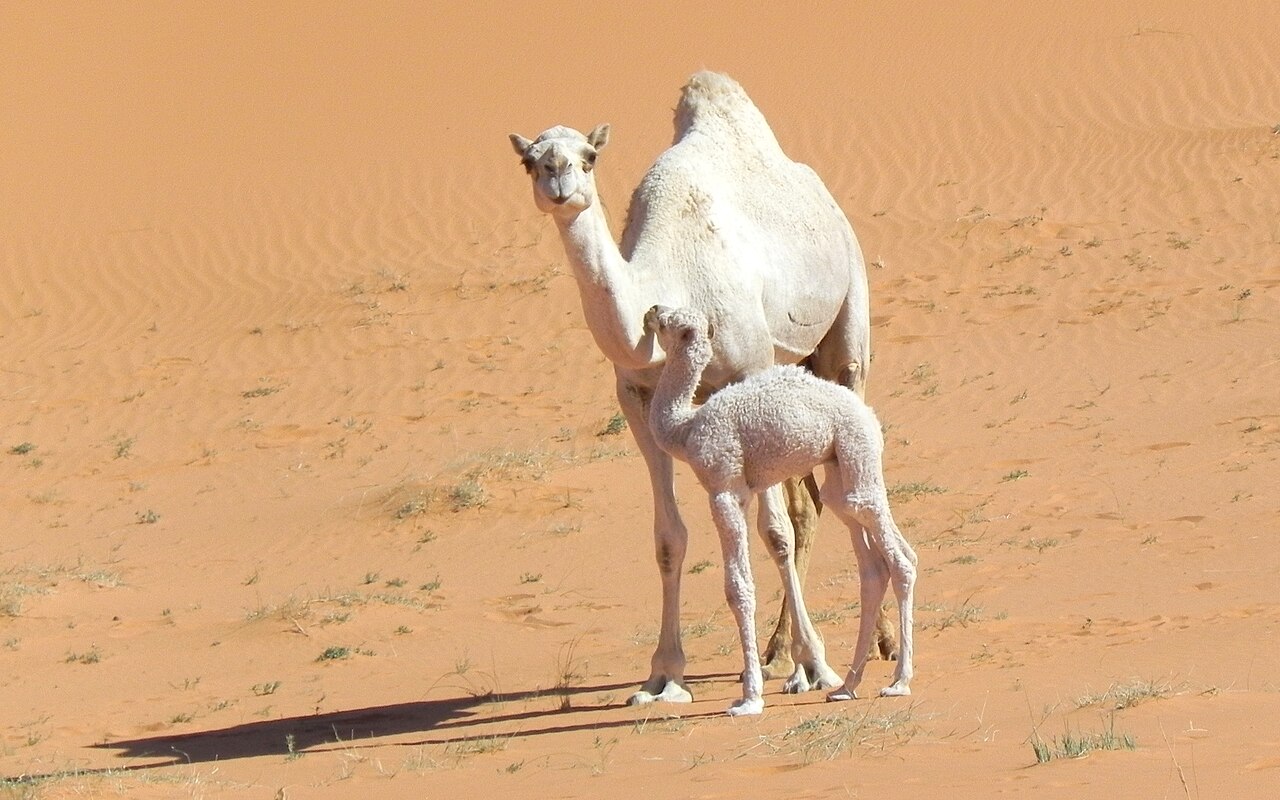
Photo: Peter Dowley / Wikimedia Commons (CC BY 2.0); an Arabian camel and her calf in the desert, representative picture
Source: Ittefaq

Comments
(0)