
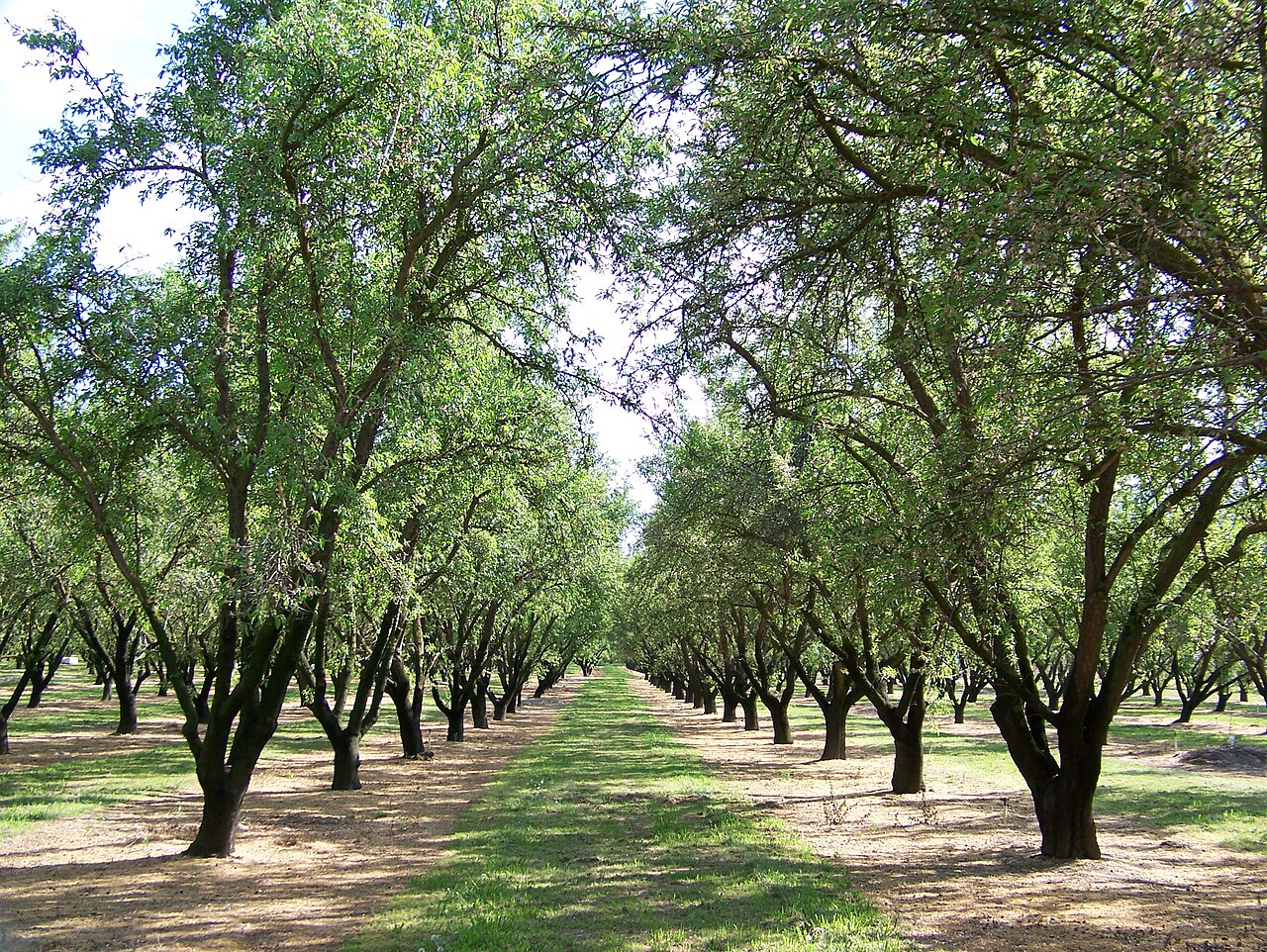
Warm, dry weather across California's Central Valley in September supported a fast 2026 almond harvest, according to a crop report contributed by Blue Diamond Growers. Daily highs ran mostly from the mid-80s to mid-90s Fahrenheit, peaking just over 100 degrees on 10 September, while morning lows were mostly in the low 50s.
Shorter days and more frequent morning dew normally cut the time available to pick up nuts drying in windrows, but September's conditions caused no significant problems, letting growers move quickly through a compressed harvest. Only a handful of Nonpareil and Independence orchards remained by the end of the period, and the most advanced late-maturing Monterey and Fritz plantings have already been picked up.
Per-acre yields are generally running below 2025, and growers keep reporting small kernels as they move into later varieties. Spider mites have caused significant defoliation in many orchards; the worst have lost nearly all their leaves and started to push new ones, spending energy reserves meant for next year, which could hurt the 2027 crop.
Rejects caused by navel orangeworm have risen slightly as the harvest went on, after a third flight of moths laid eggs on hulls in orchards waiting to be shaken, though damage remains the lowest in several years; later orchards have seen more. Stink bugs, which are drawn to the Independence variety, continue to cause brown-spot damage, and university research has not yet found an effective way to limit those losses.
As each orchard finishes, growers turn to post-harvest work: irrigation to restore root-zone moisture depleted during harvest, fertiliser applications and smoothing of the orchard floor.
Photo: Nehrams2020 / Wikimedia Commons (CC BY-SA 3.0)
Source: California Ag Network

Comments
(0)