
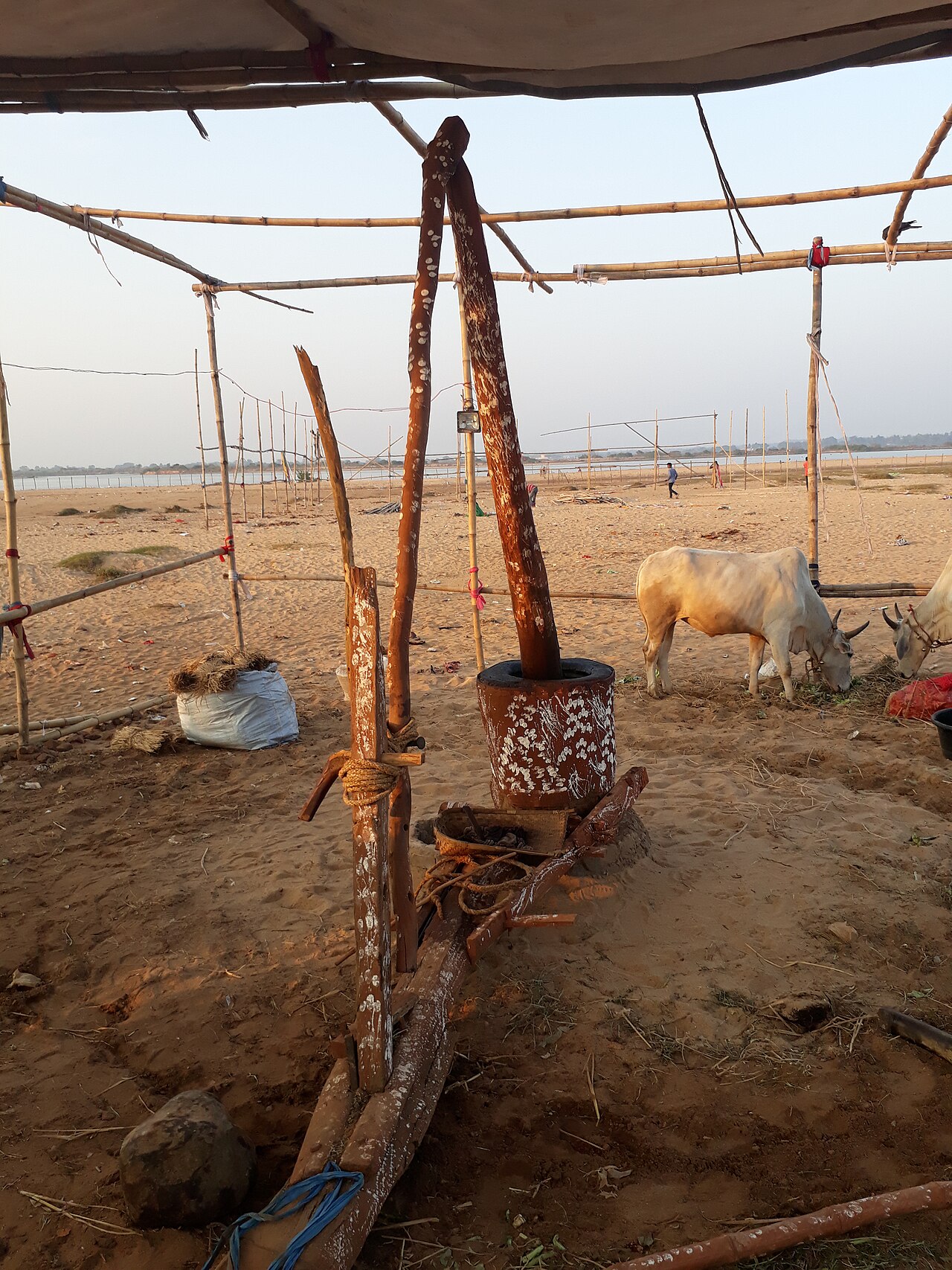
The bullock walking blindfolded round a wooden press to crush mustard seed for oil has all but disappeared from rural Bangladesh. At Chandani in Rajbari Sadar upazila, Bachchumia has kept the old press working with a new drive: a rotating rig built from auto-rickshaw parts now turns it, while the heart of the machine is still the traditional wooden ghani.
Making mustard oil in a ghani has run in Bachchumia's family since his grandfather's time, and for years the presses were turned by bullocks. A few years ago he changed the method, fitting parts of an auto-rickshaw in a particular arrangement to make the turning mechanism. Switched on by electricity or a motor, the press turns on its own.
Under a tin shed at his home stand three such rigs side by side, each with a wooden ghani at its centre. Mustard seed goes in, the rig turns, and under the pressure of the wooden press the oil comes out drop by drop into a pot. As the oil pressers put it, the tradition has been kept; only the source of the power has changed.
Running a press with a bullock, they explain, means someone has to stay beside it almost all the time, keeping the animal on its circle and watching the whole process, which takes both time and labour. Many in the family are also no longer comfortable with blindfolding the animal. The new rig has cut much of that labour.
By the report's figures, one press crushes about 30 to 35 kg of mustard in a day for 8 to 10 kg of oil. With all three running, 90 to 105 kg of seed a day could yield an estimated 24 to 30 kg of oil, though actual output depends on the mustard variety, its moisture and quality, the efficiency of the press and the power supply. When the electricity goes, production stops altogether, the new challenge the method brings.
Modern oil mills and bottled edible oil have steadily reduced the number of small wooden presses, and the skills that went with them. Yet ghani-pressed mustard oil keeps a market of its own. Local people say a rig like this could be an alternative for families who want to press oil the traditional way but cannot keep and care for a bullock; villagers come every day to see it, and some are showing interest in building presses of their own.
The report adds that keeping that market takes more than a story of tradition: seed quality, clean production, storage, bottling, labelling, food safety and the applicable government standards and approvals all matter. It is by Barta24's staff correspondent in Kushtia.
Photo: Swetapadma07 / Wikimedia Commons (CC BY-SA 4.0)
Source: Barta24

Comments
(0)