
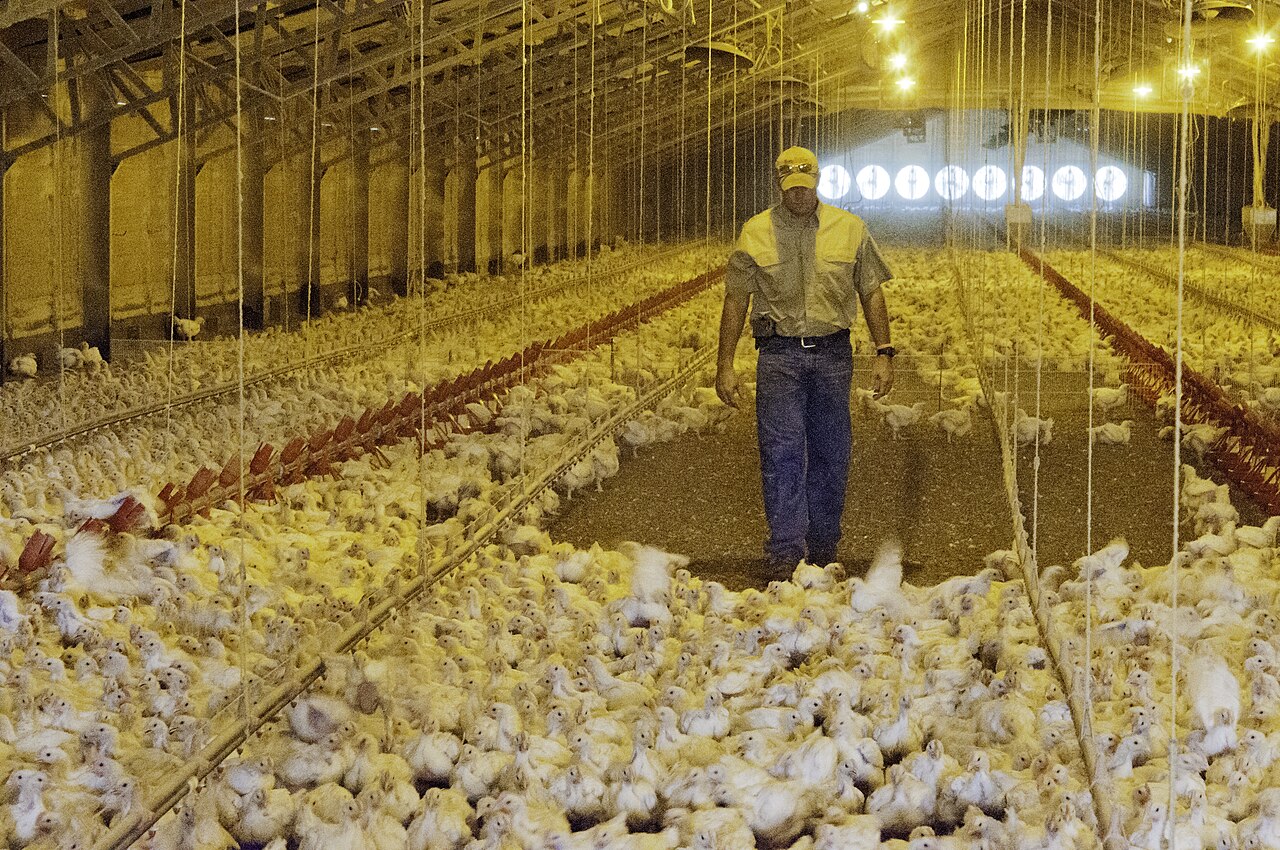
The genes that let gut bacteria resist antibiotics changed in broiler chickens mainly as the birds grew older, not because of what was added to their feed, according to a Penn State study published in Poultry Science.
At the Penn State Poultry Education and Research Center, researchers fed 320 broilers one of four diets: no additive, an antibiotic, essential oils or a probiotic. They sequenced faecal samples at 1, 10 and 21 days of age. The antibiotic did not produce a lasting change in the birds' overall "resistome", which surprised the team. "The resistome of a one-day-old chick looked quite different from that of a 10-day-old chick, and the resistome changed again by day 21," said first author Ana Fonseca, now a Penn State Extension poultry educator, attributing it to natural microbial succession as the gut community matures.
Poultry producers are increasingly replacing in-feed antibiotics with probiotics and essential oils because of concern about antibiotic resistance, but "we don't fully know whether these products affect antibiotic-resistance genes in chickens," said senior author Erika Ganda, associate professor of food animal microbiomes.
Fonseca cautioned that the results do not mean additives never affect resistance, only that under this experiment's conditions the birds' natural development had the bigger effect. Understanding where resistance genes come from, she said, can help develop safer ways to raise poultry. The work was funded in part by USDA's National Institute of Food and Agriculture.
Photo: USDAgov / Wikimedia Commons (Public domain)
Source: Morning Ag Clips


Comments
(0)